
“The opportunity to beautify the front of our school, in partnership with Tended Earth, reflects what is possible when students and community take collective ownership - building pride in place and creating small pockets of nature that support greater biodiversity. It shows how each small contribution, from many hands, can grow into something far greater than the sum of its parts.”
Shane Gemmola, Acting Principal of BSC
High School Wilding
Rewilding Together
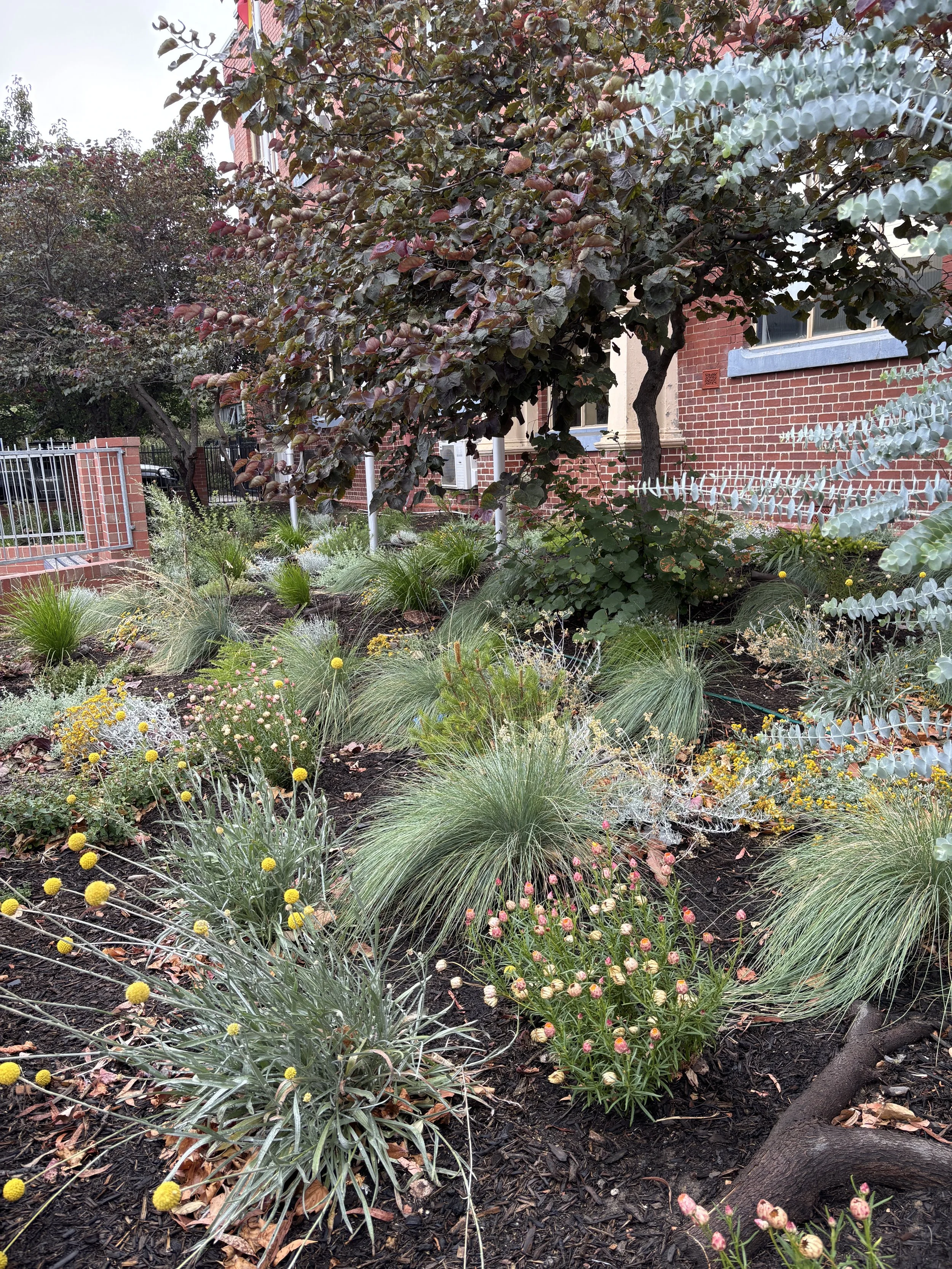
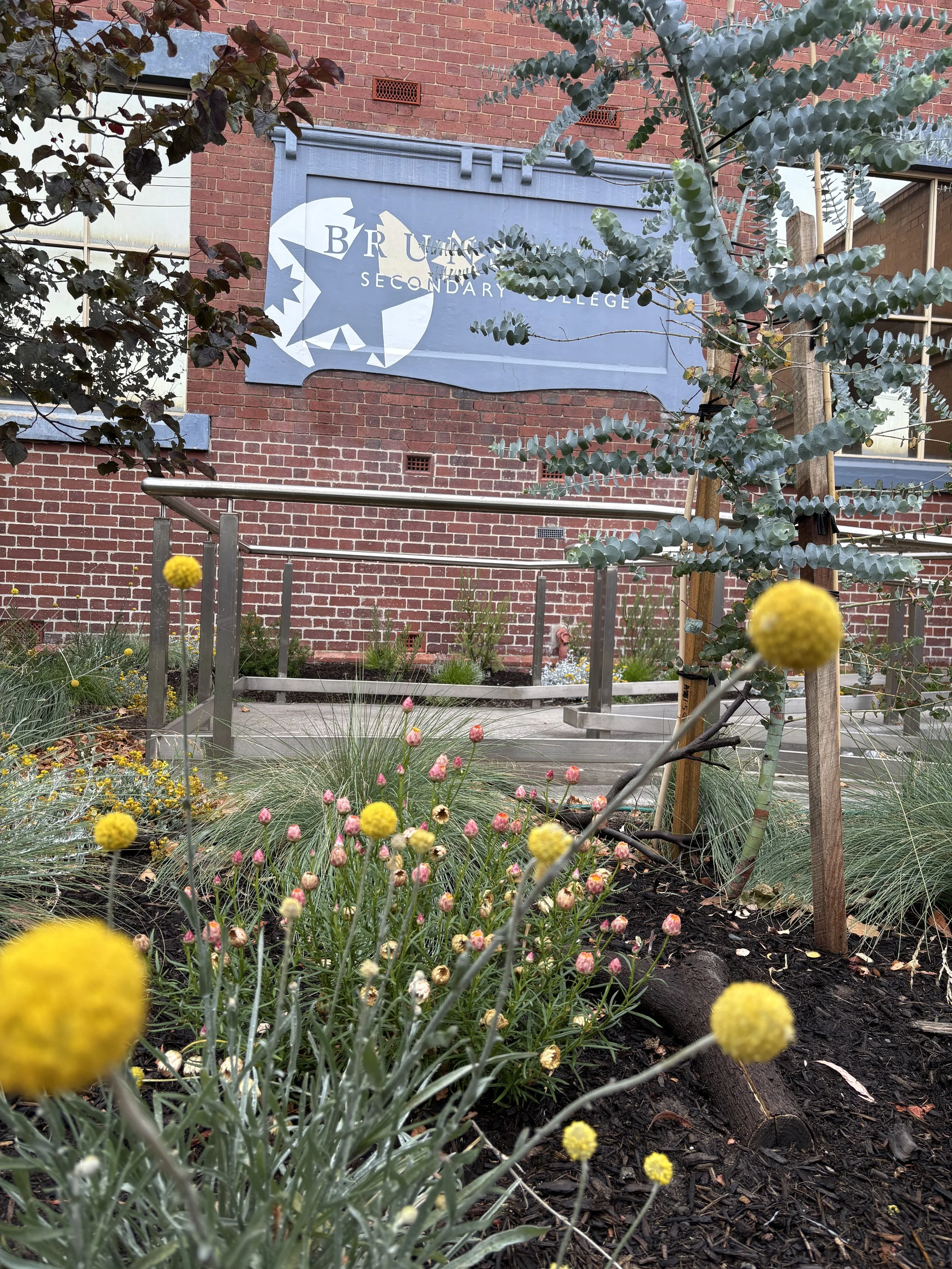
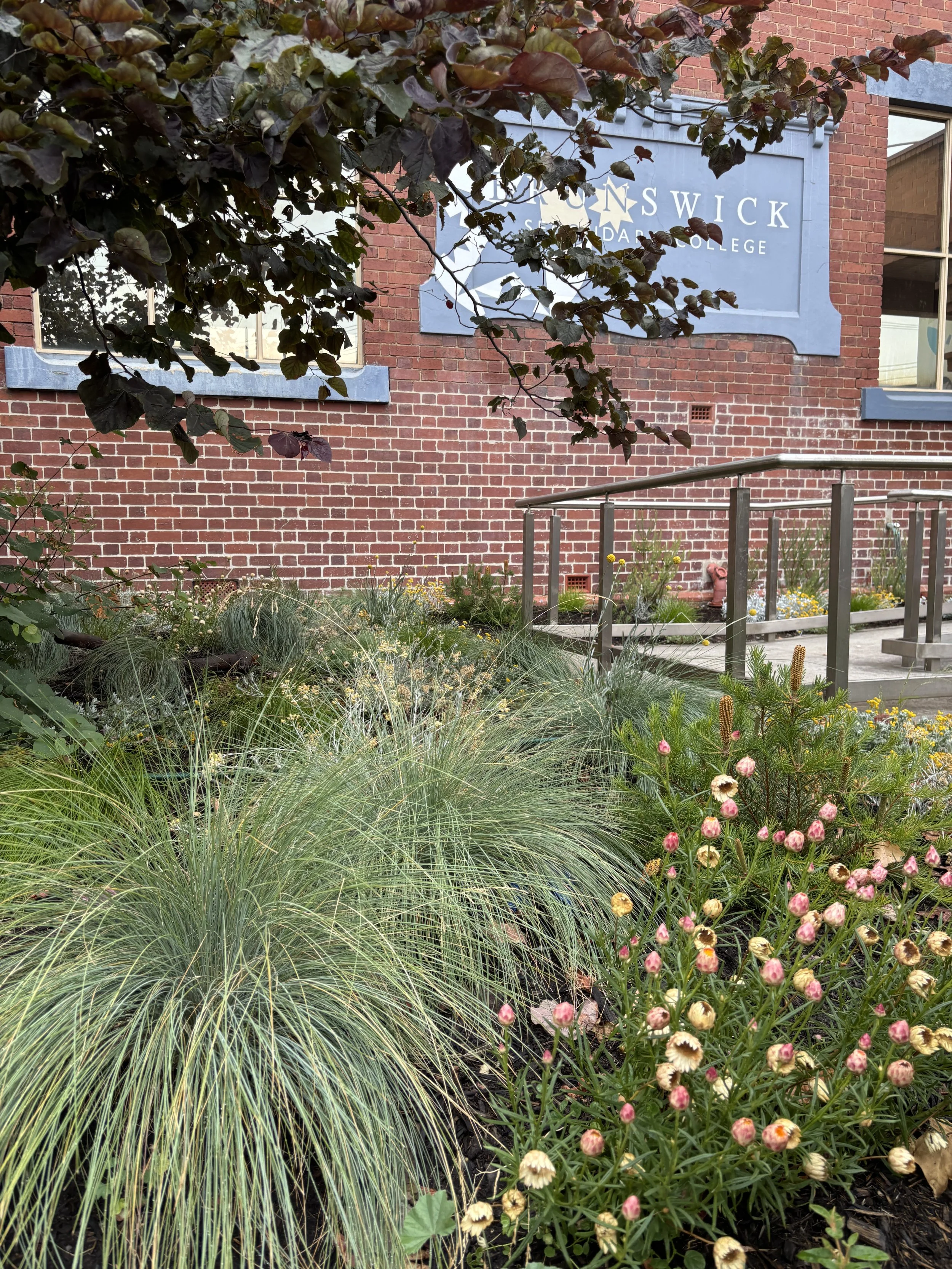
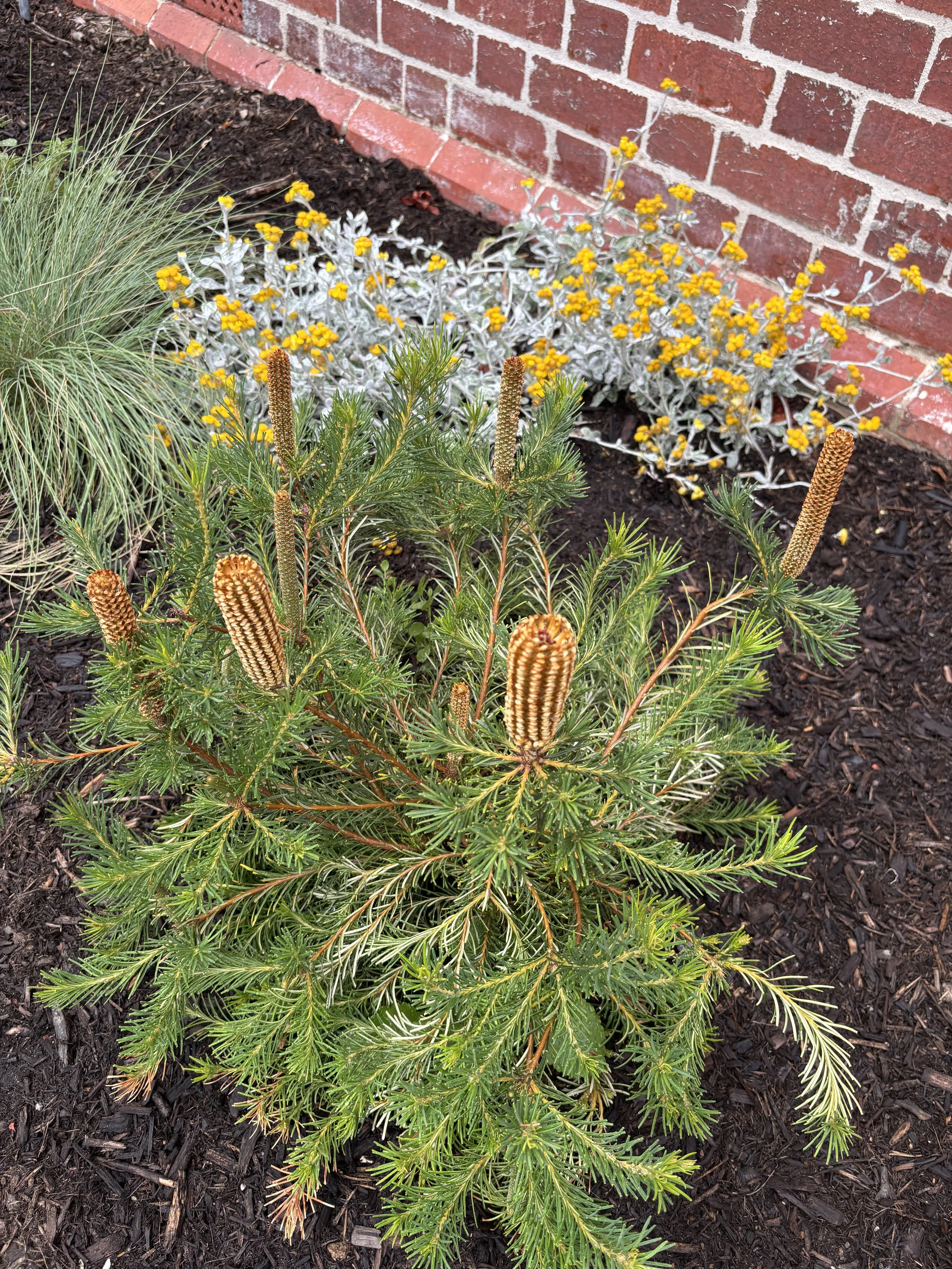
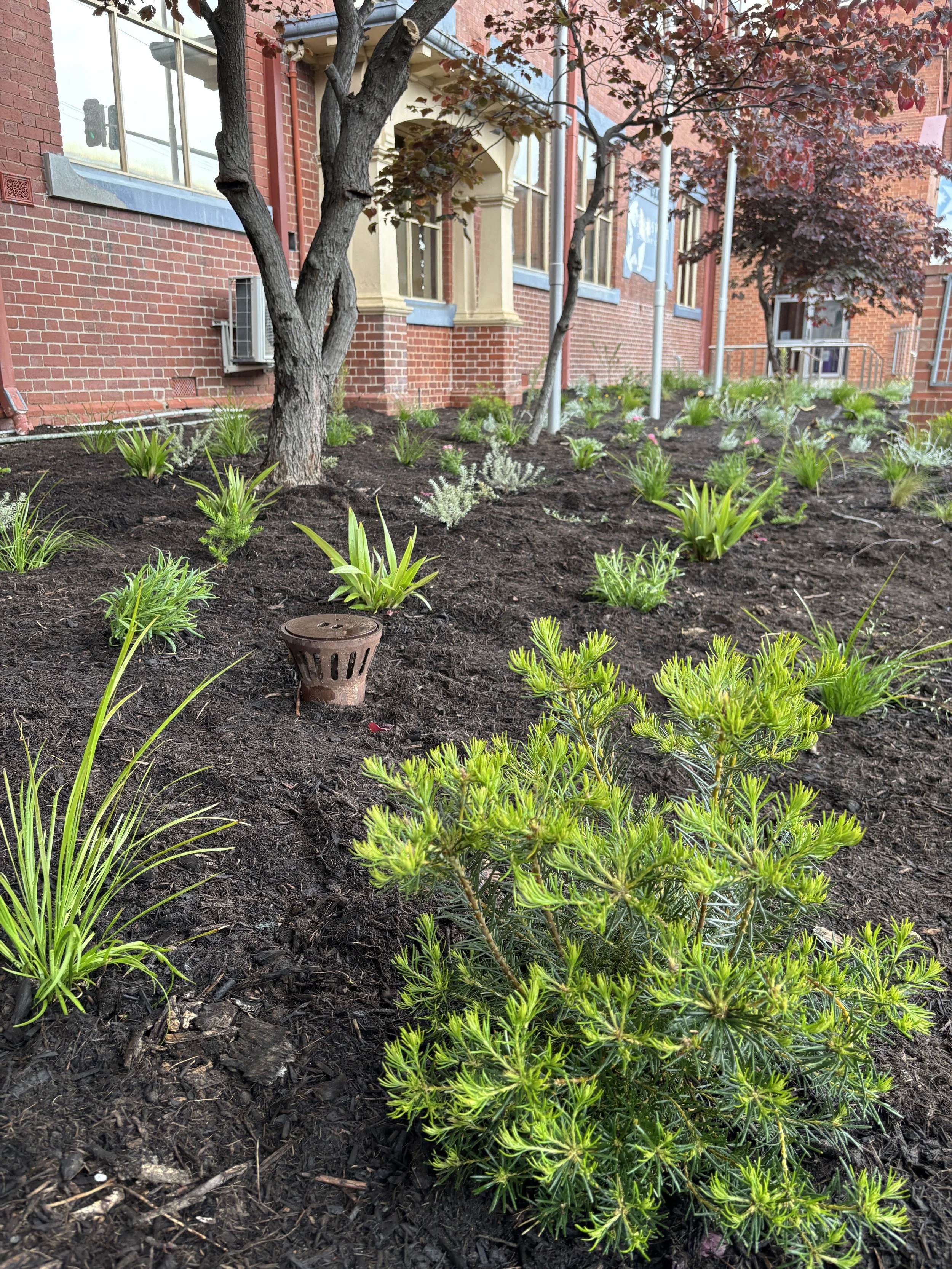
A community-powered rewilding initiative at Brunswick Secondary College (BSC) has transformed three neglected street-facing garden beds (~262 sq. metres) of the school into multi-layered wild gardens - boosting biodiversity and creating habitat for local wildlife.
Collaborative Design & Delivery
by Tended Earth, BSC Parents’ Association President Allison Berry, and the BSC Leadership Team.
Support
with funding from BSC Parents’ Association ($8,139) and in-kind support for project design and delivery.
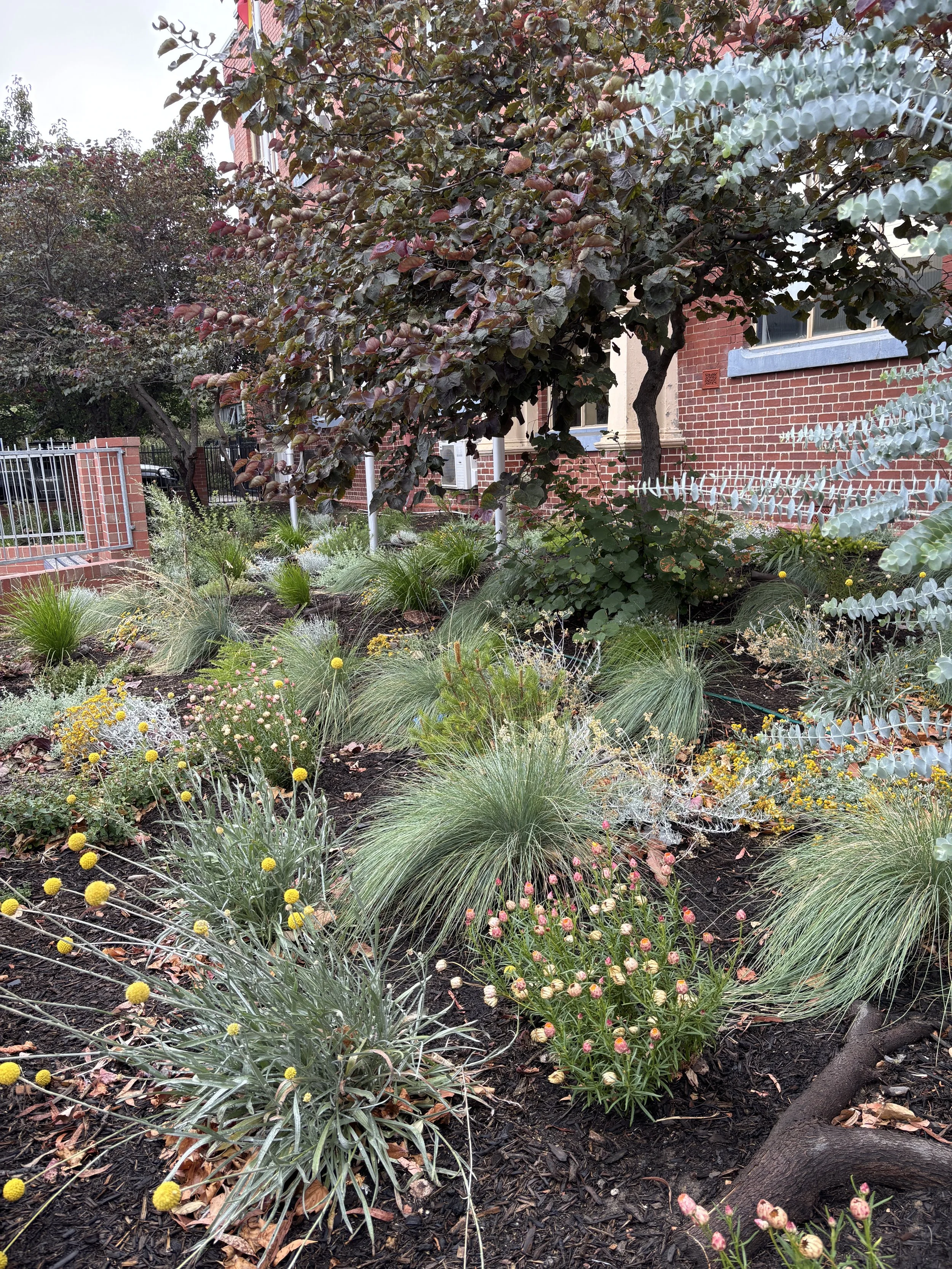
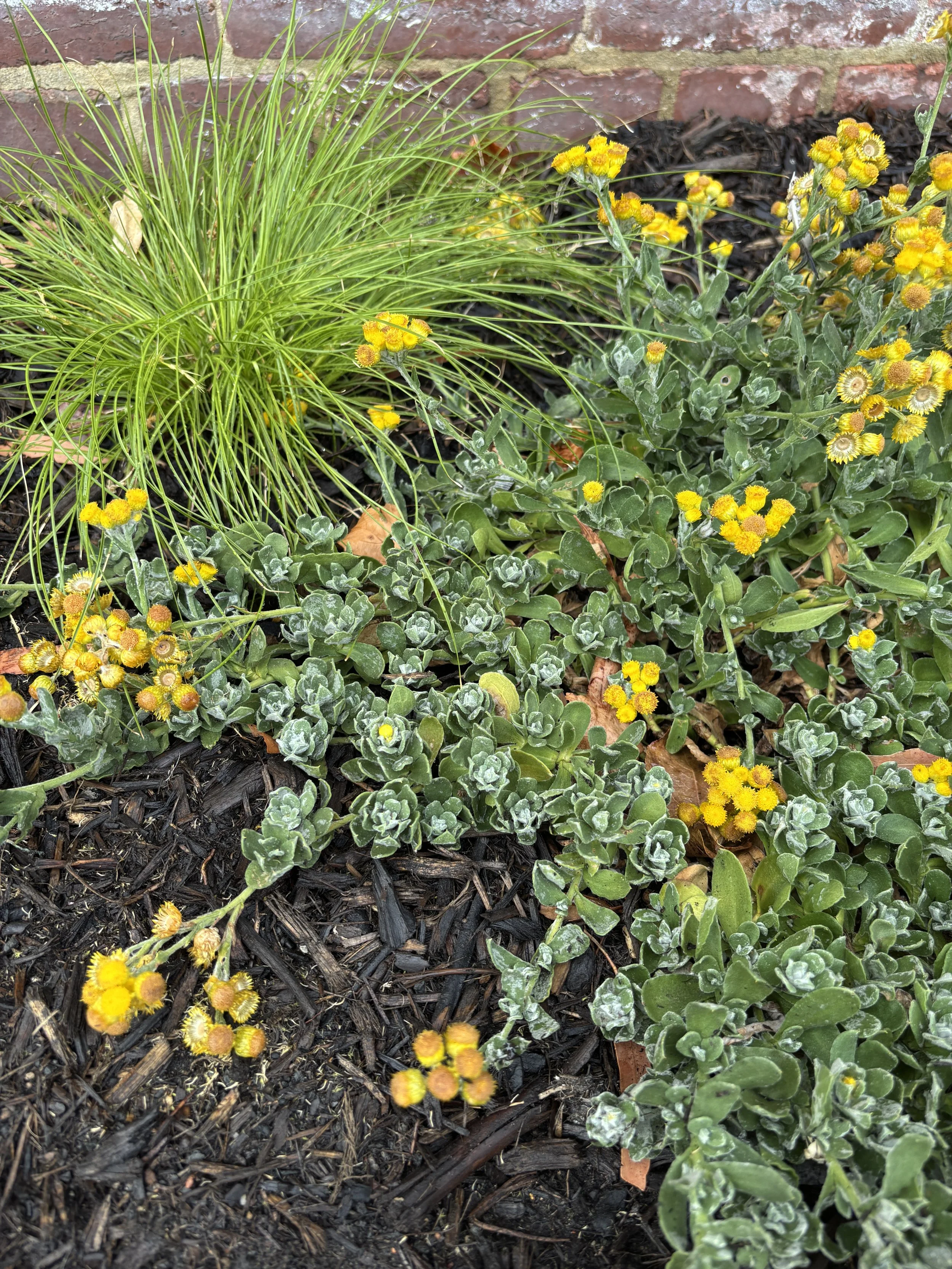
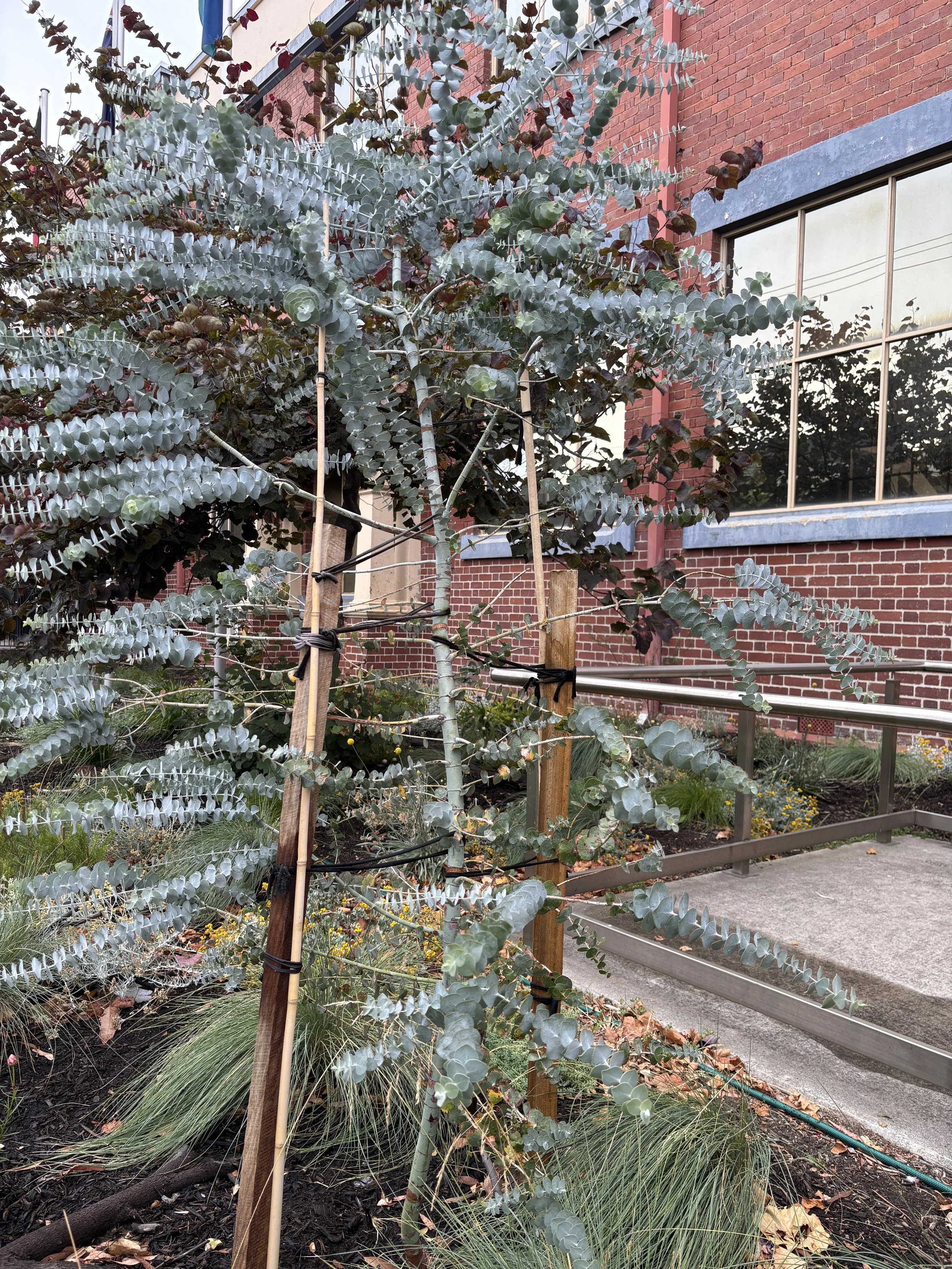
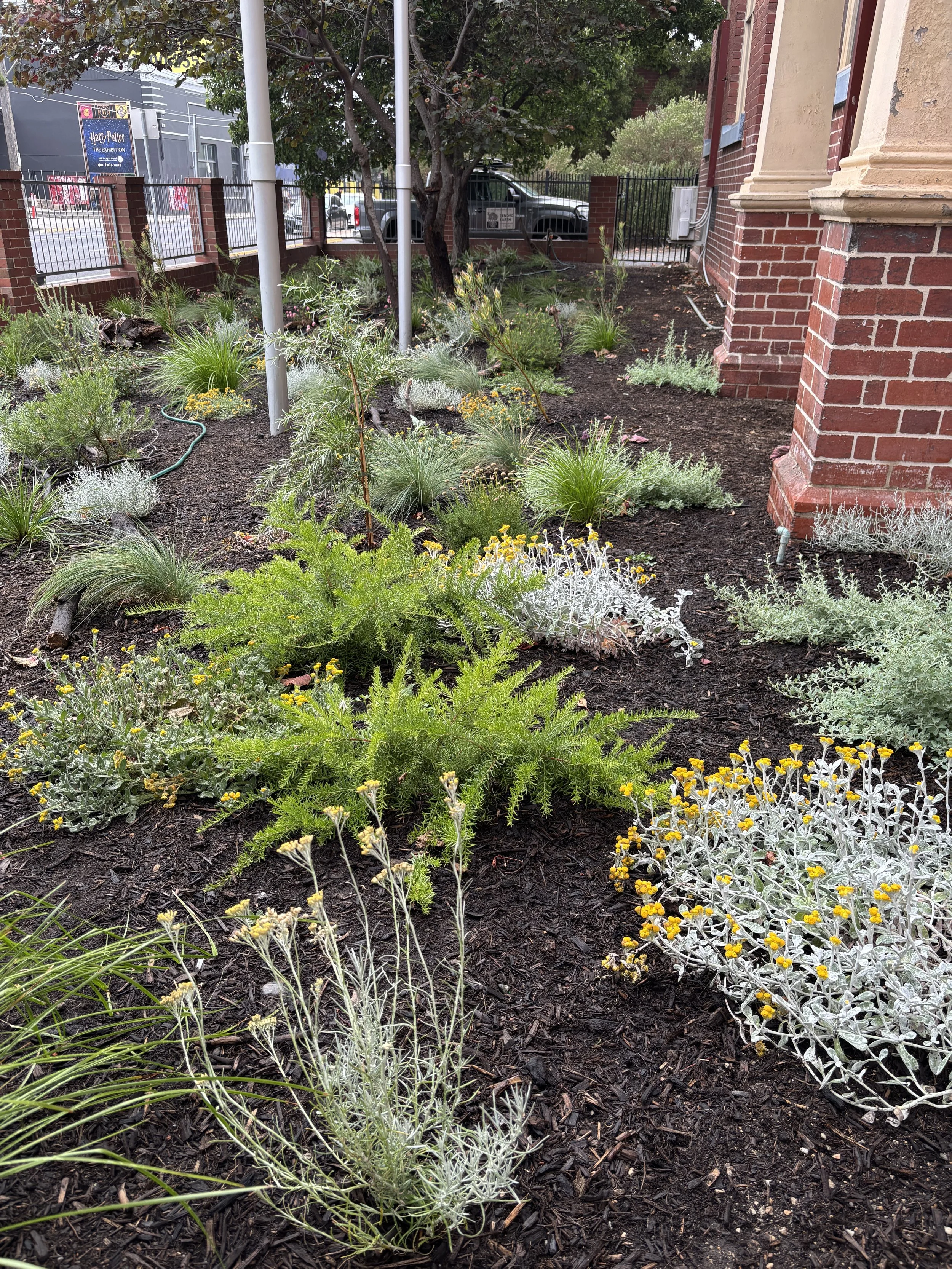
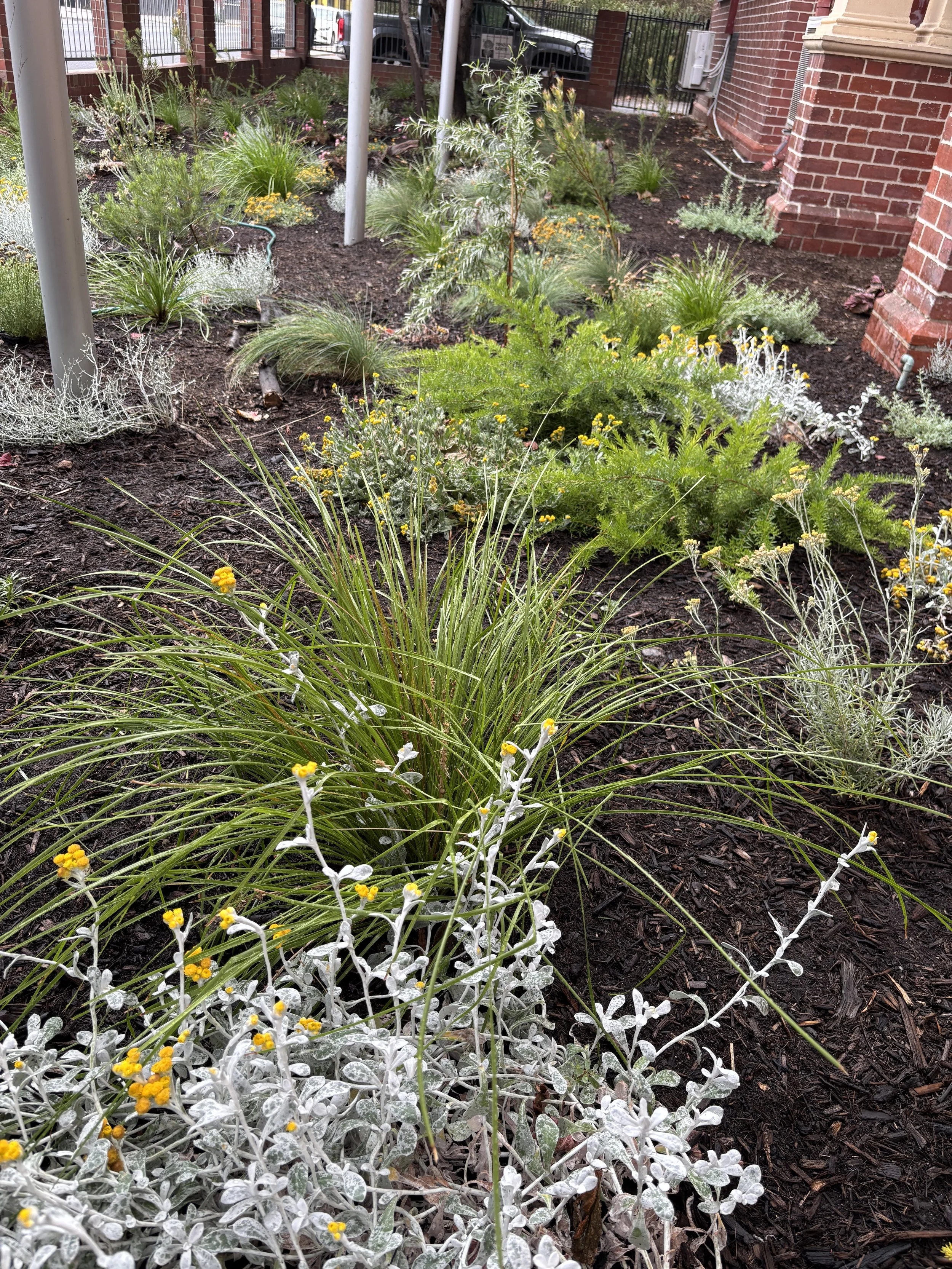
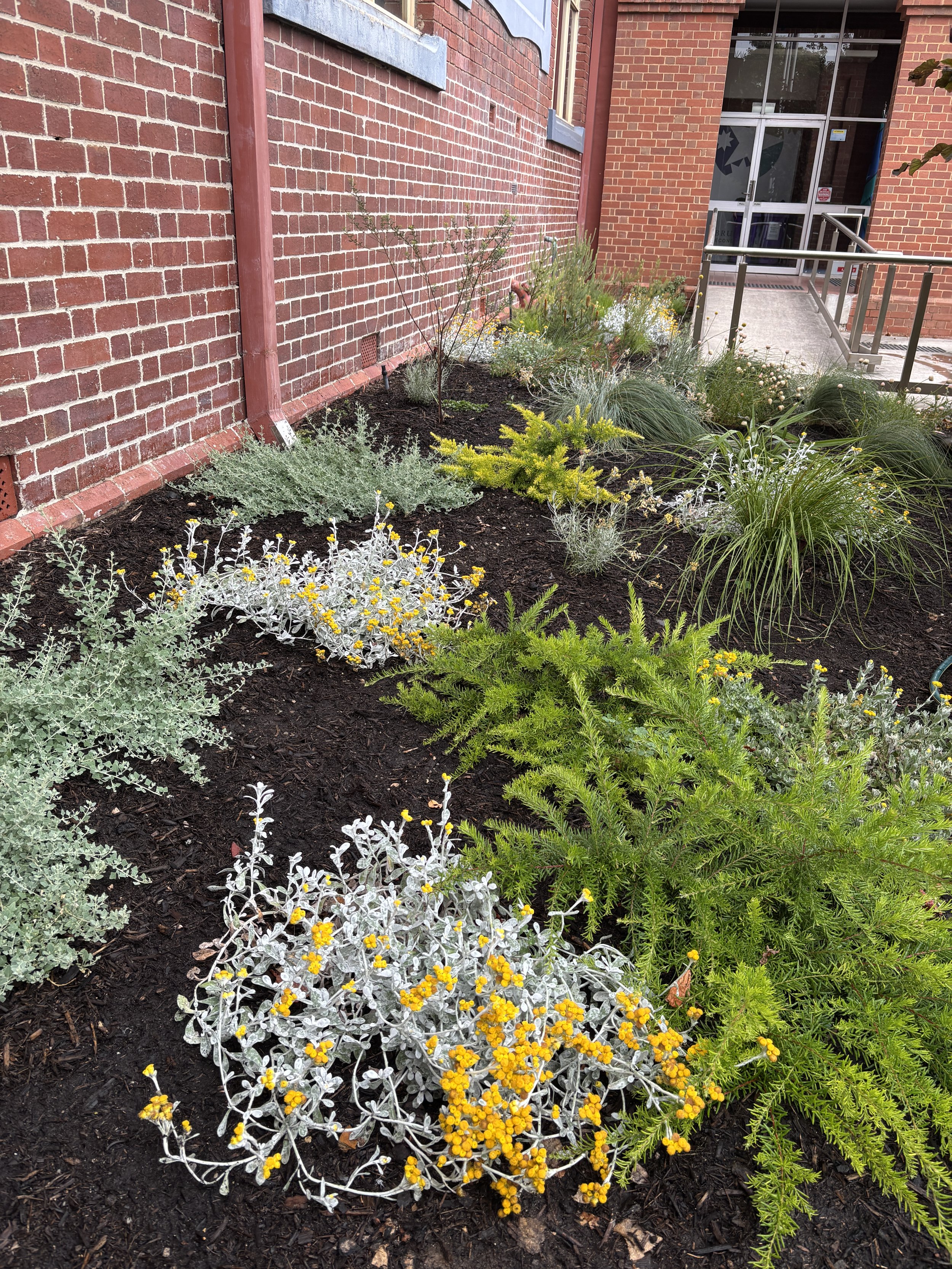
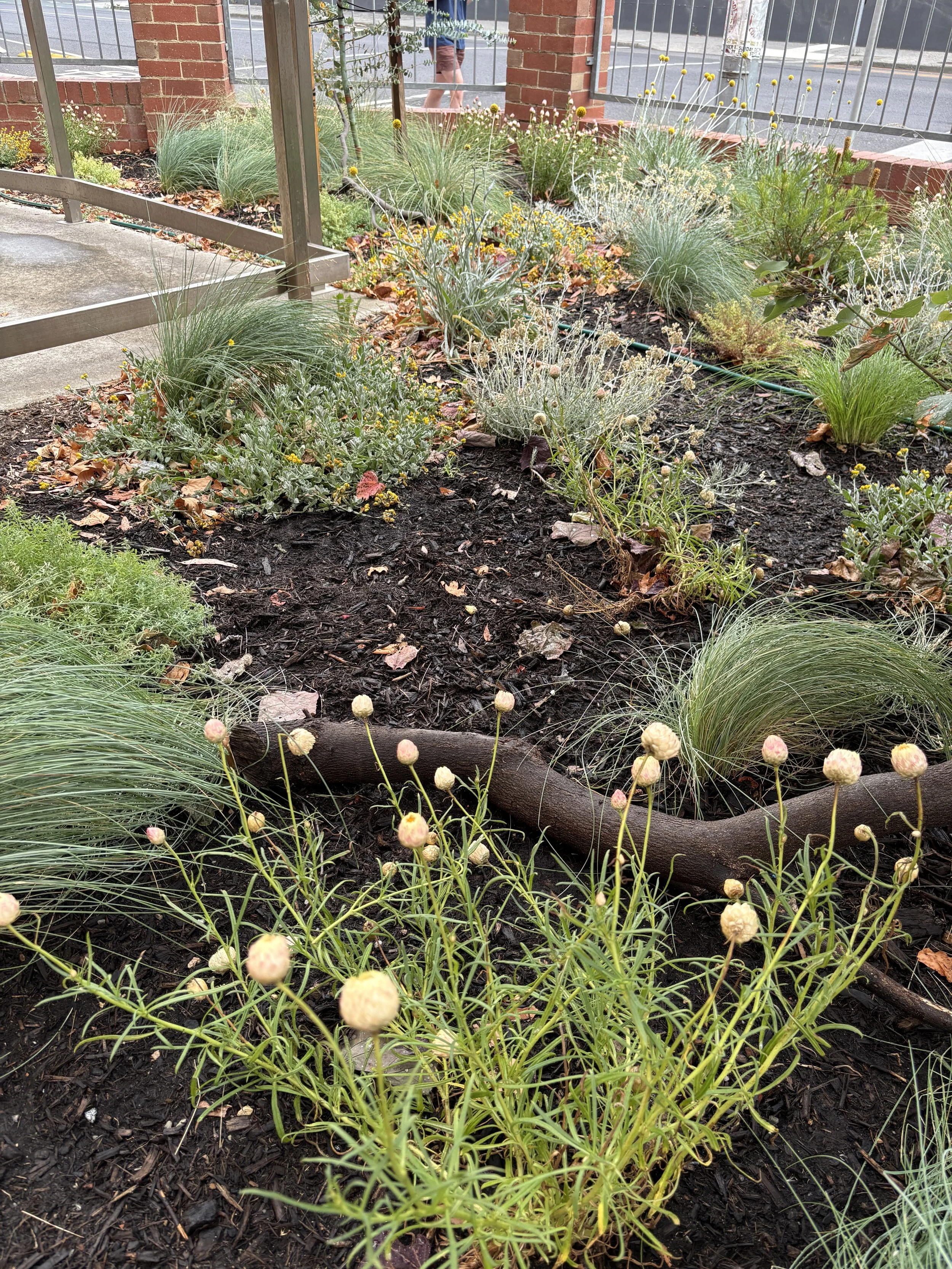
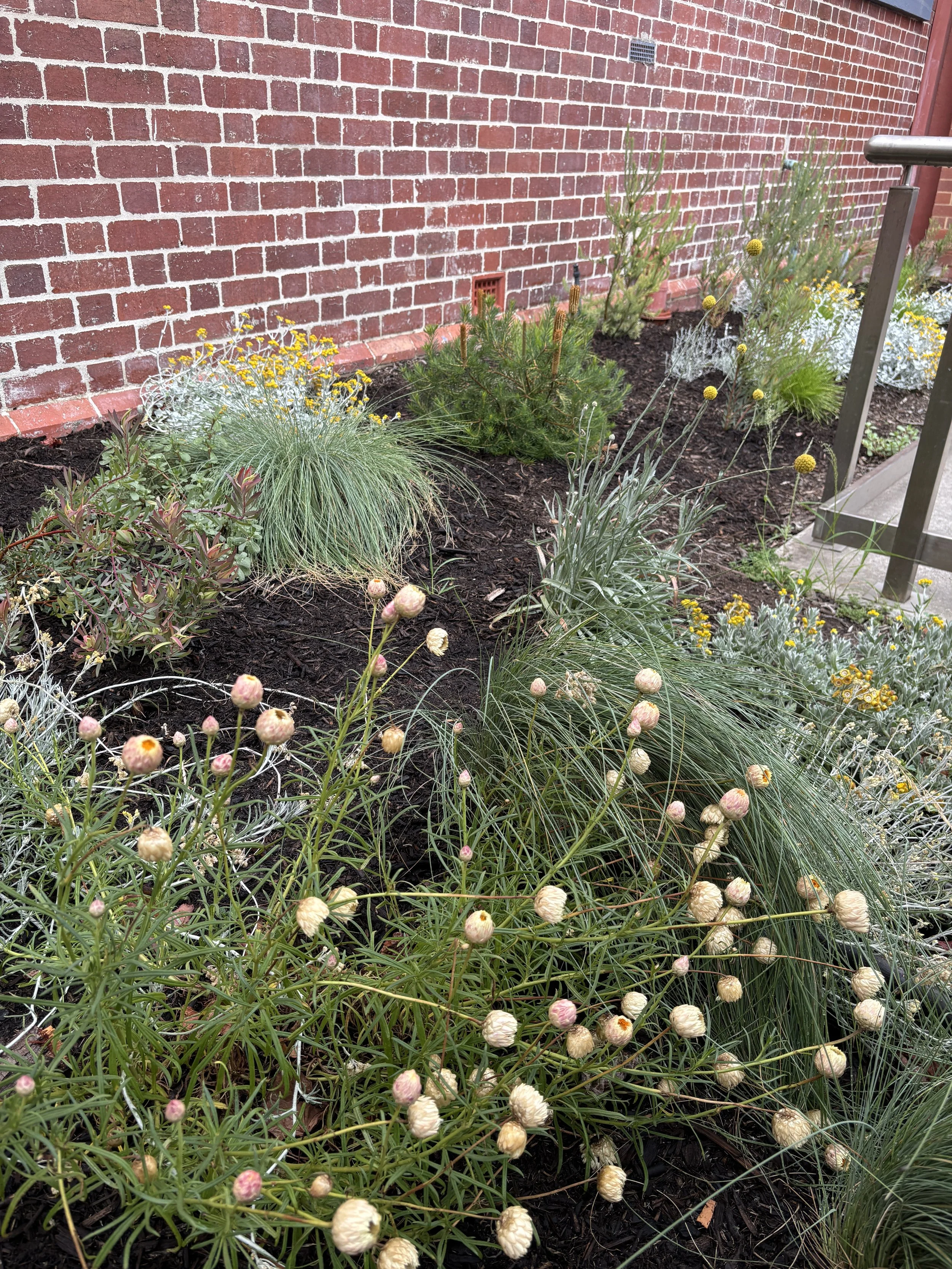
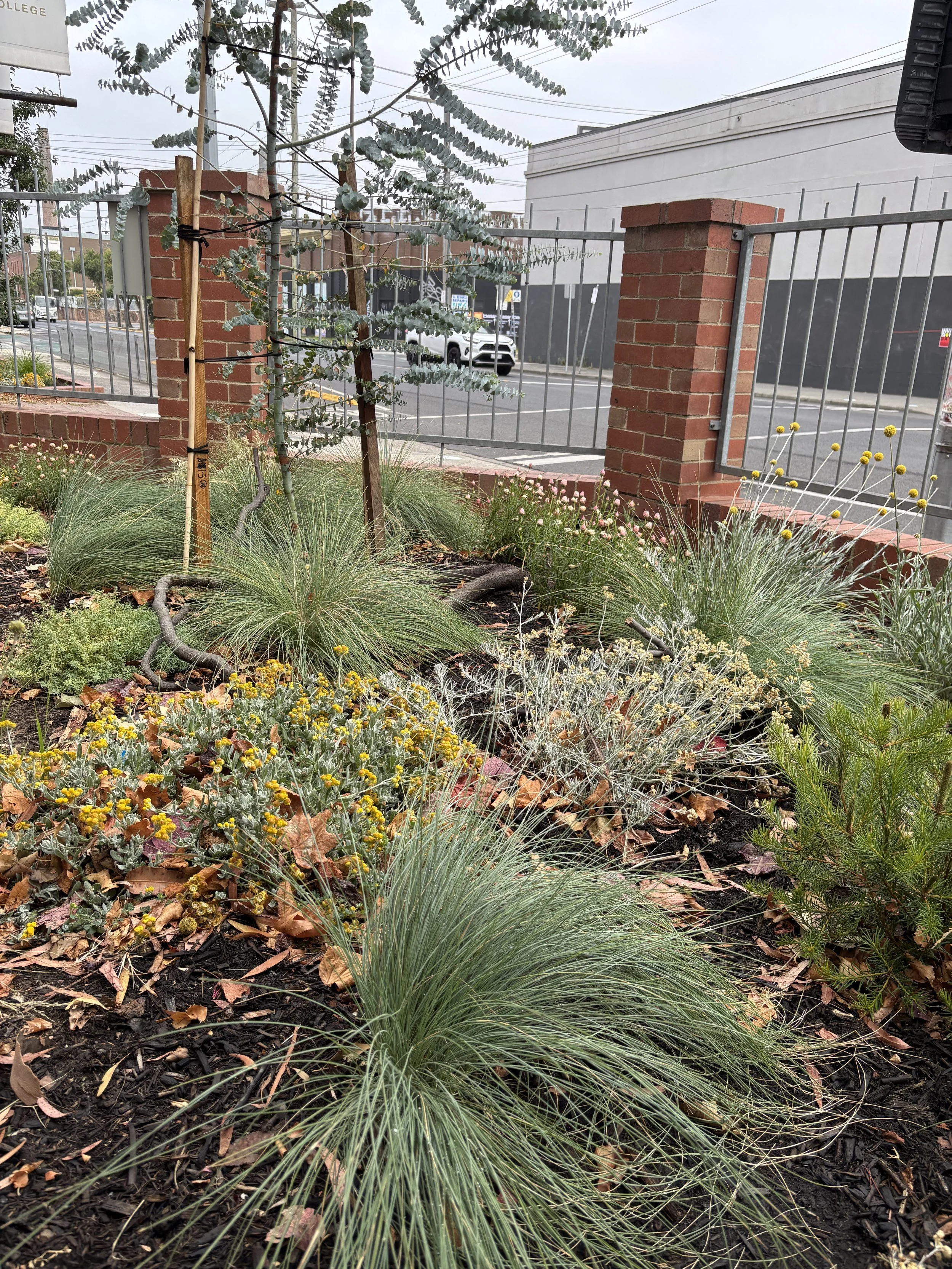
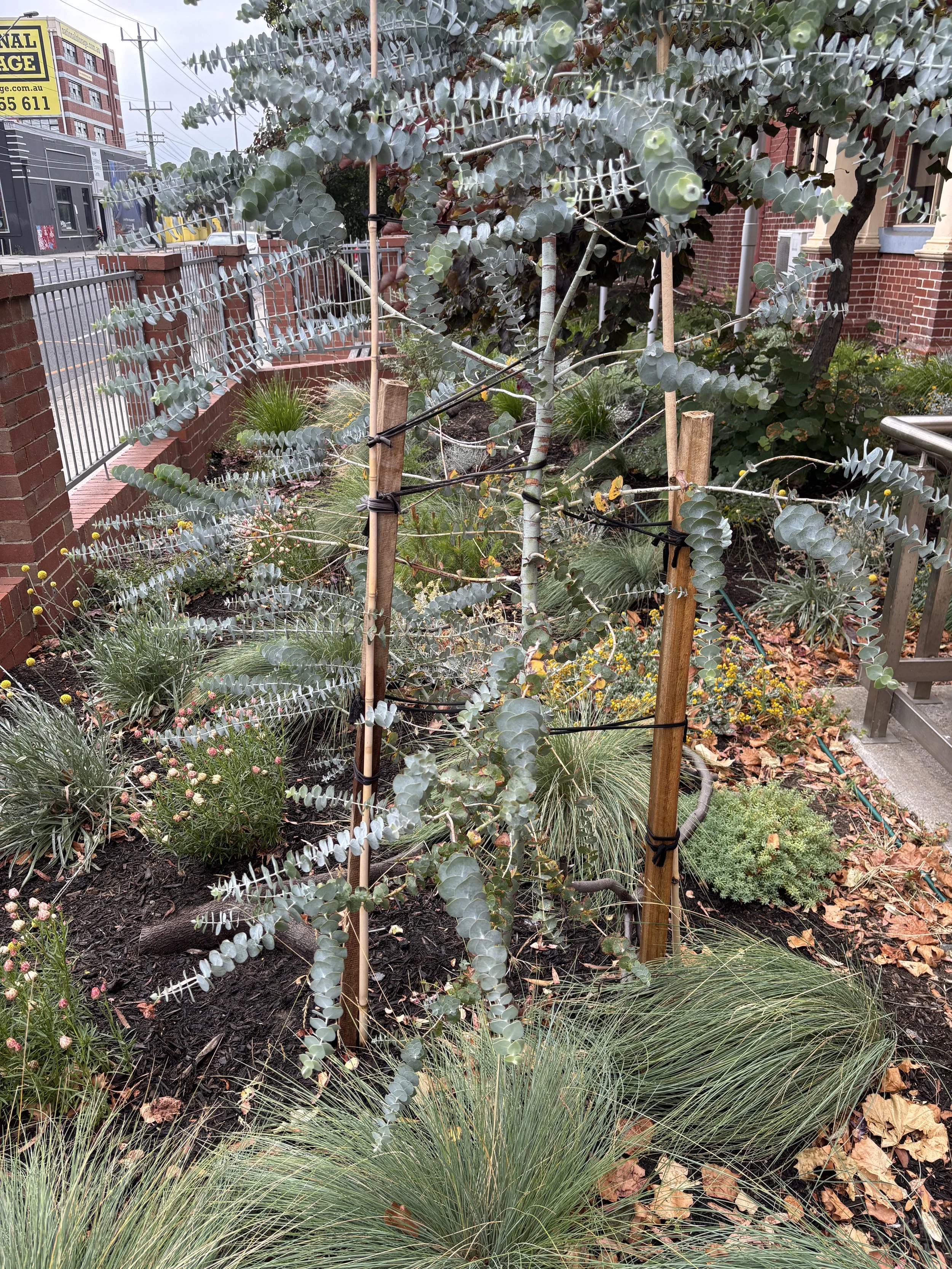
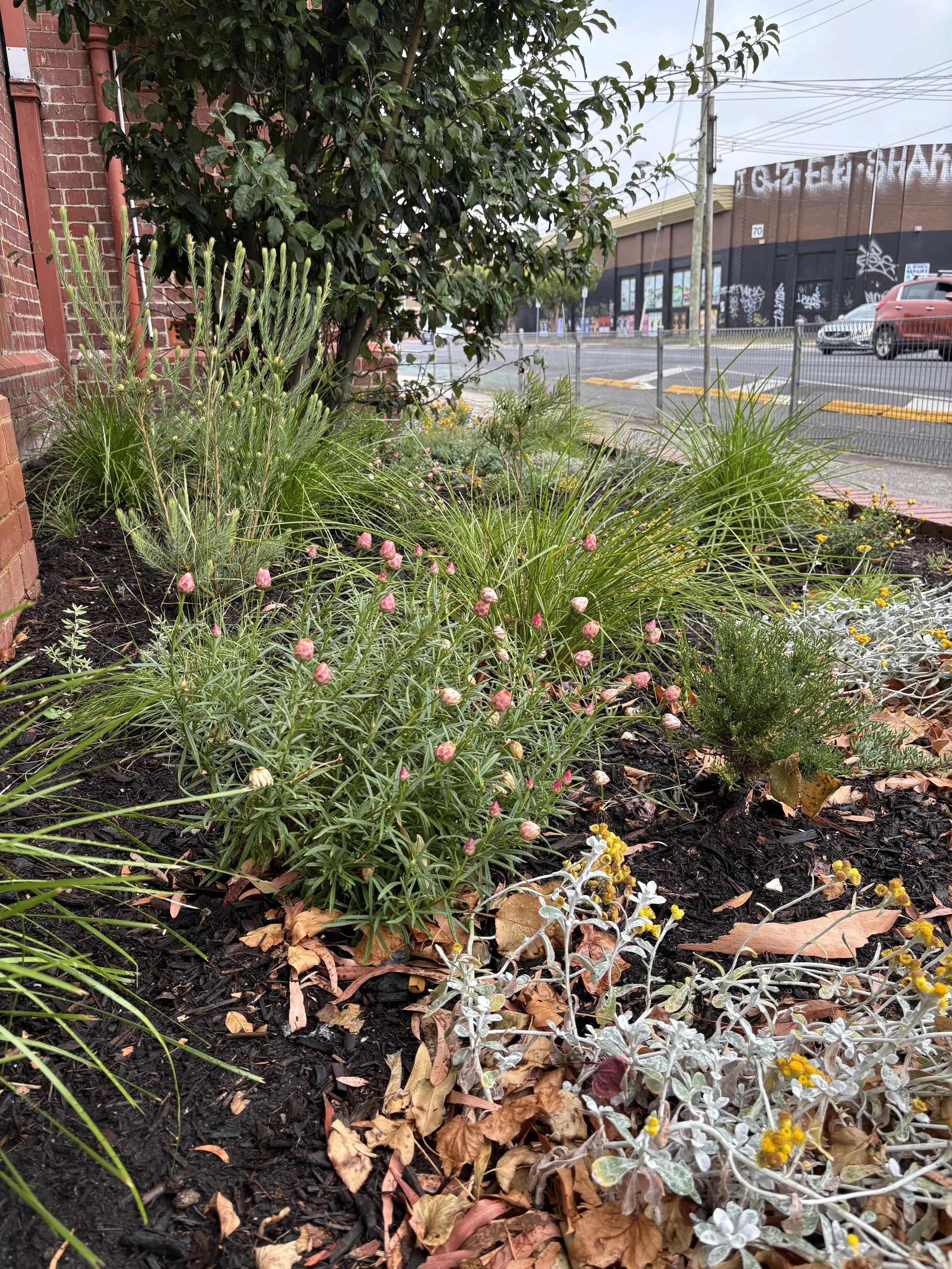
Rewilding in Action
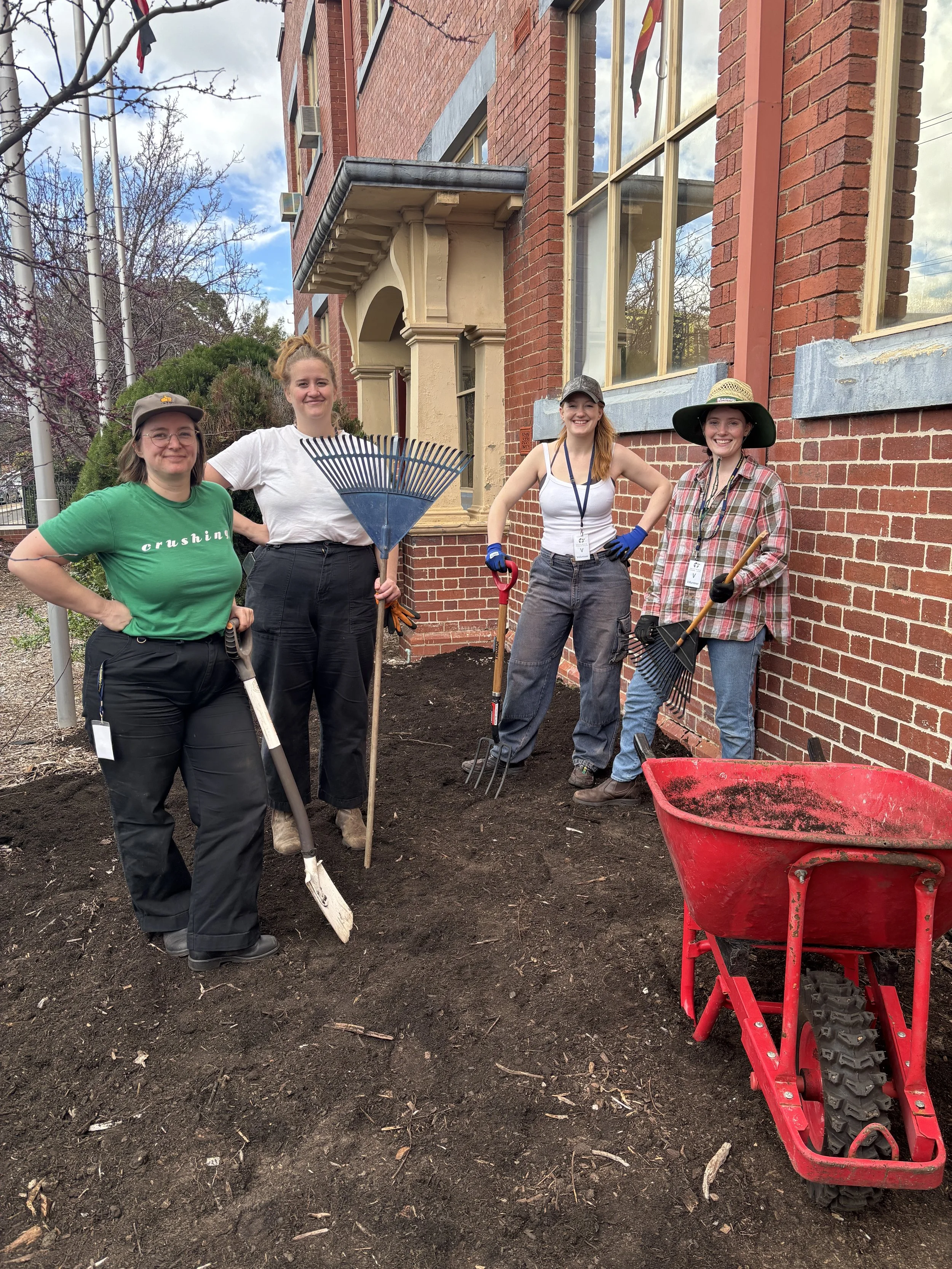
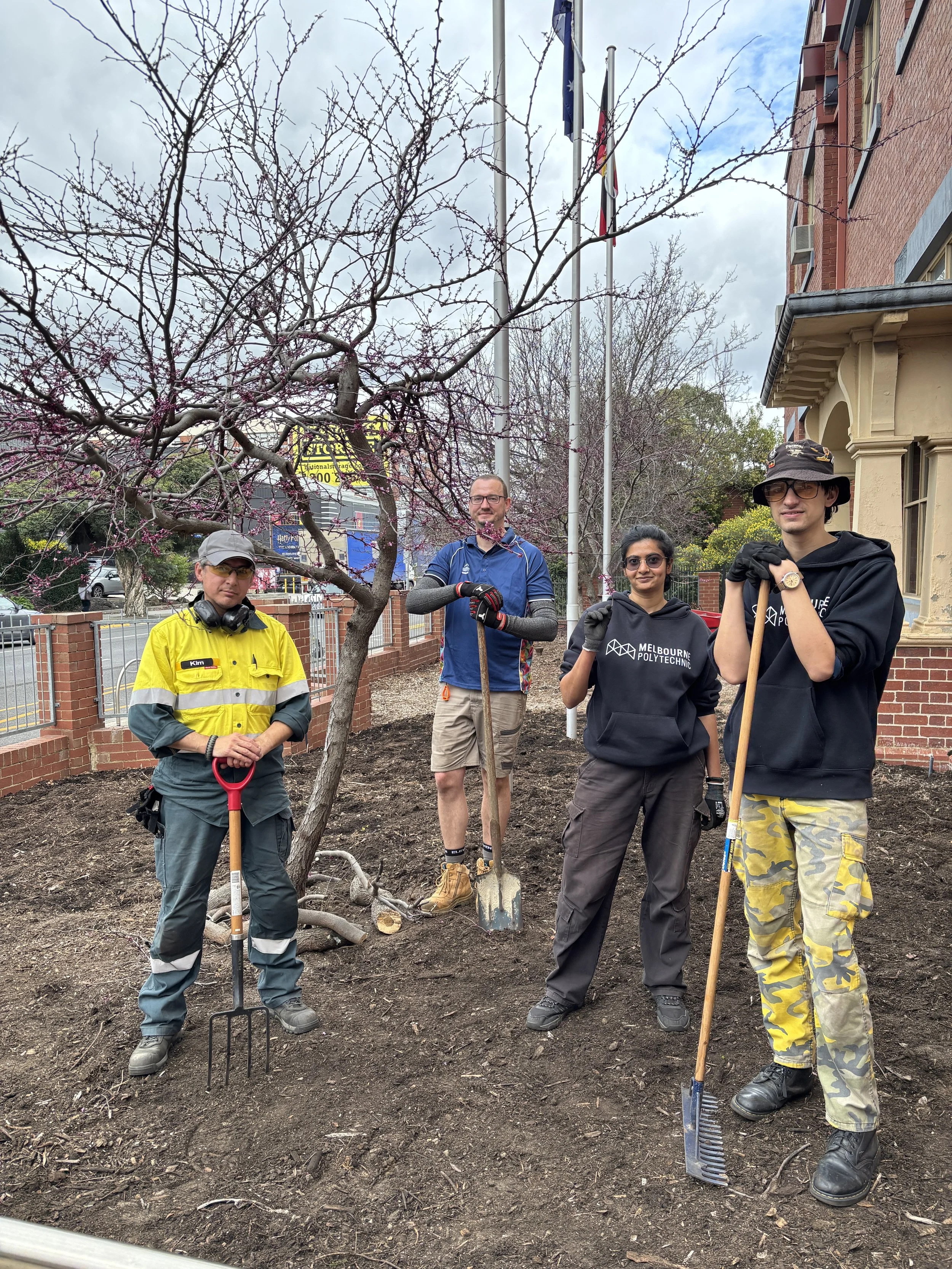
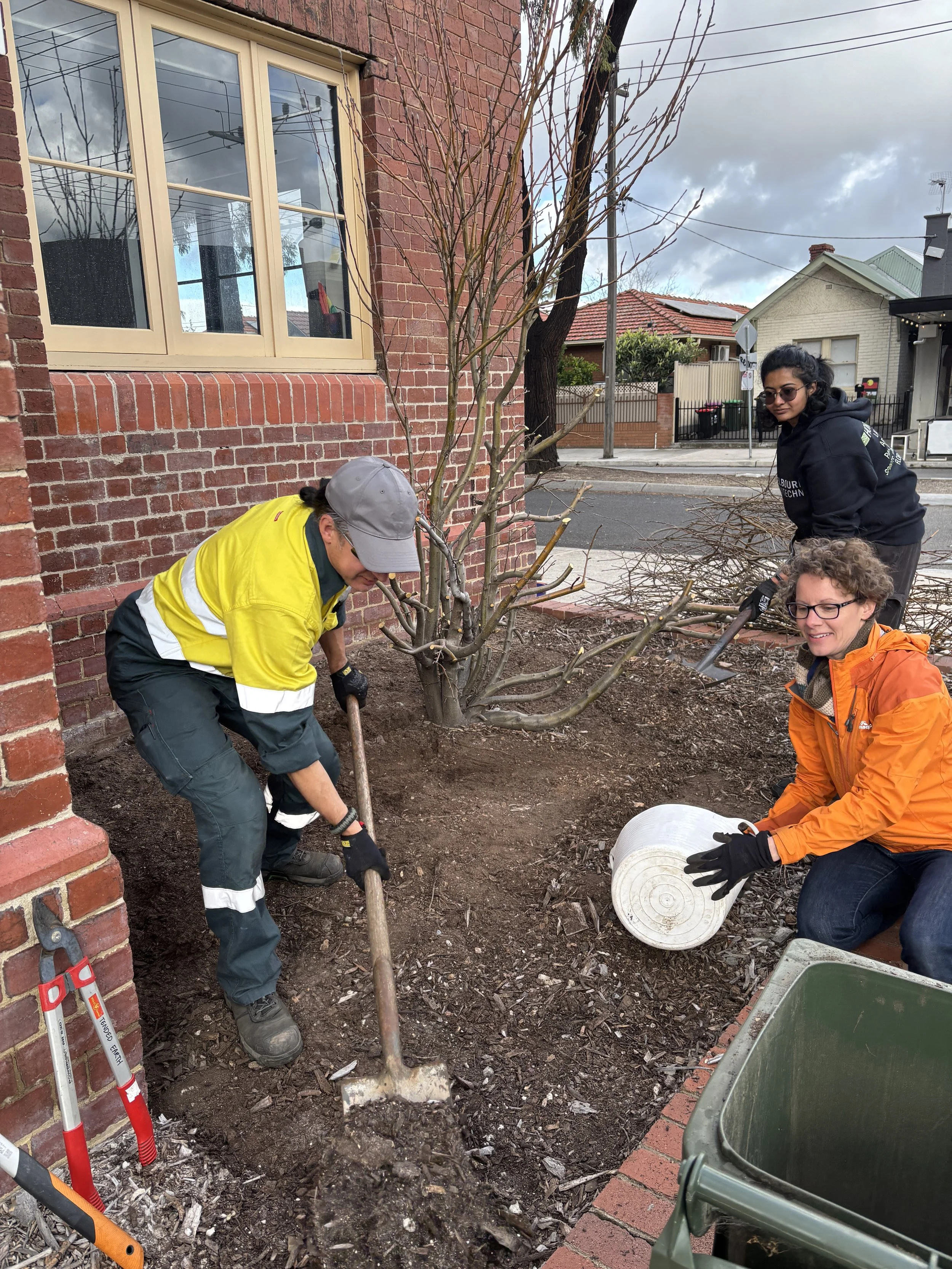
Phase 1: Site preparation
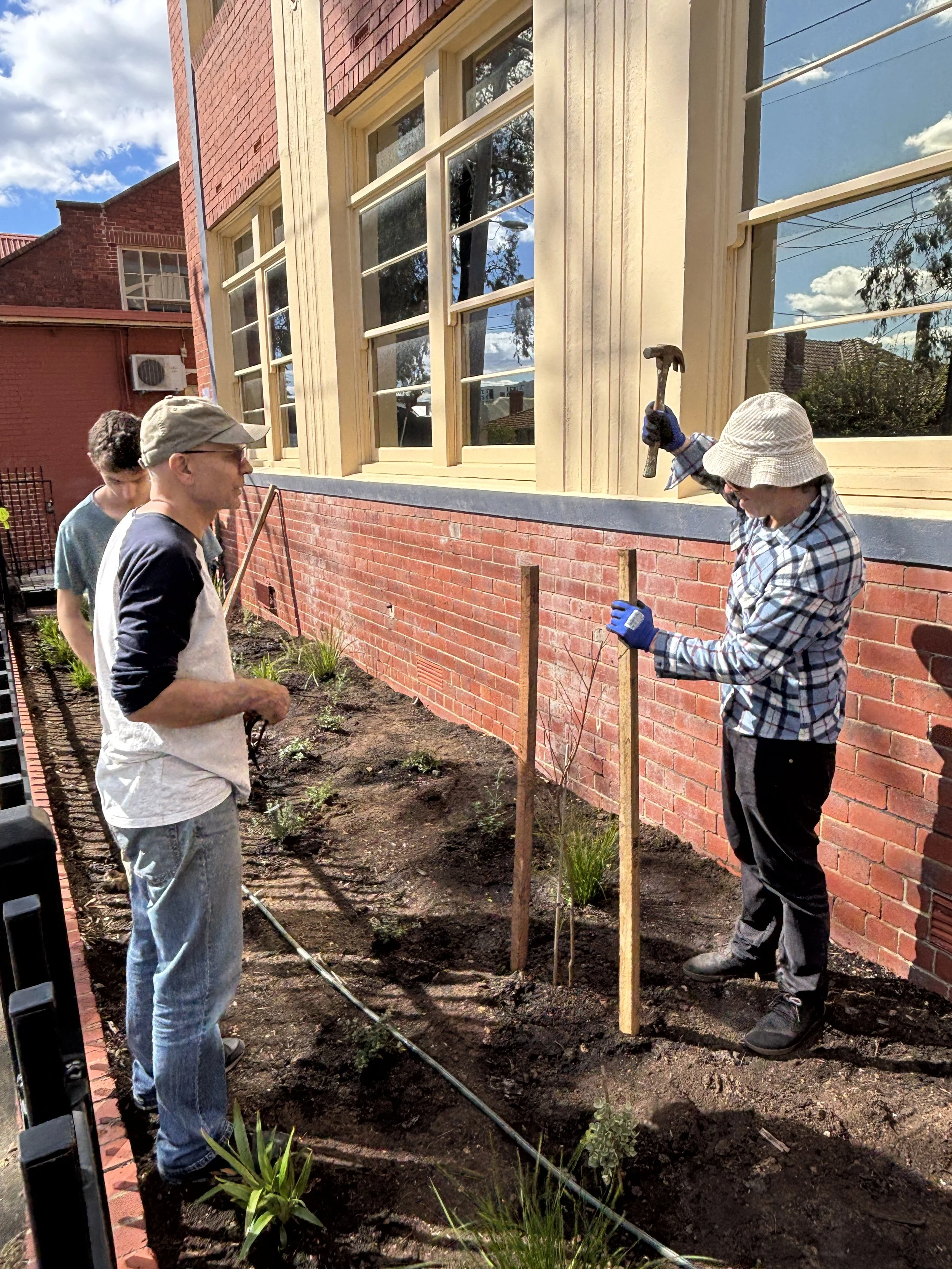
Horticultural TAFE students - Meredith, Celia, Immy, Chloe, Kim, Rory, Vee, and George - were supervised for the preparation of the sites for planting.
Weeds removed
Soil improved with compost and zeolite
BSC Grounds Staff assisted with removal of unwanted vegetation, and the steel tree cages that were trapping existing trees.
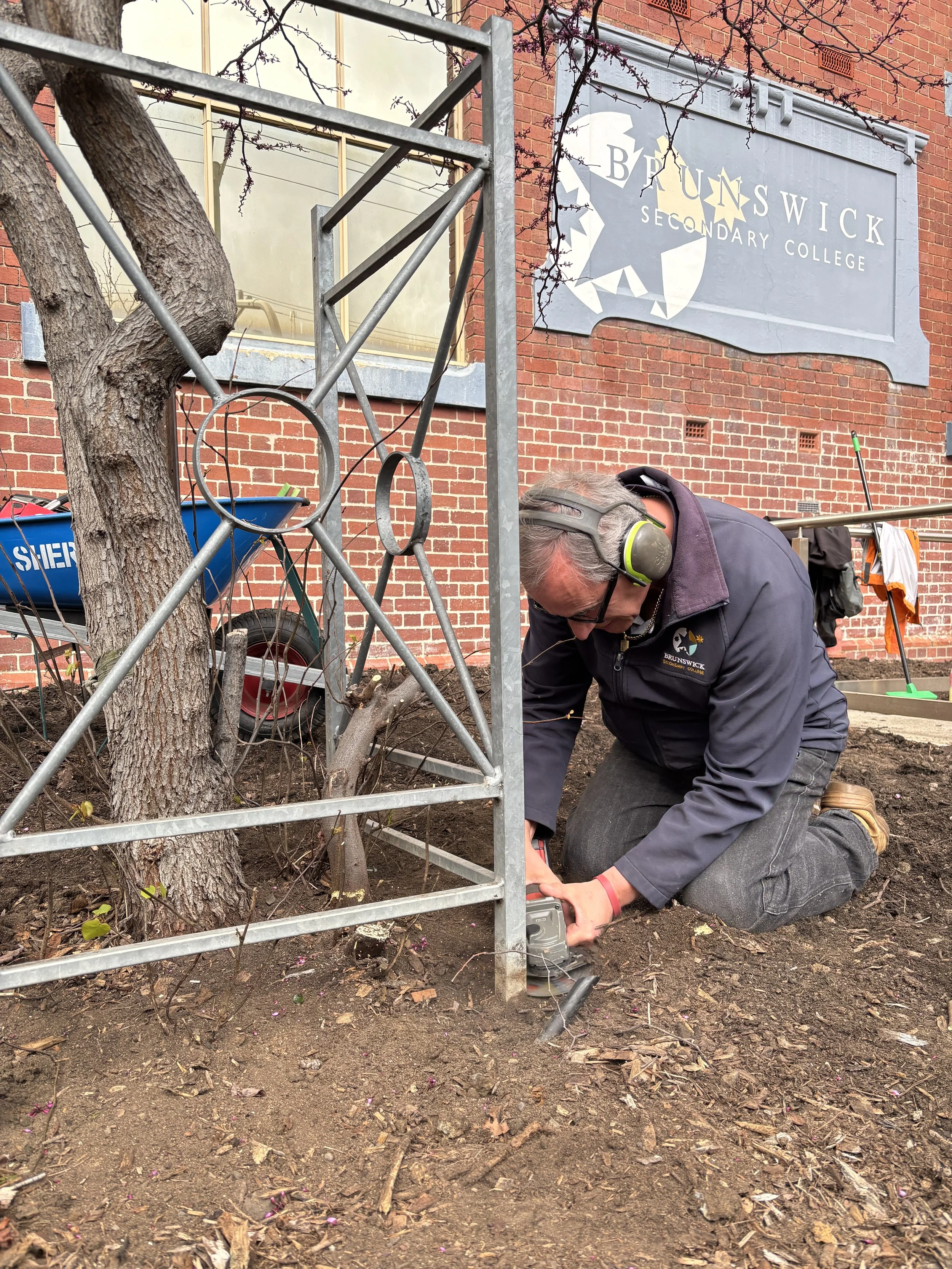
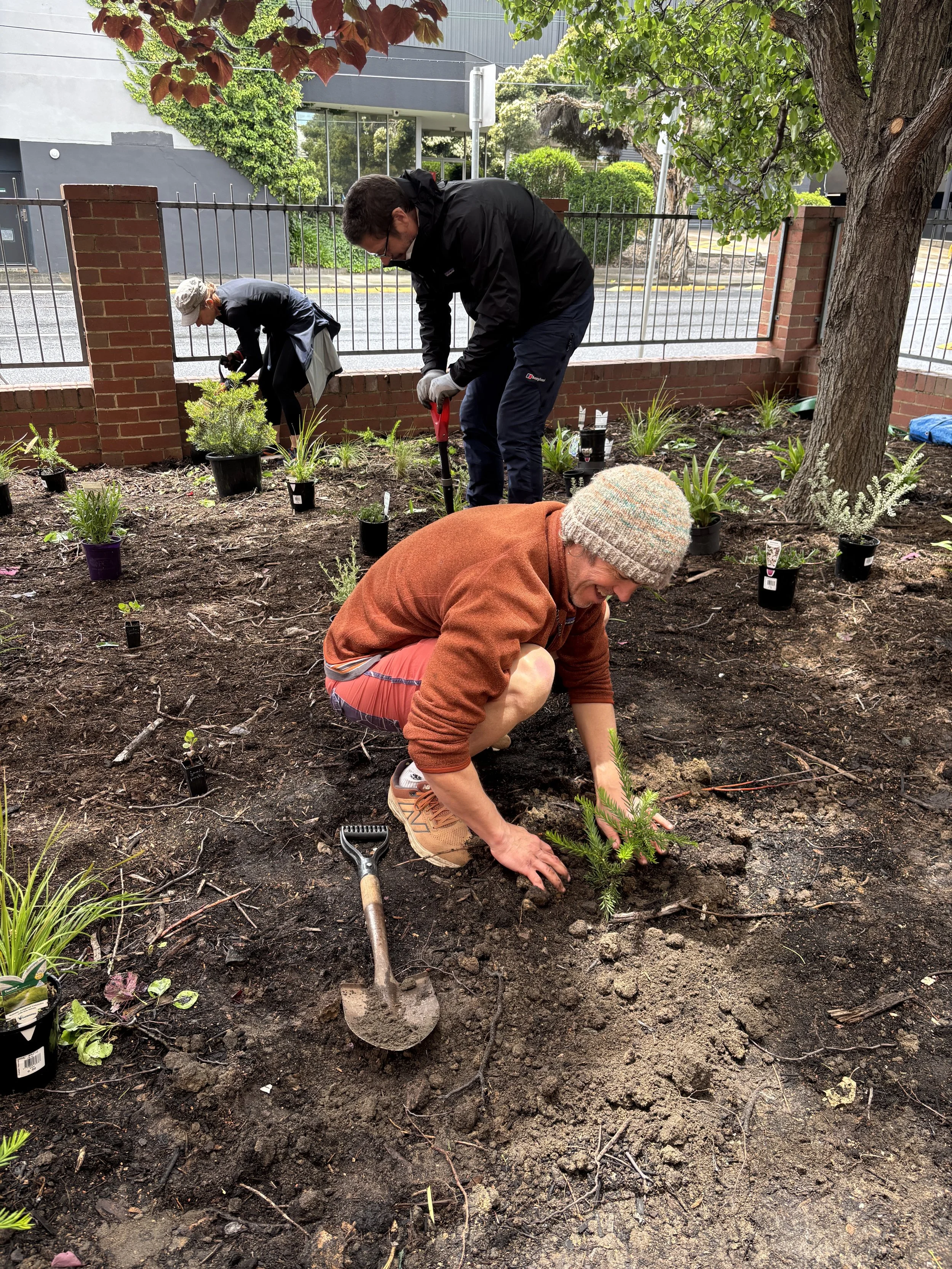
Phase 2: Community Planting Day
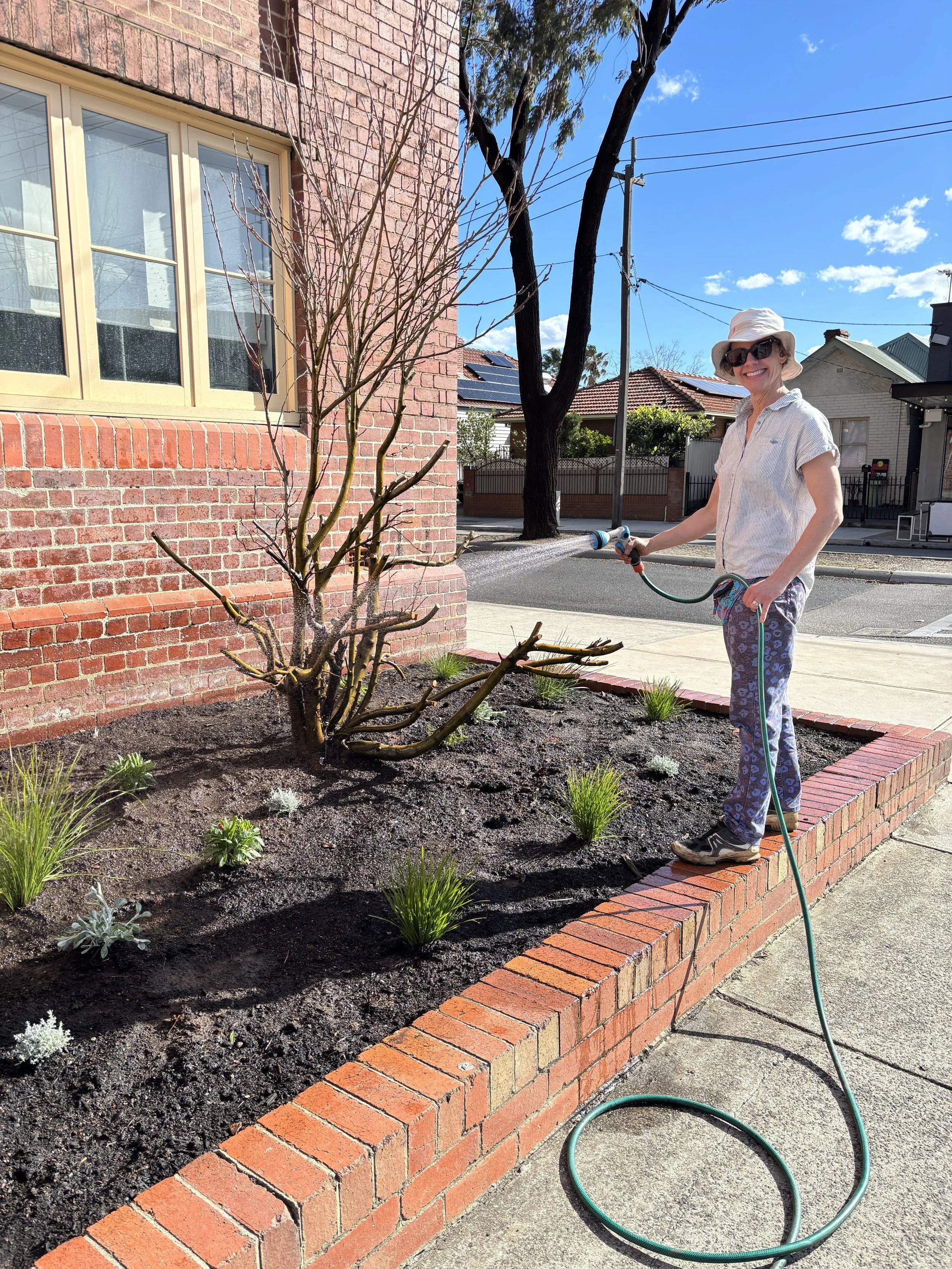
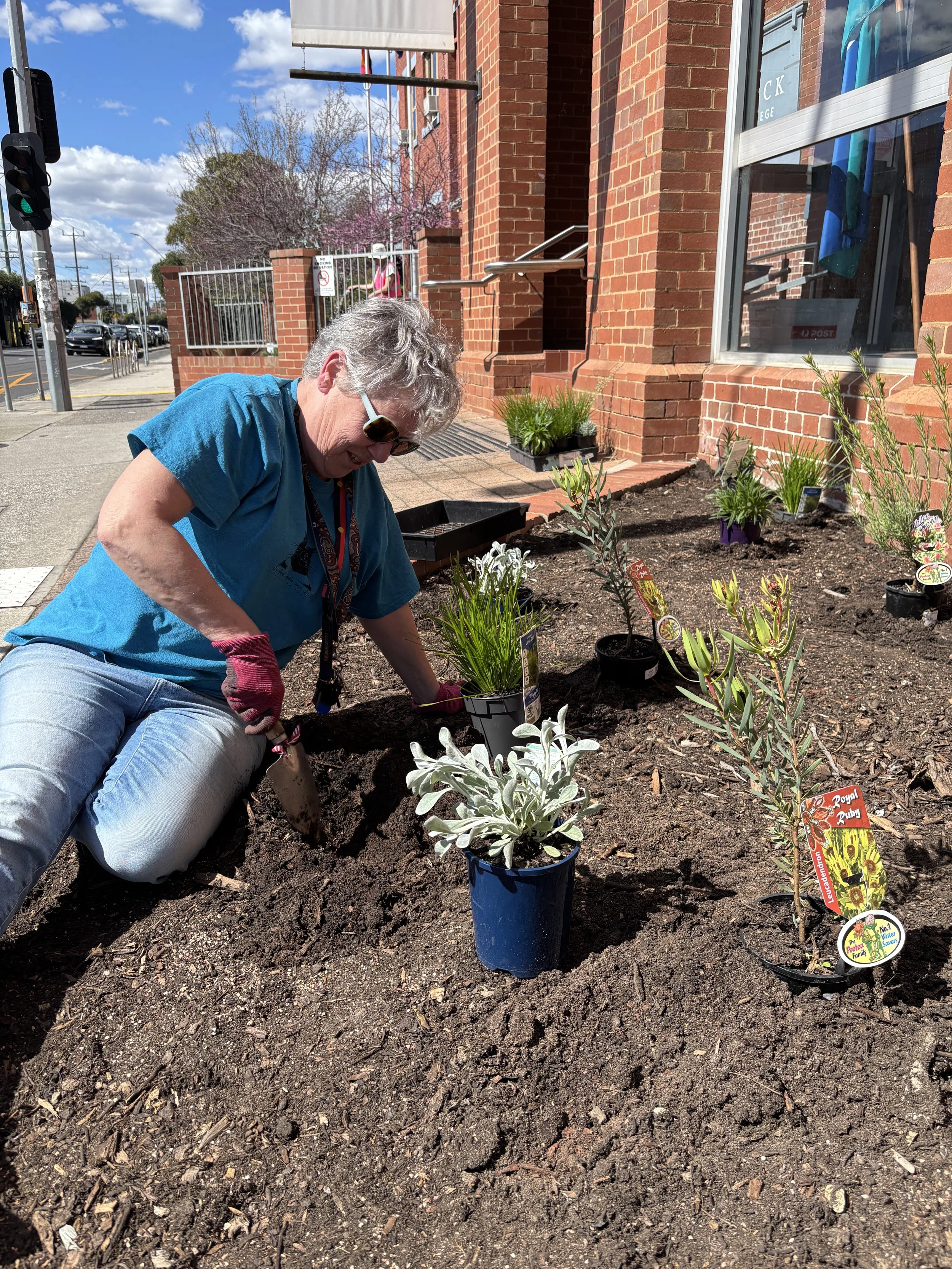
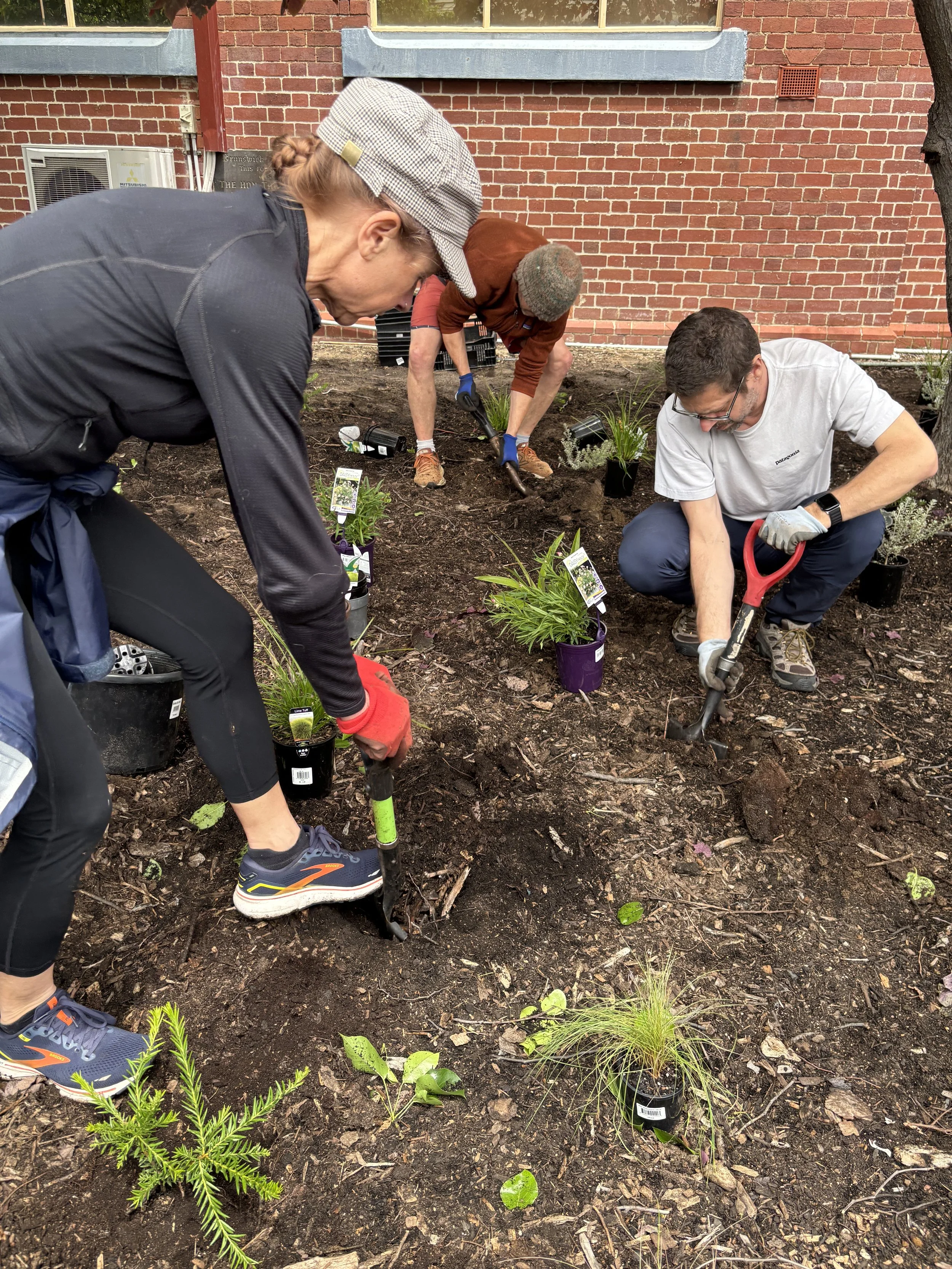
BSC students, teachers, families and friends were invited to join us for a community planting day.
35 volunteers planted 250 new plants!
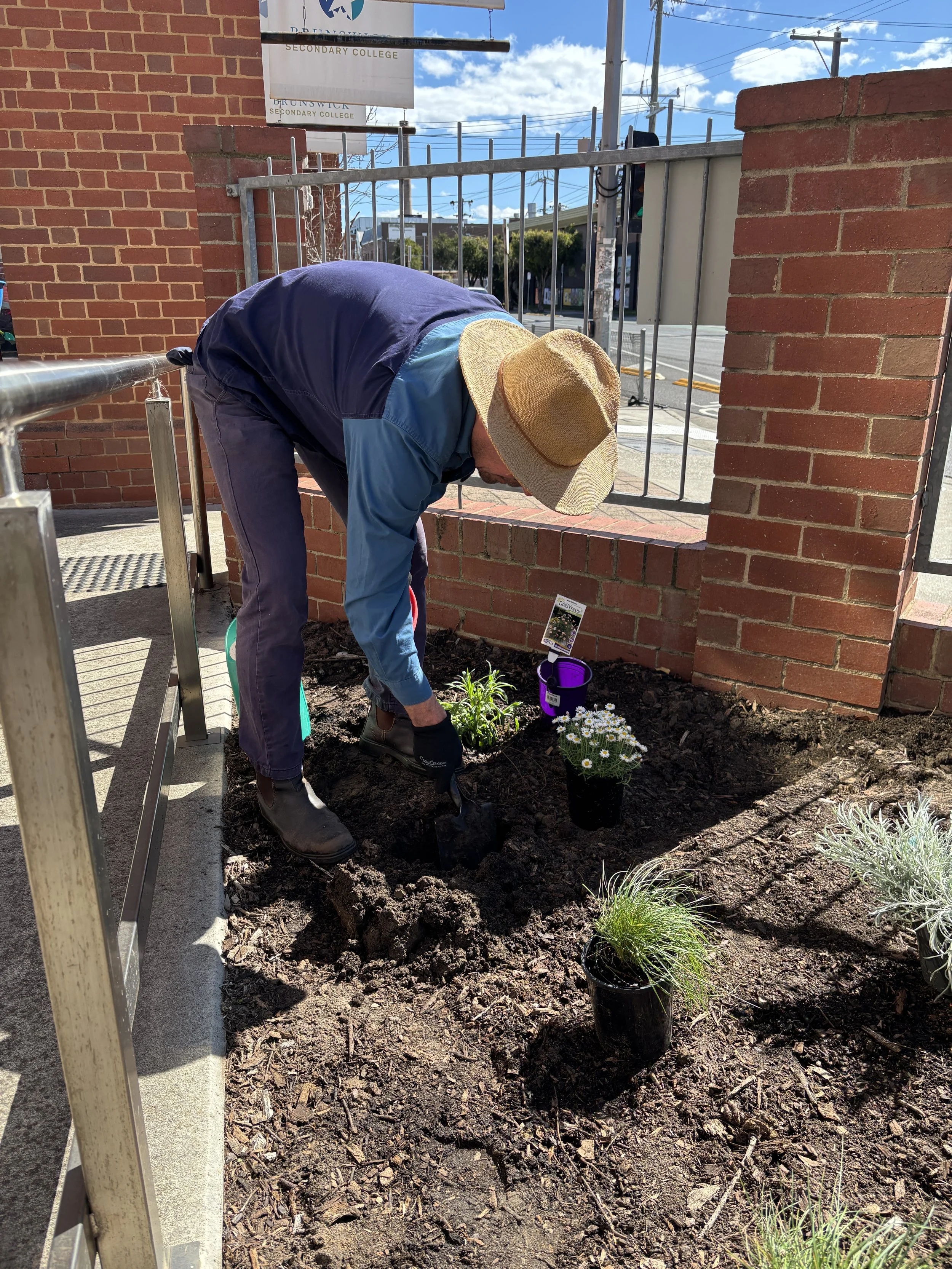
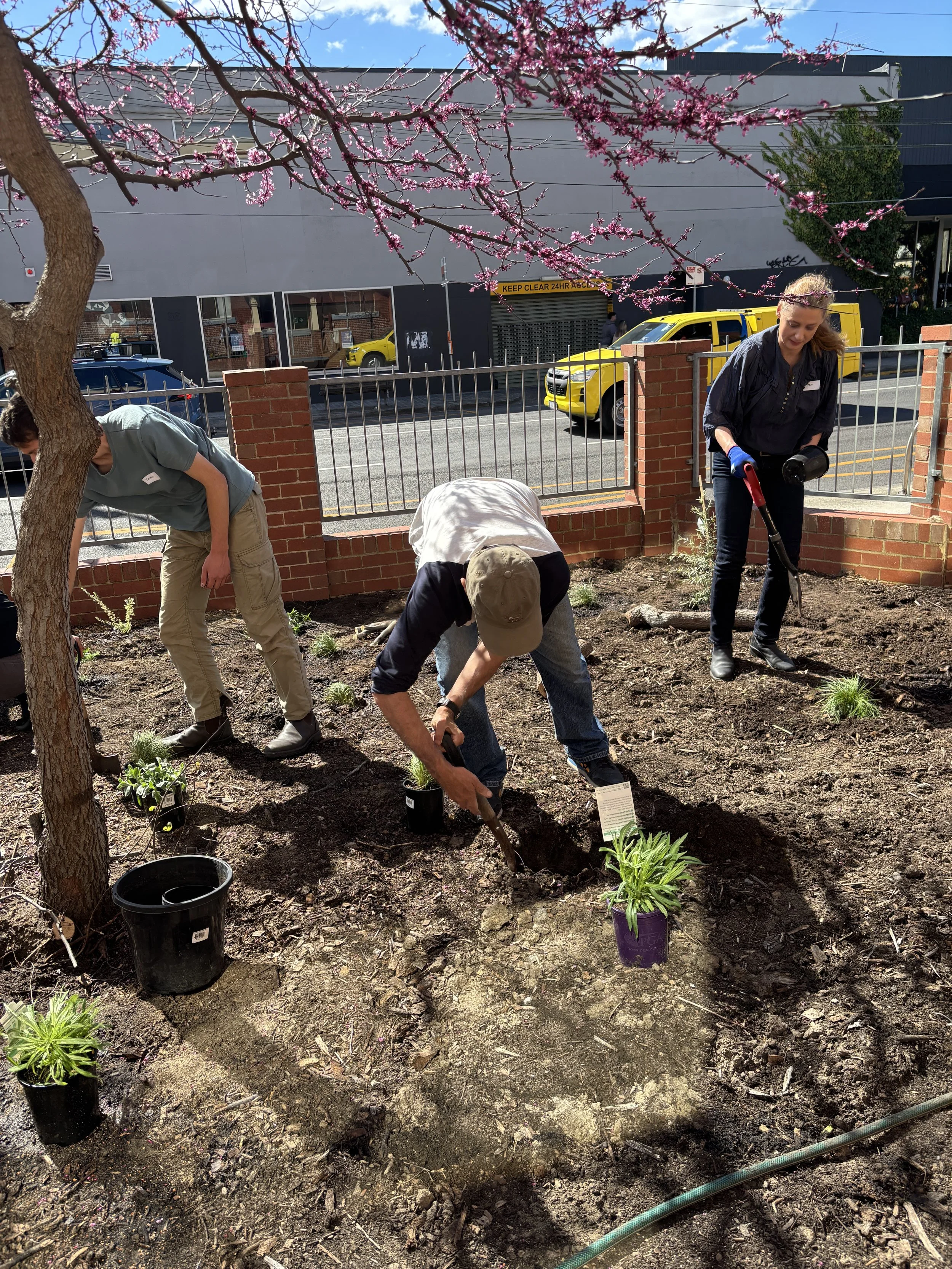
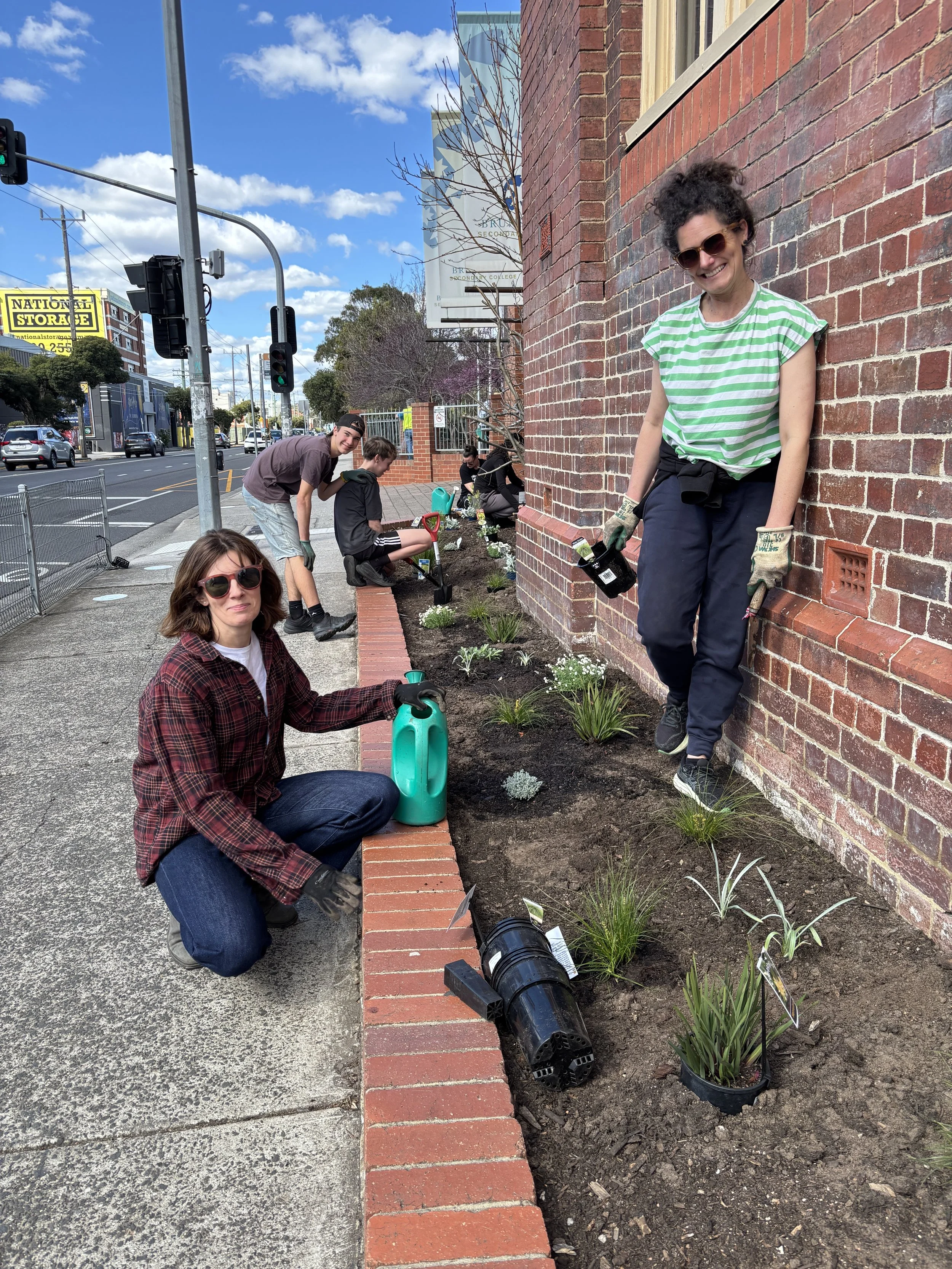
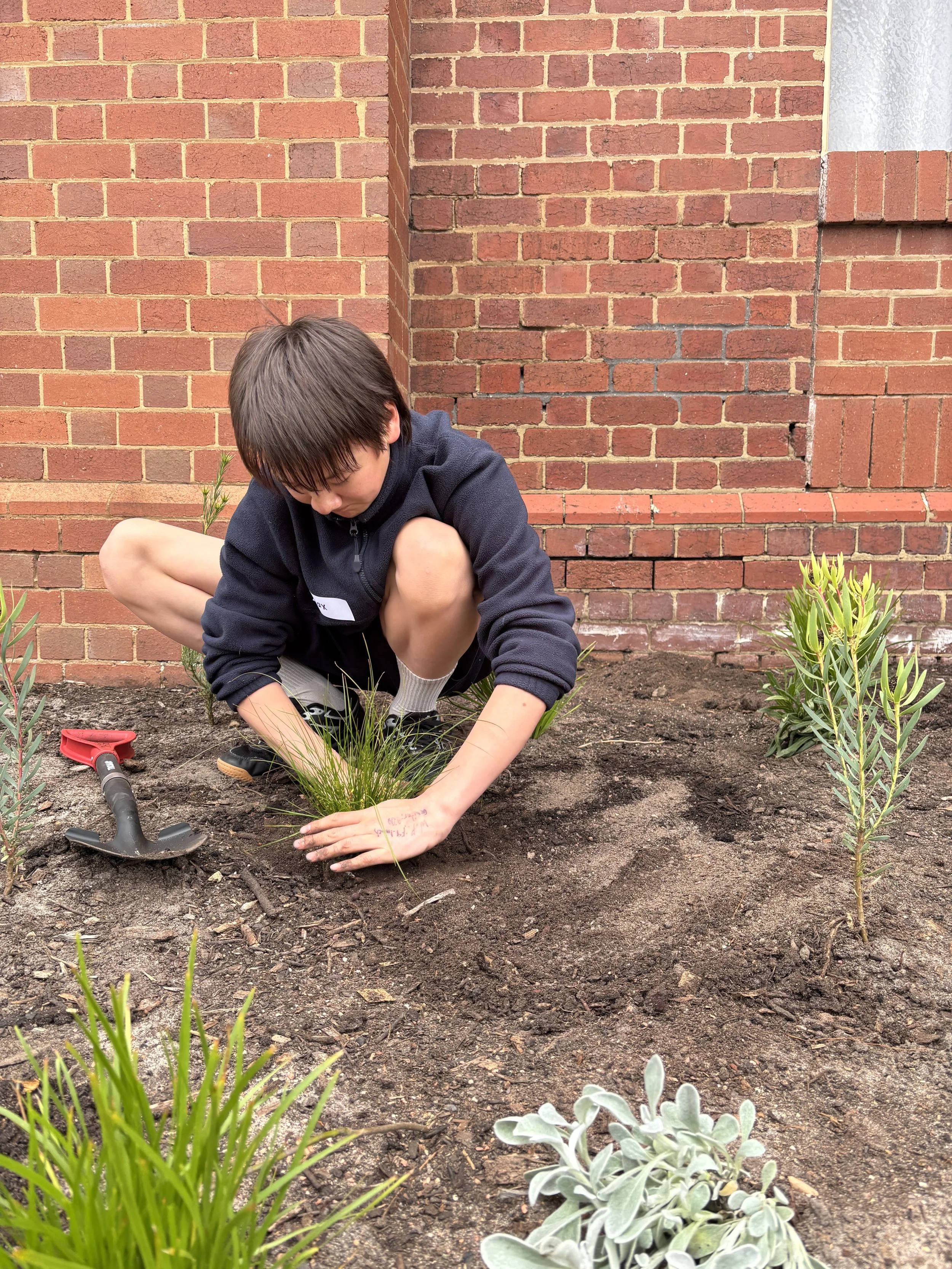
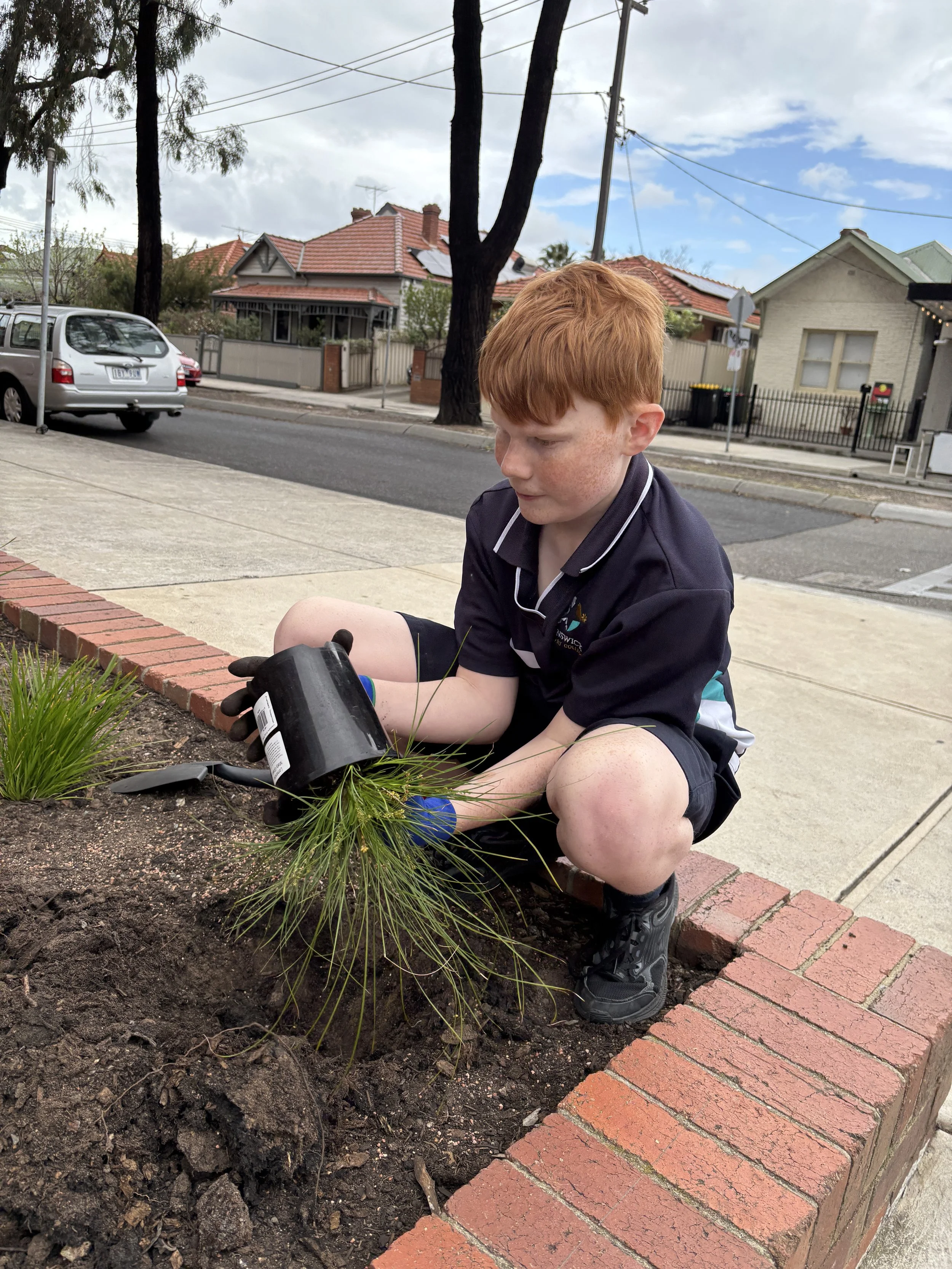
Phase 3: Student Planting Session
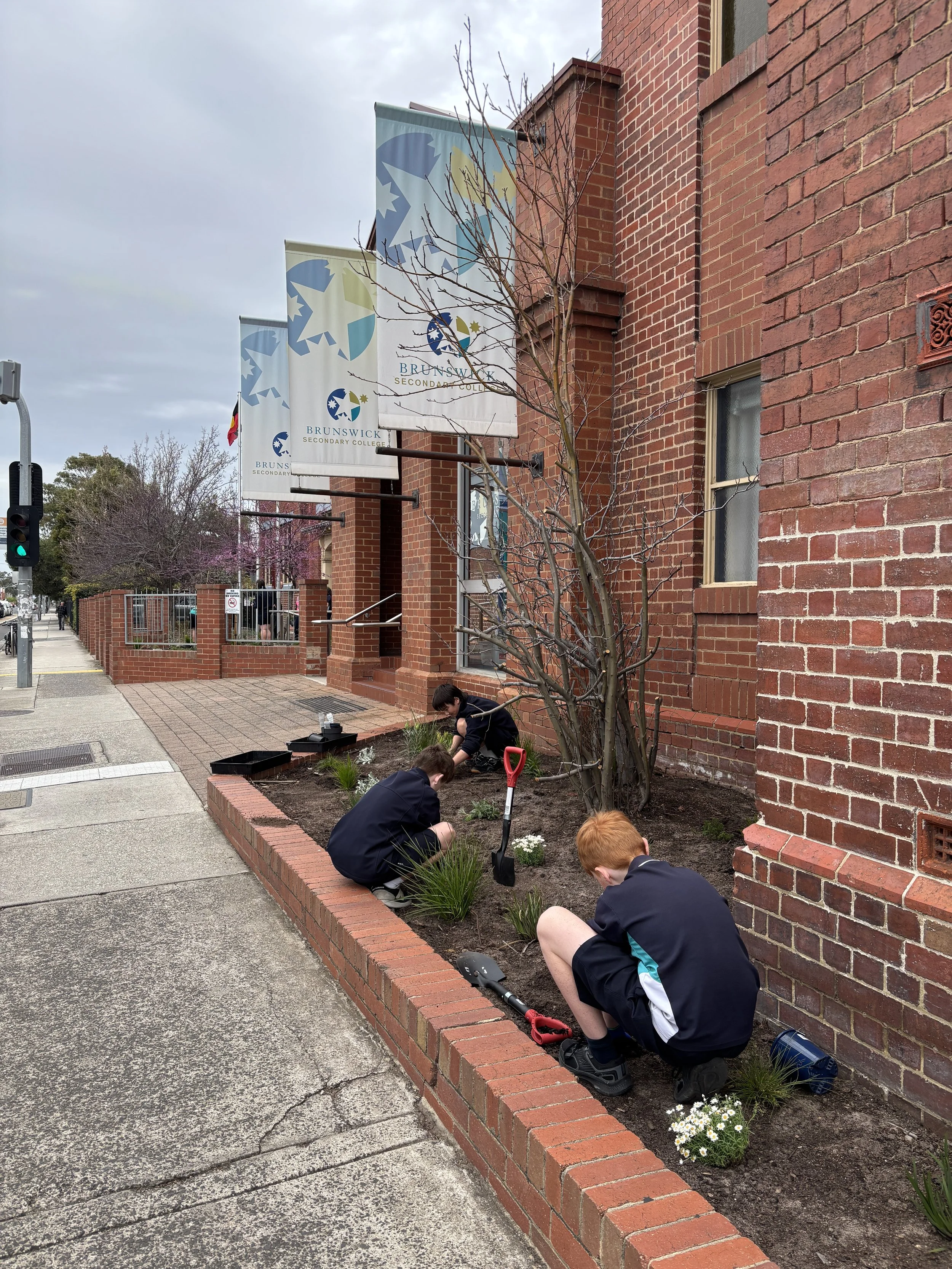
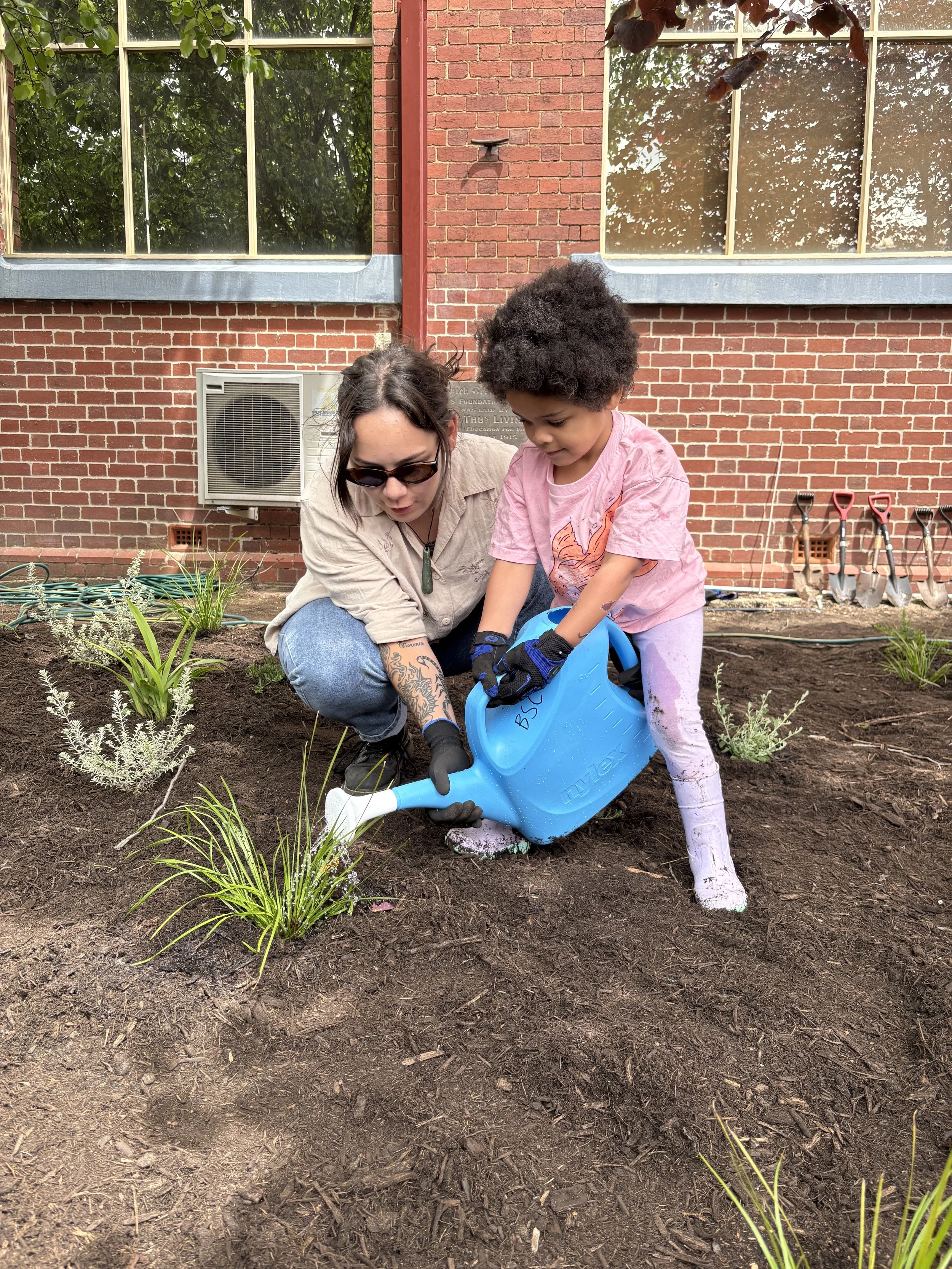
Ross Mortimer, BSC Student Mental Health and Wellbeing Team and an enthusiastic team of year 7 students joined us for a planting session.
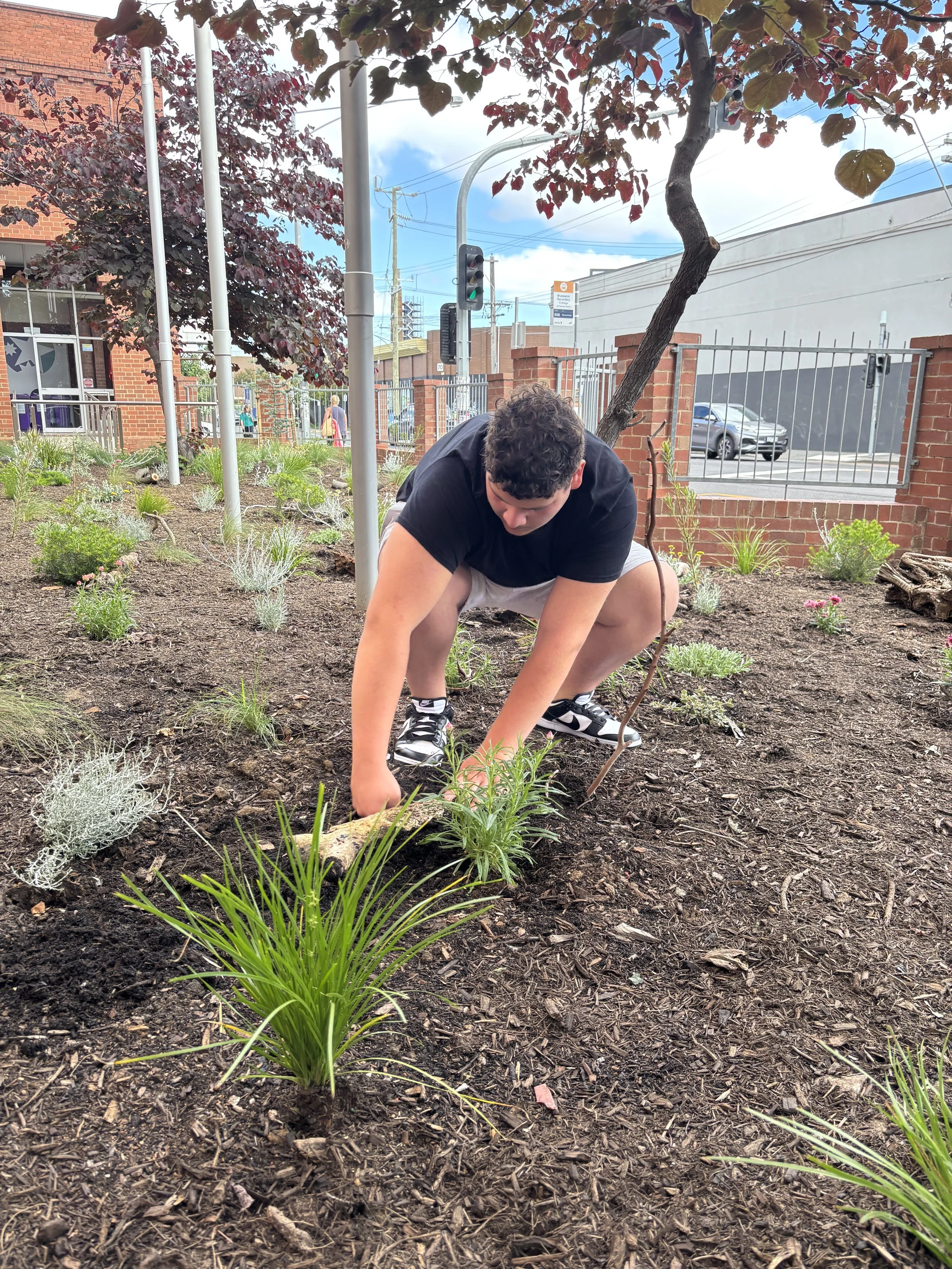
Eight students placed, planted, and watered in another 50 plants!

Phase 4: Mulching
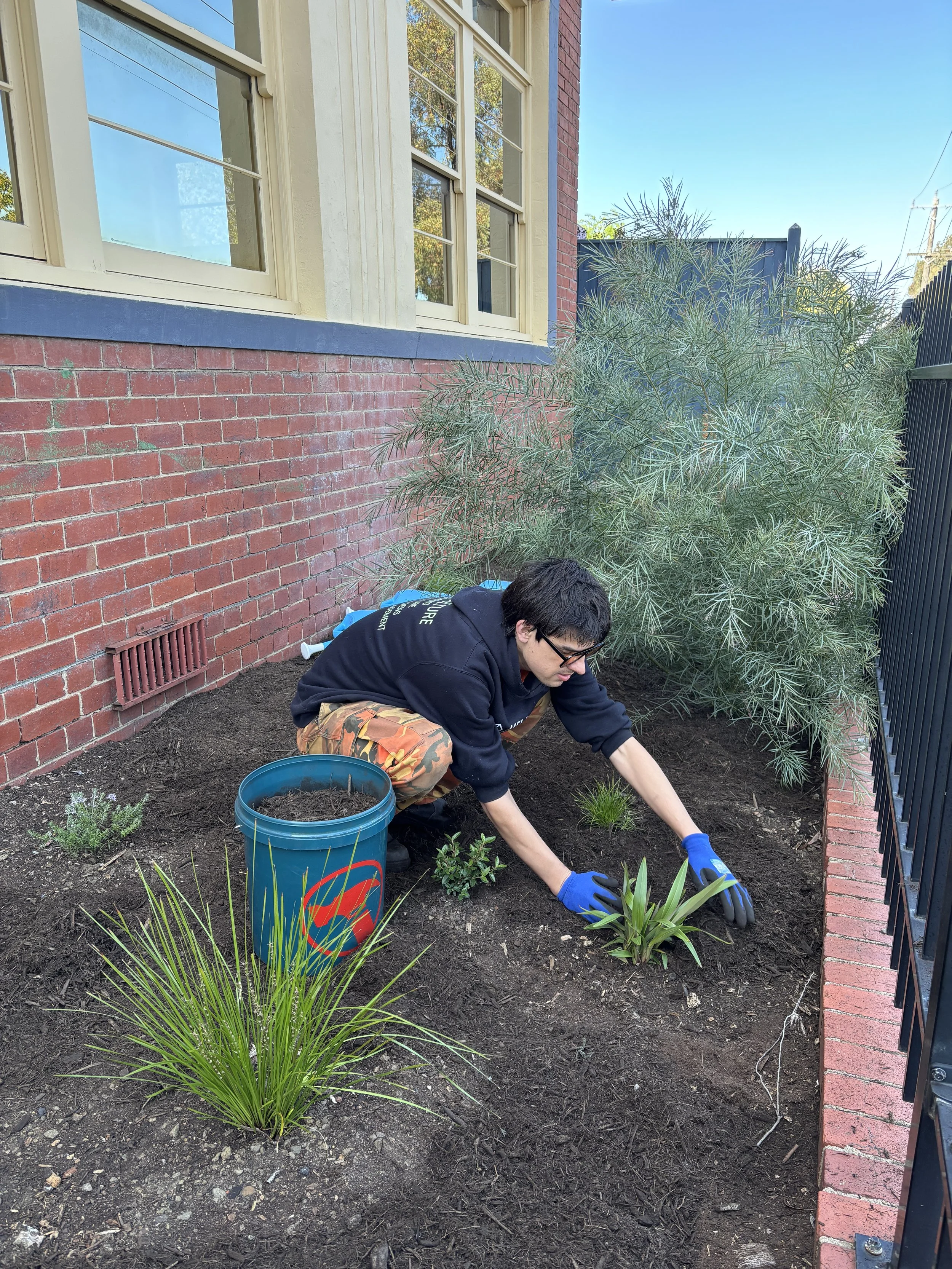
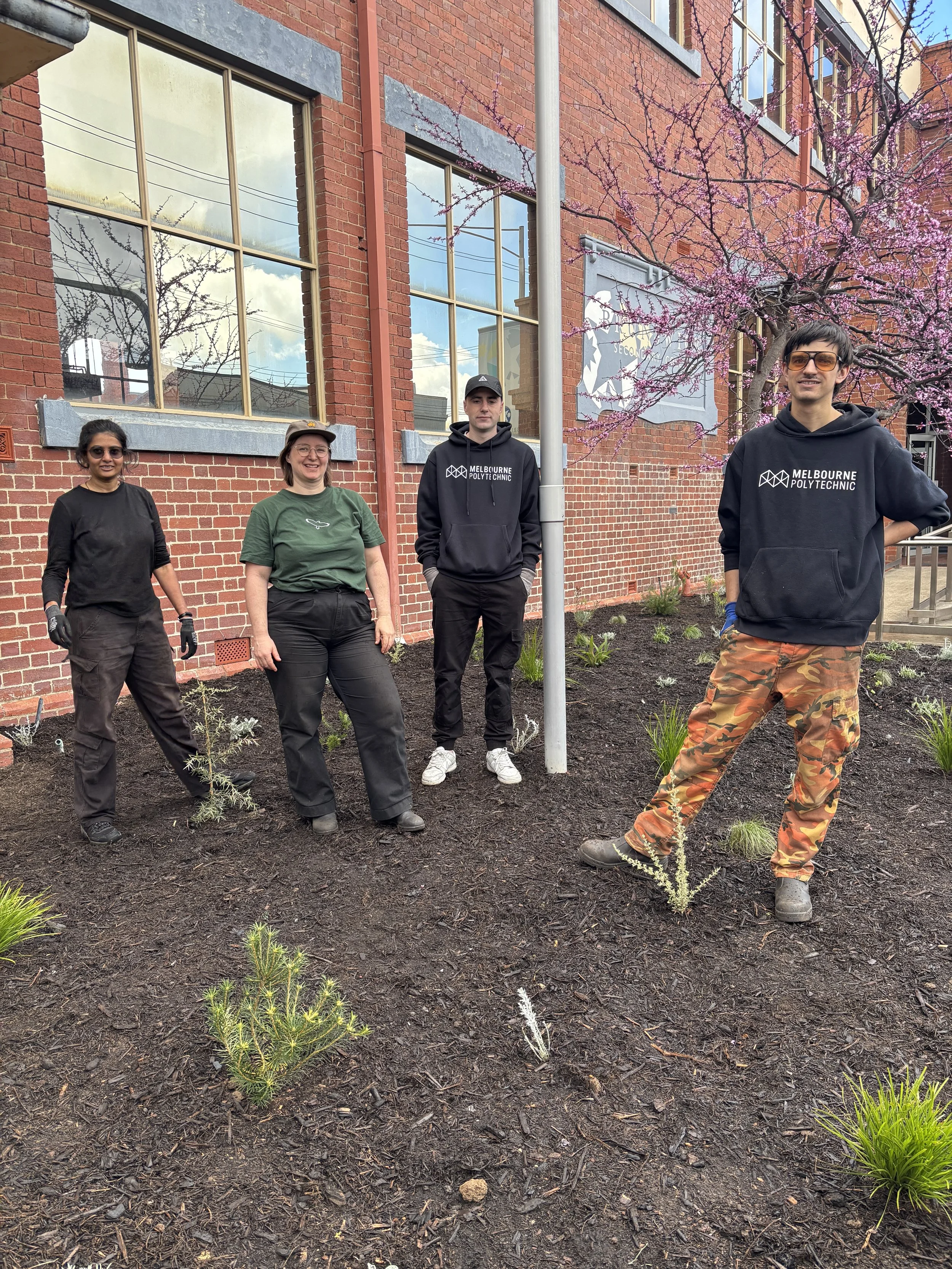
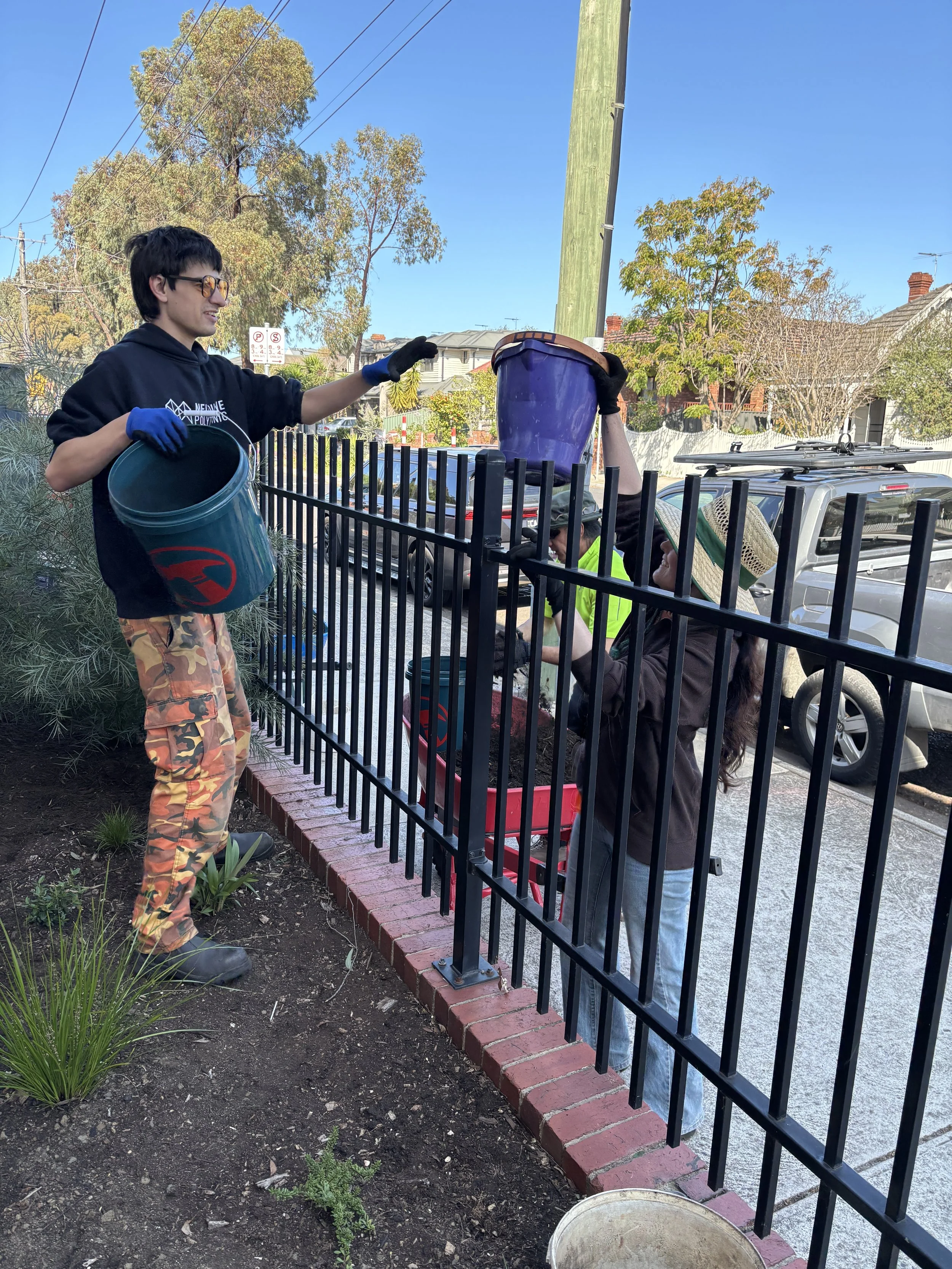
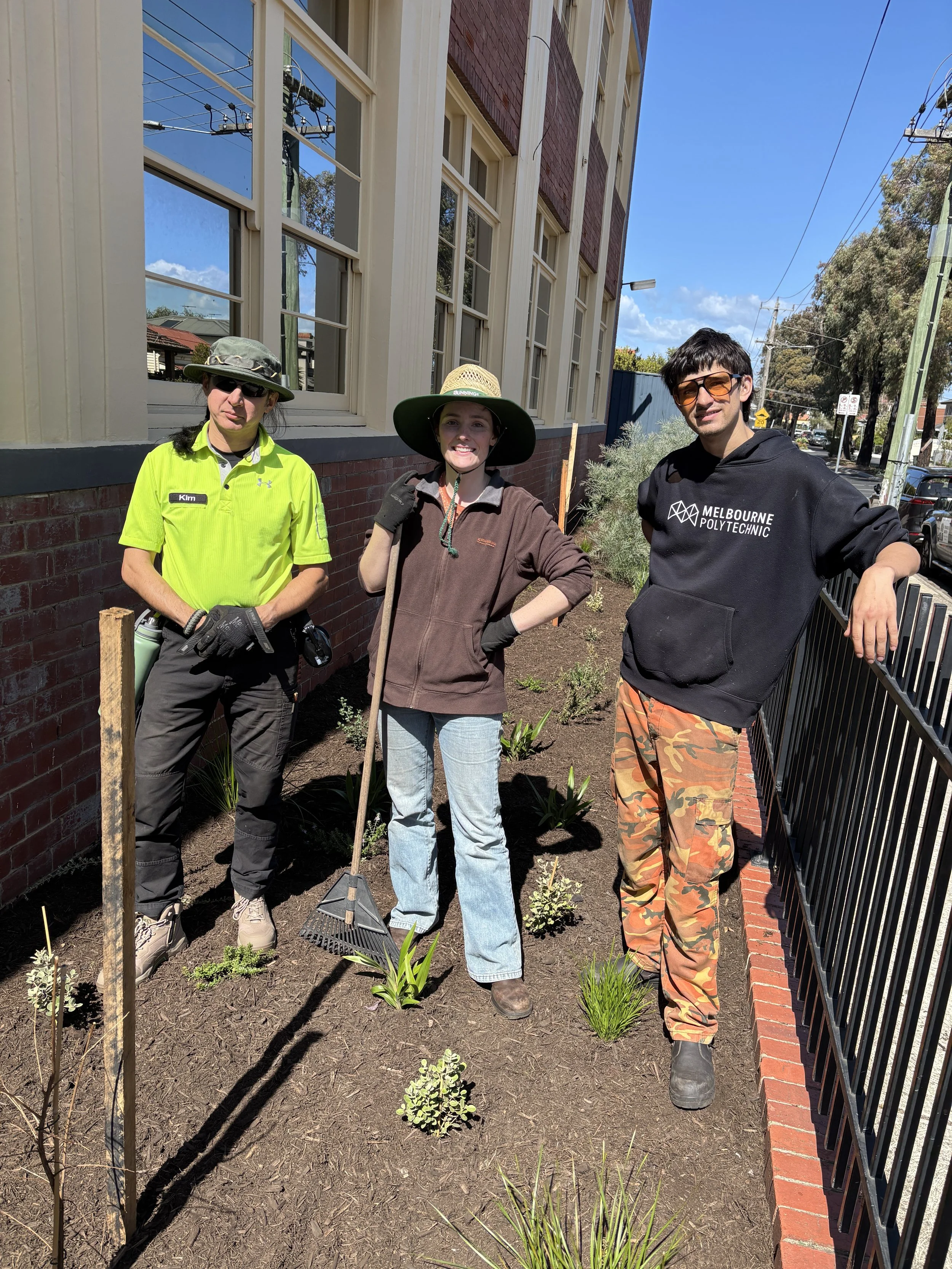
A team of Horticultural/ Eco-conservation TAFE students - Meredith, Chloe, Kim, Kenny, Vee, and George - returned to spread mulch throughout the gardens
Partially broken down mulch was used to help further boost the soil health
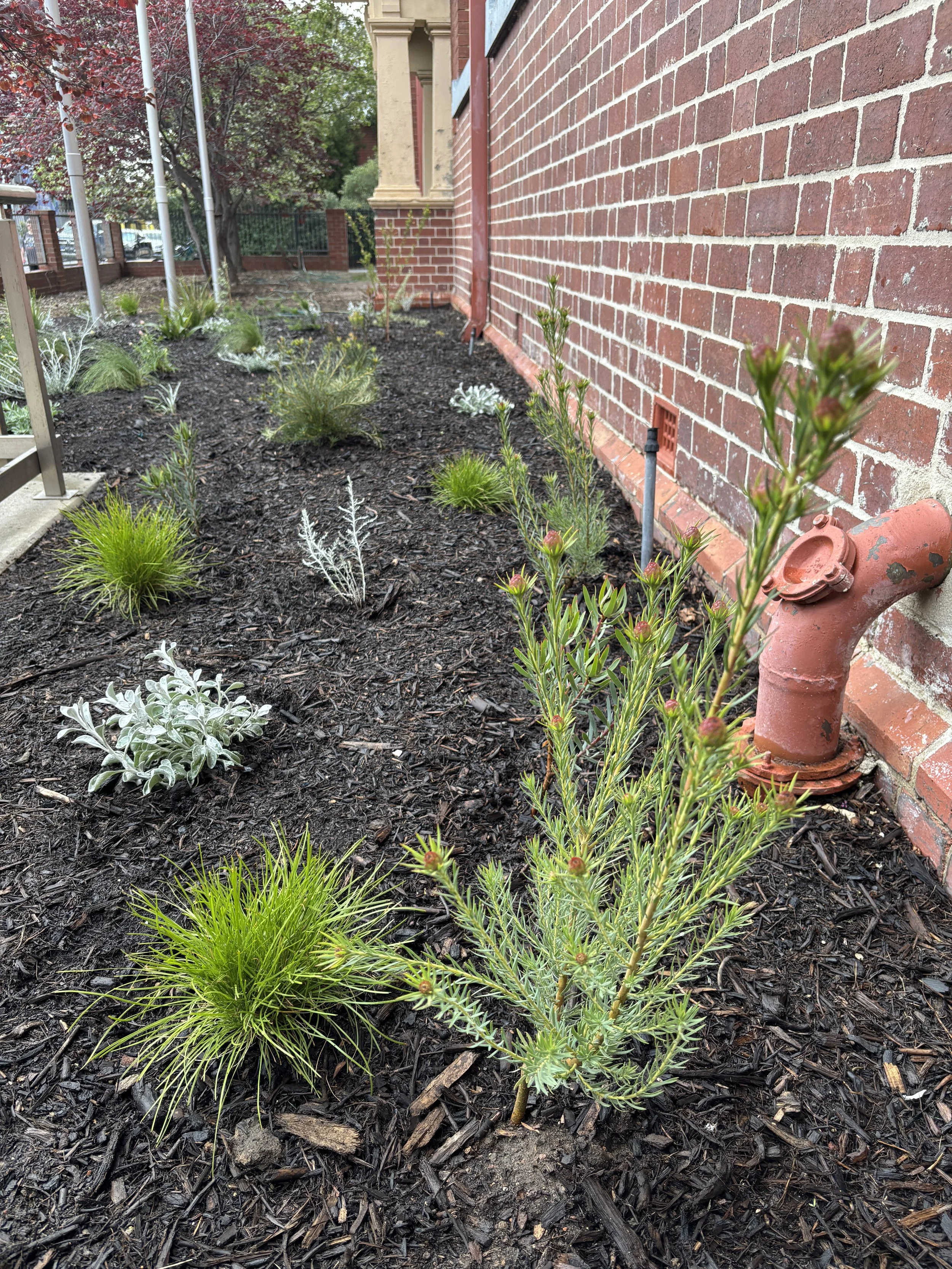
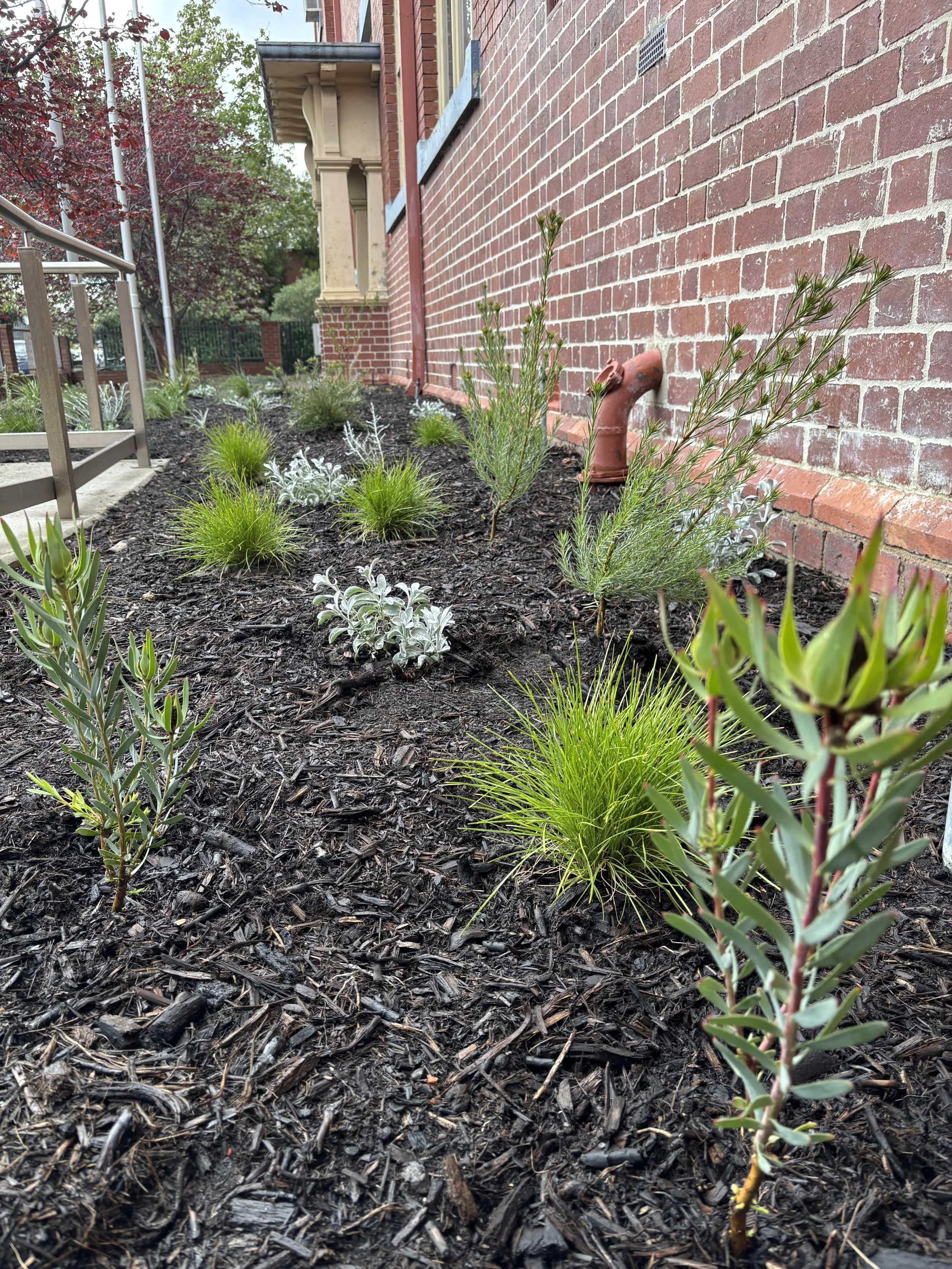
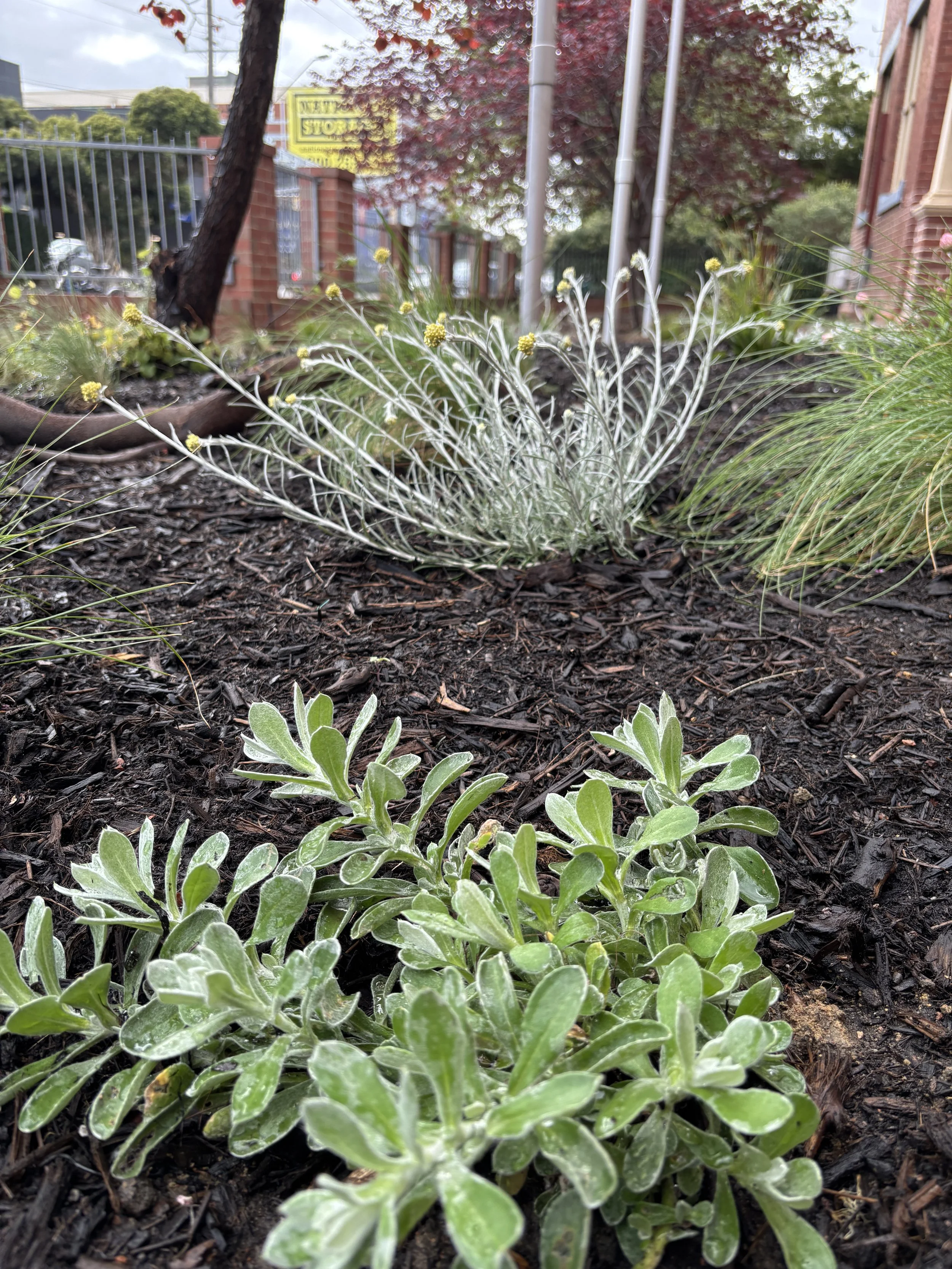
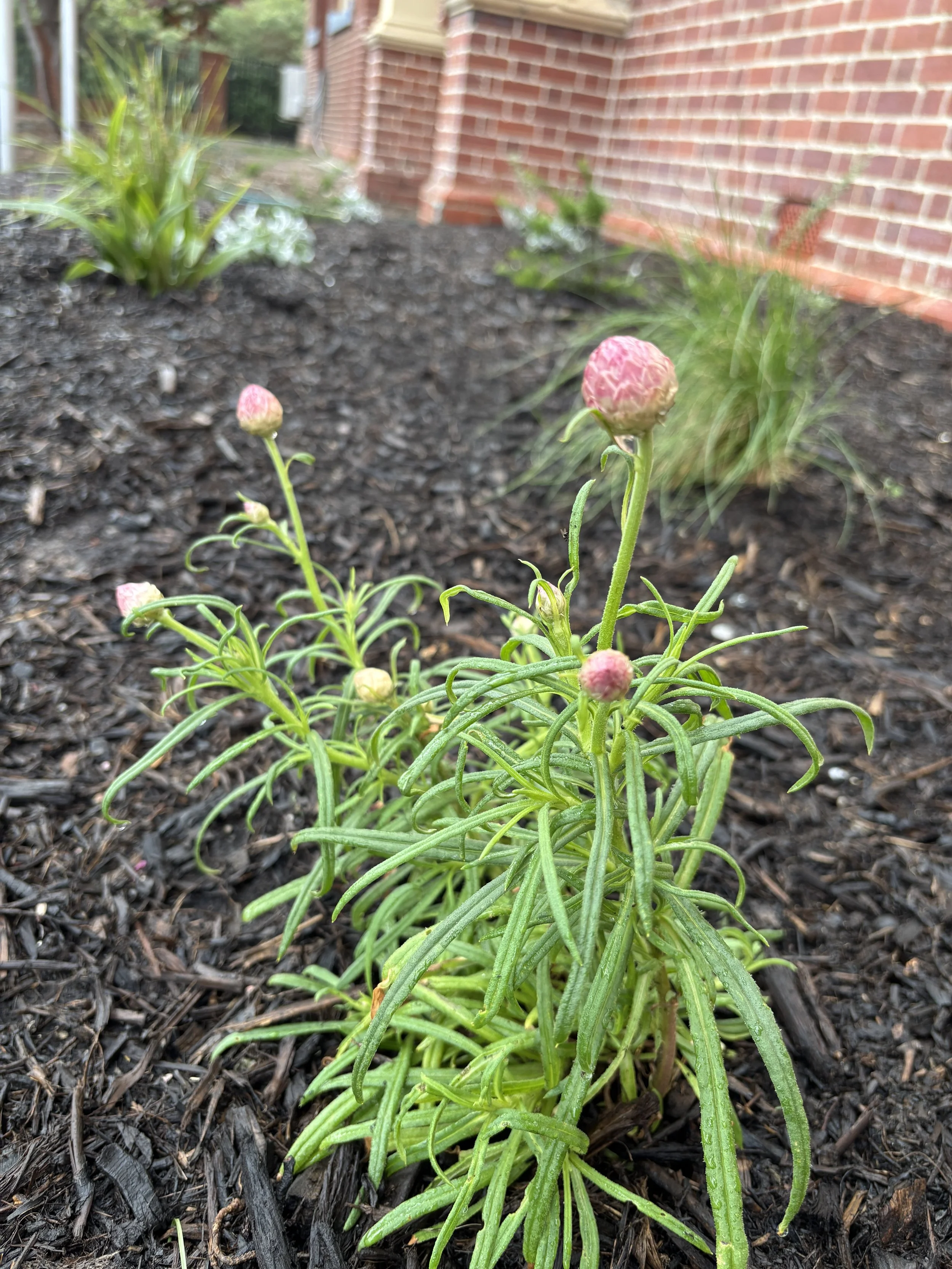
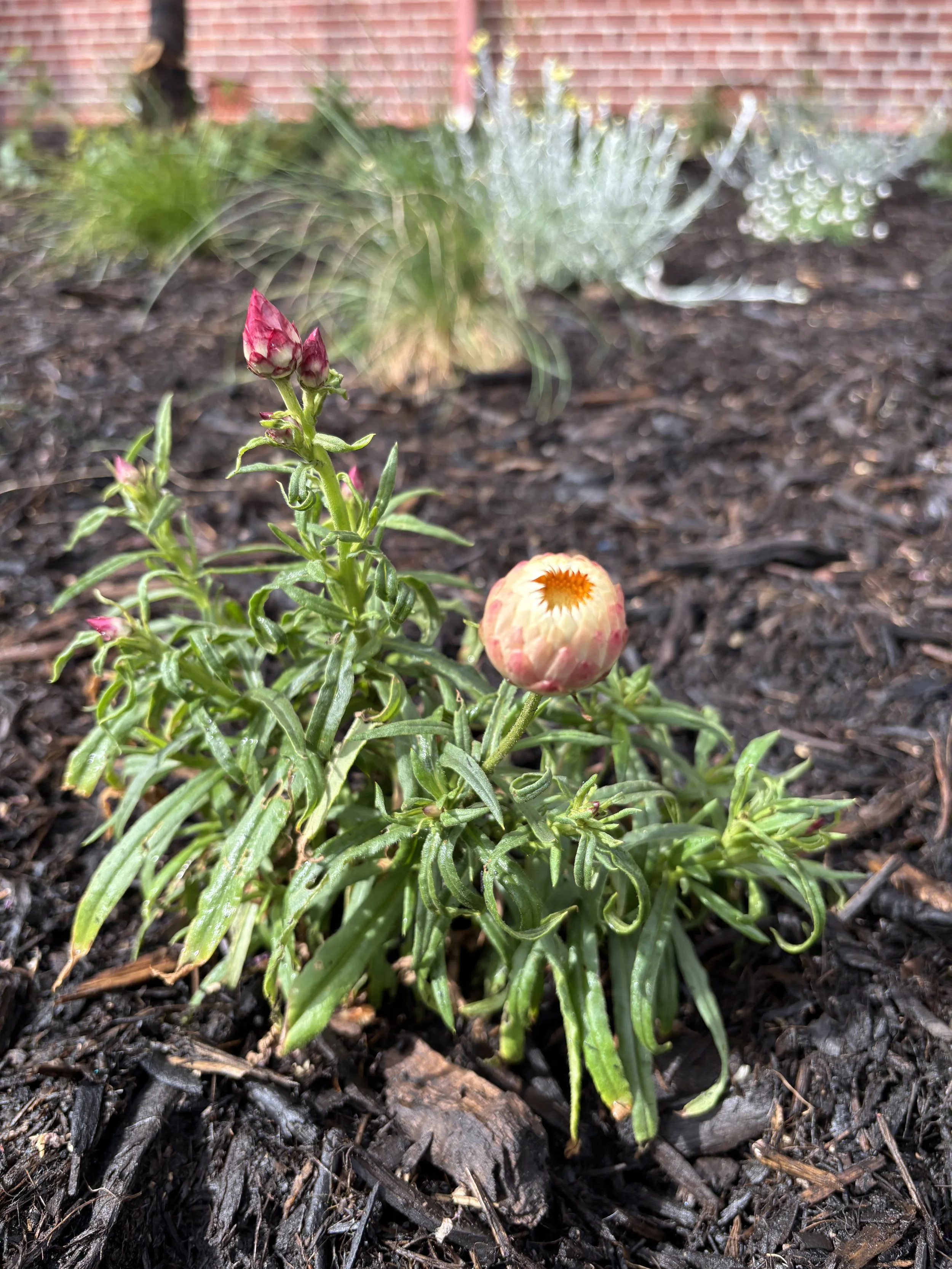
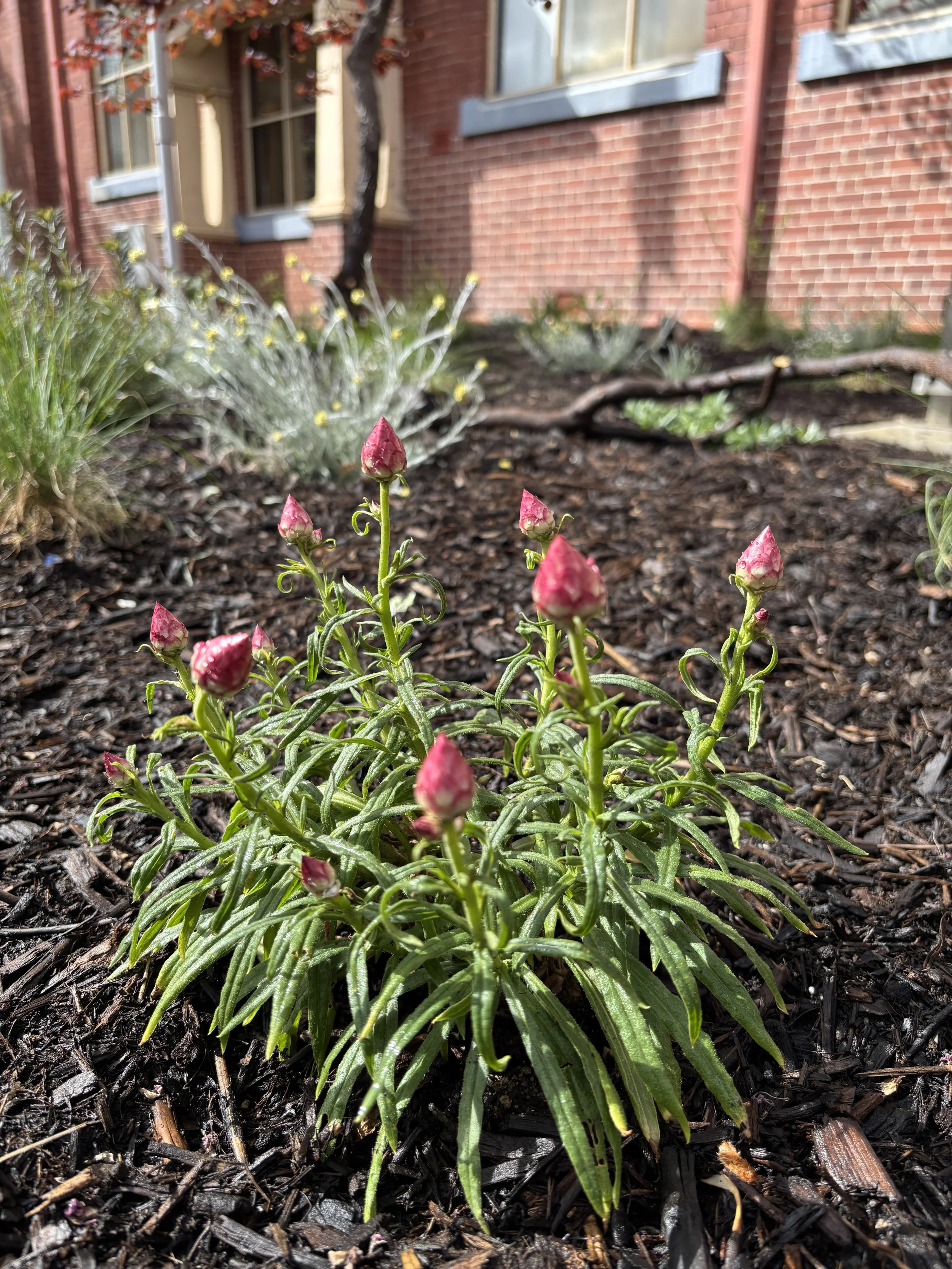
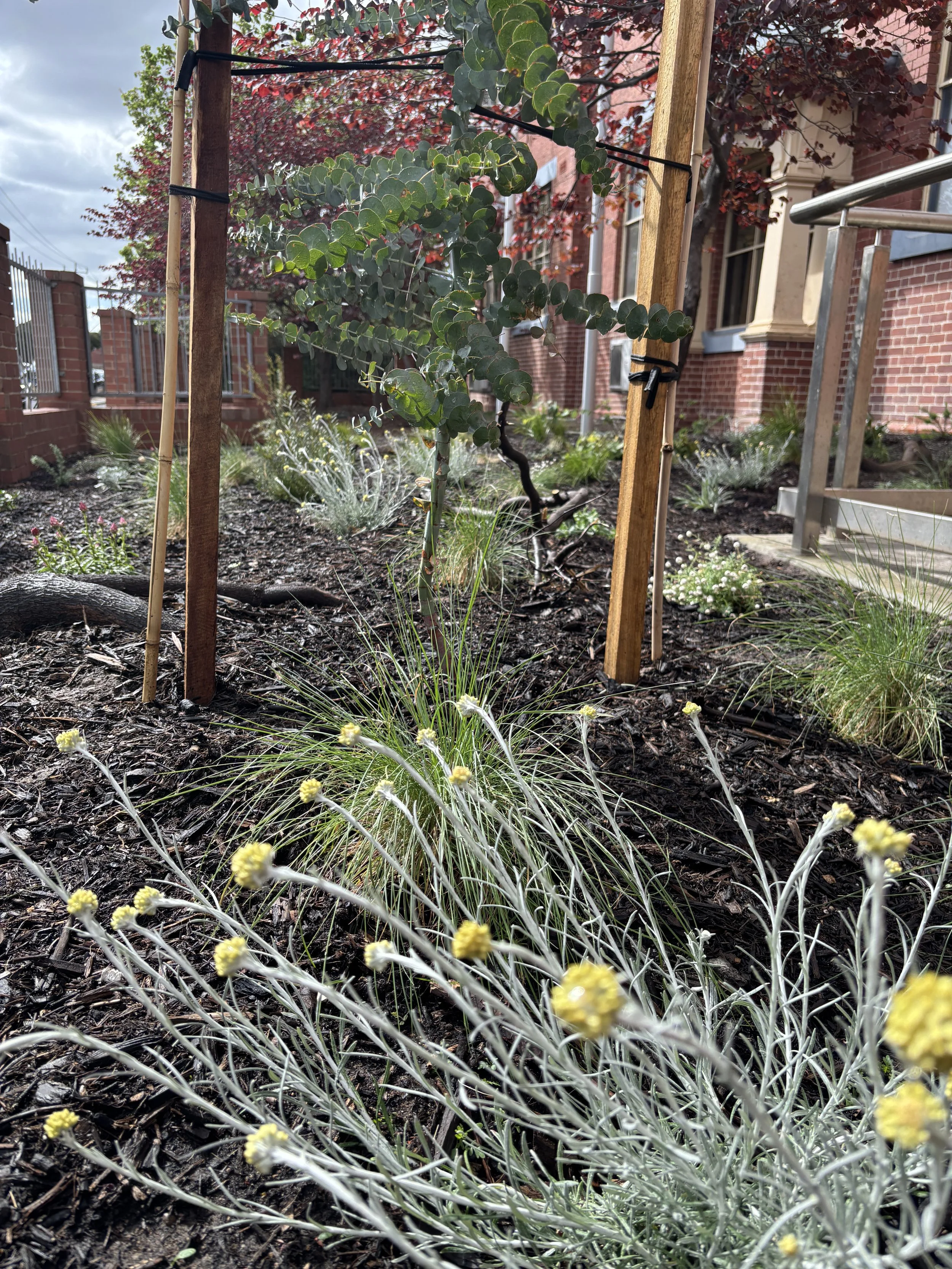
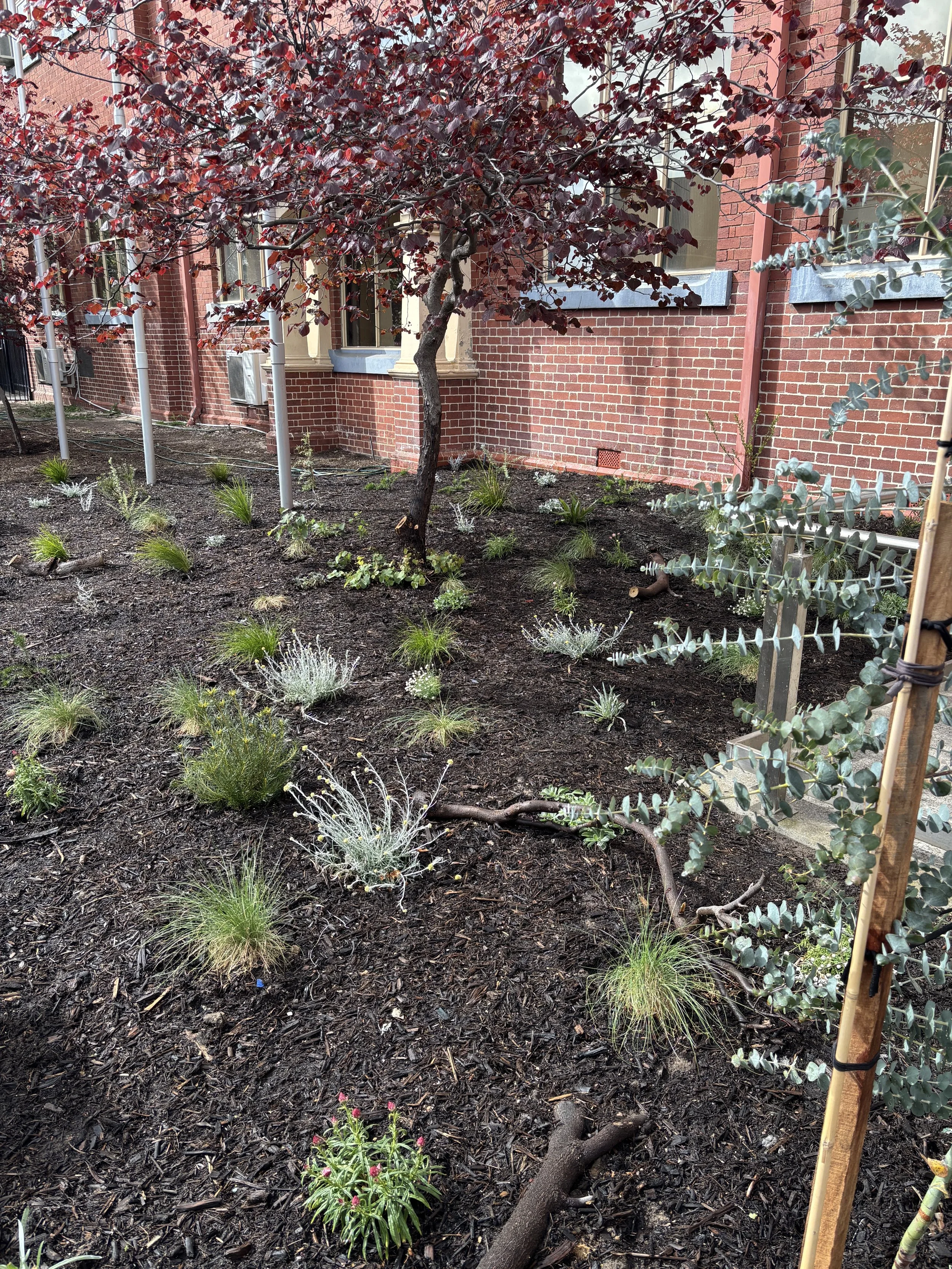
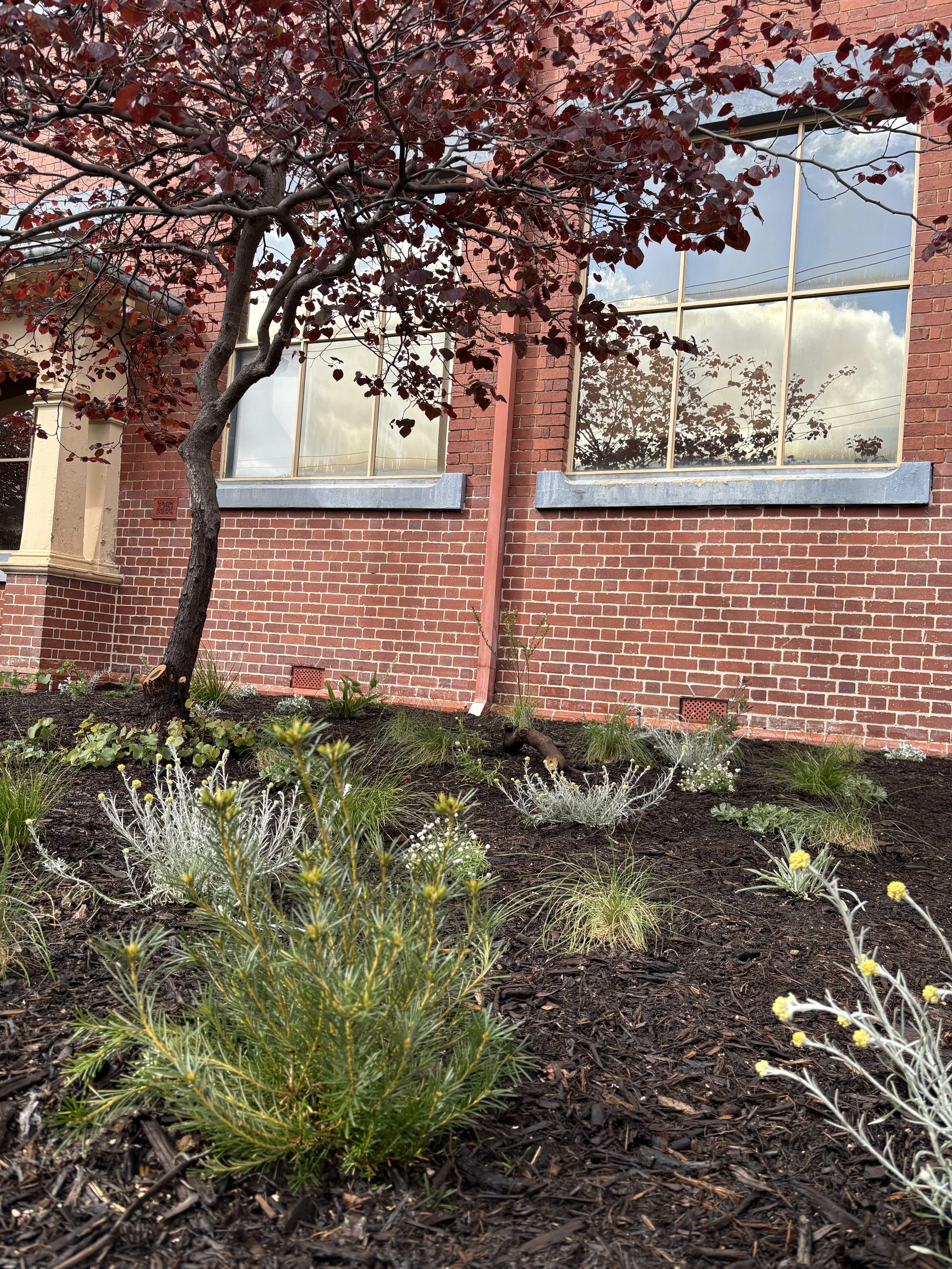
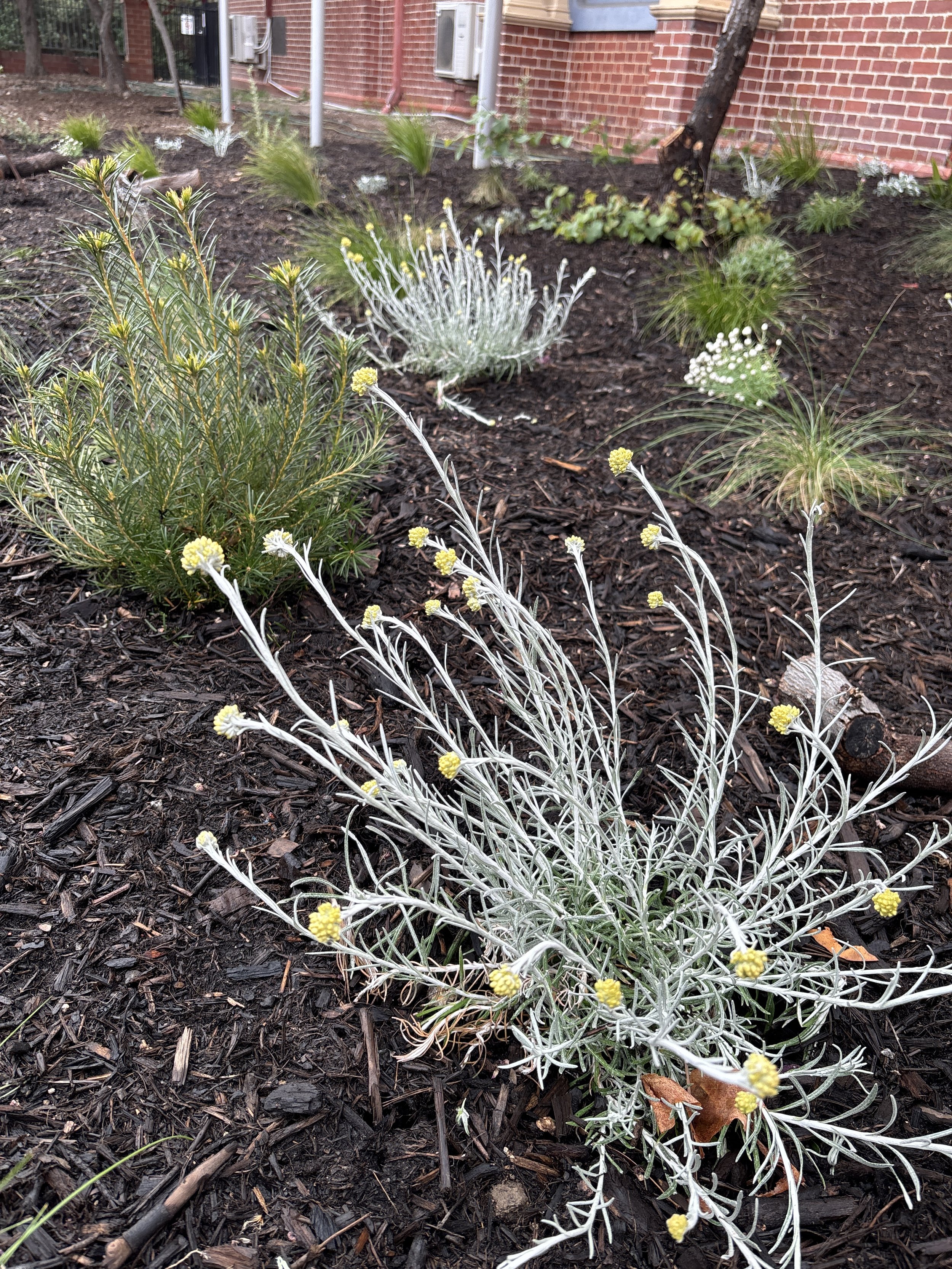
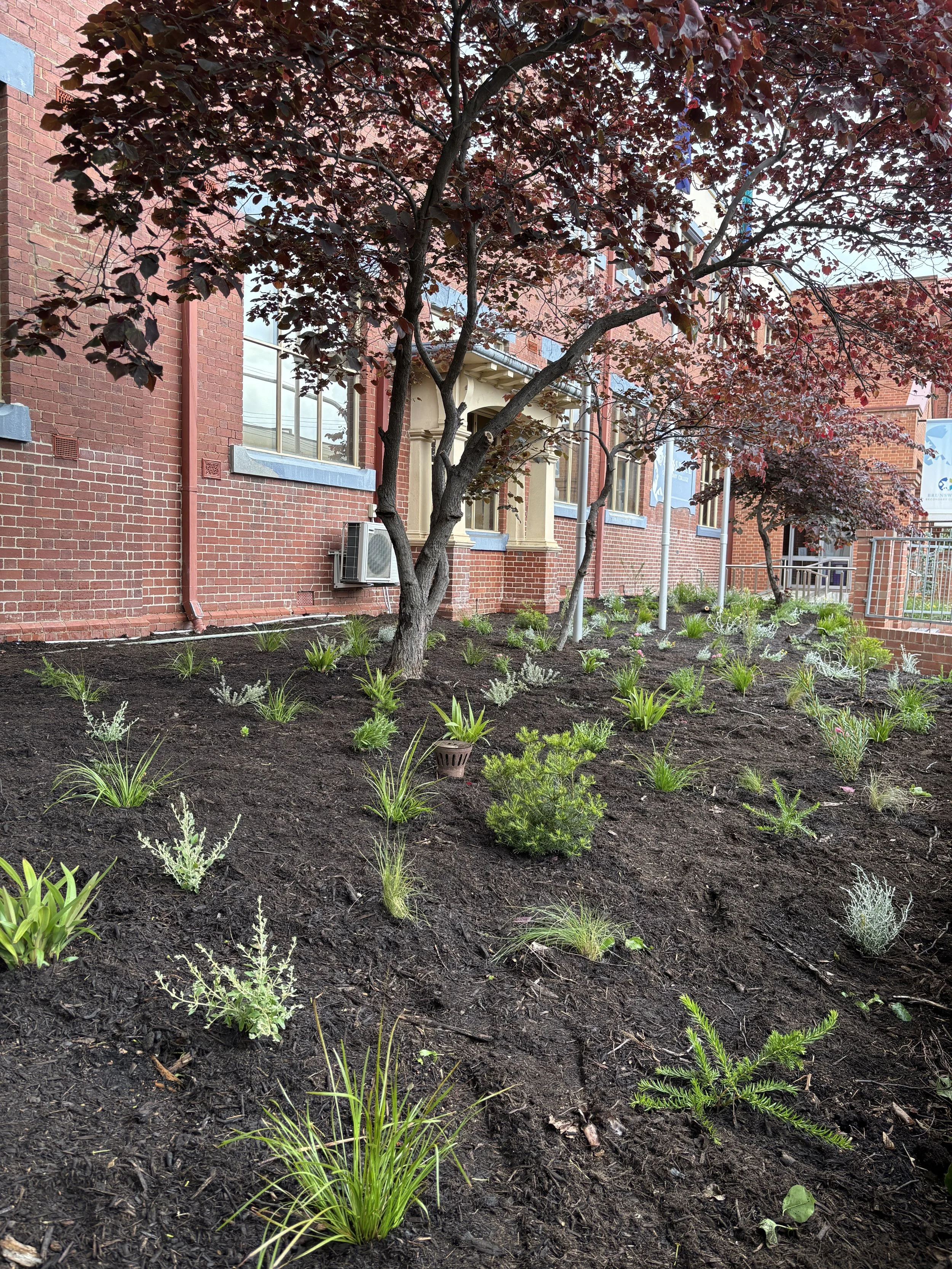
Phase 5: Starting to Grow
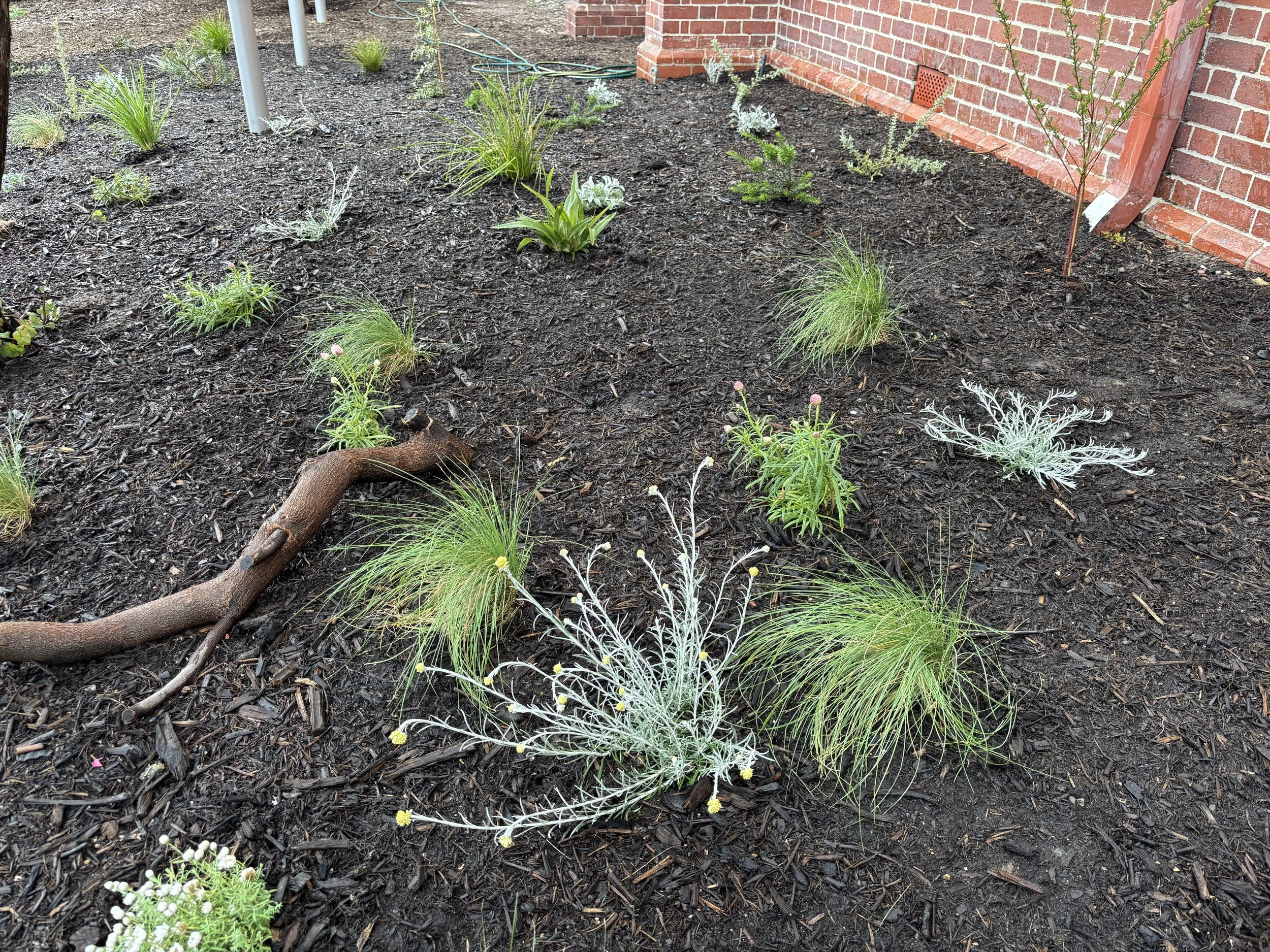
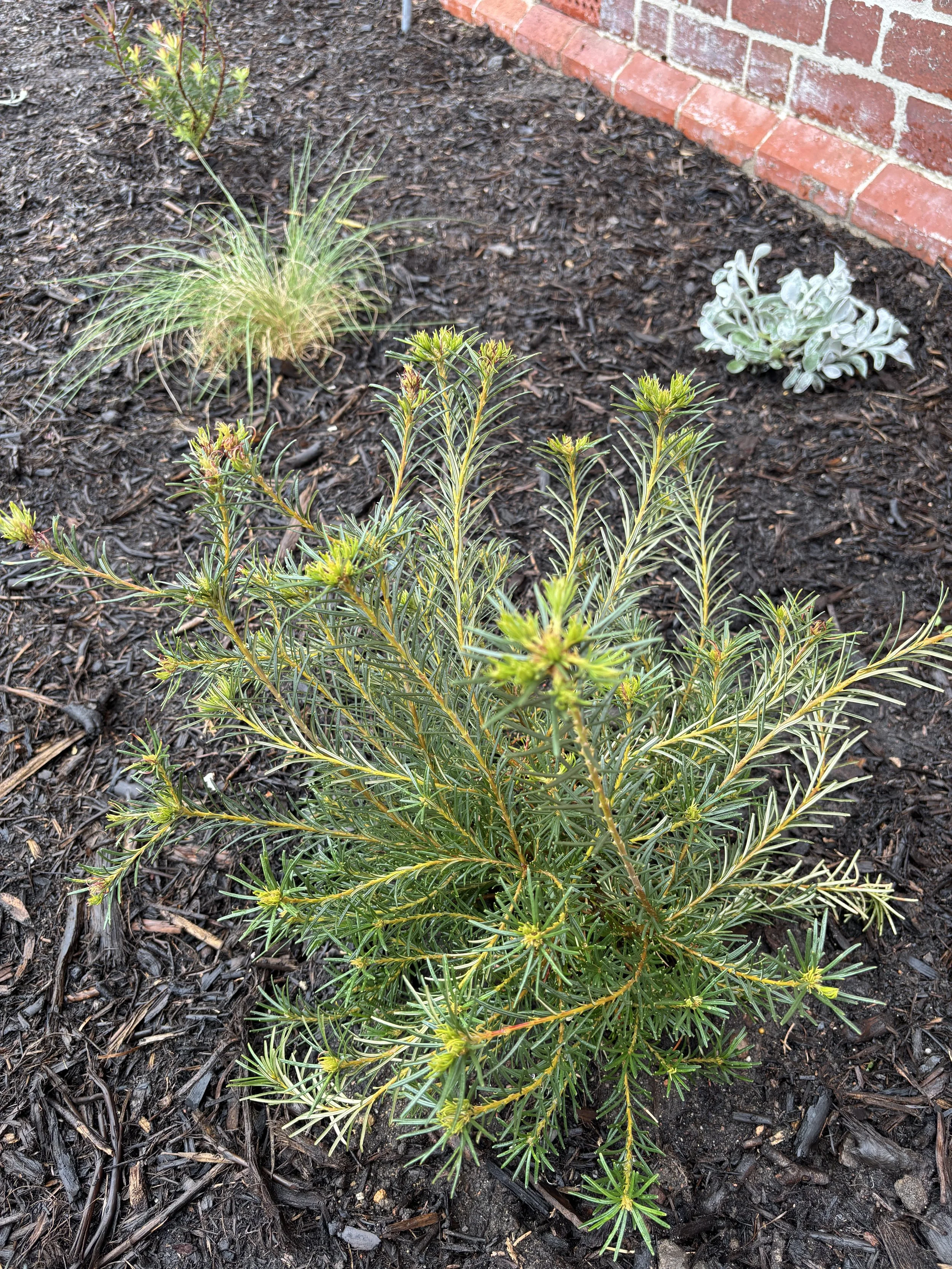
One month after first round of planting (17 Oct 2025) - lovely to see the new plants settling in beautifully!


Phase 6: Another Planting Day!
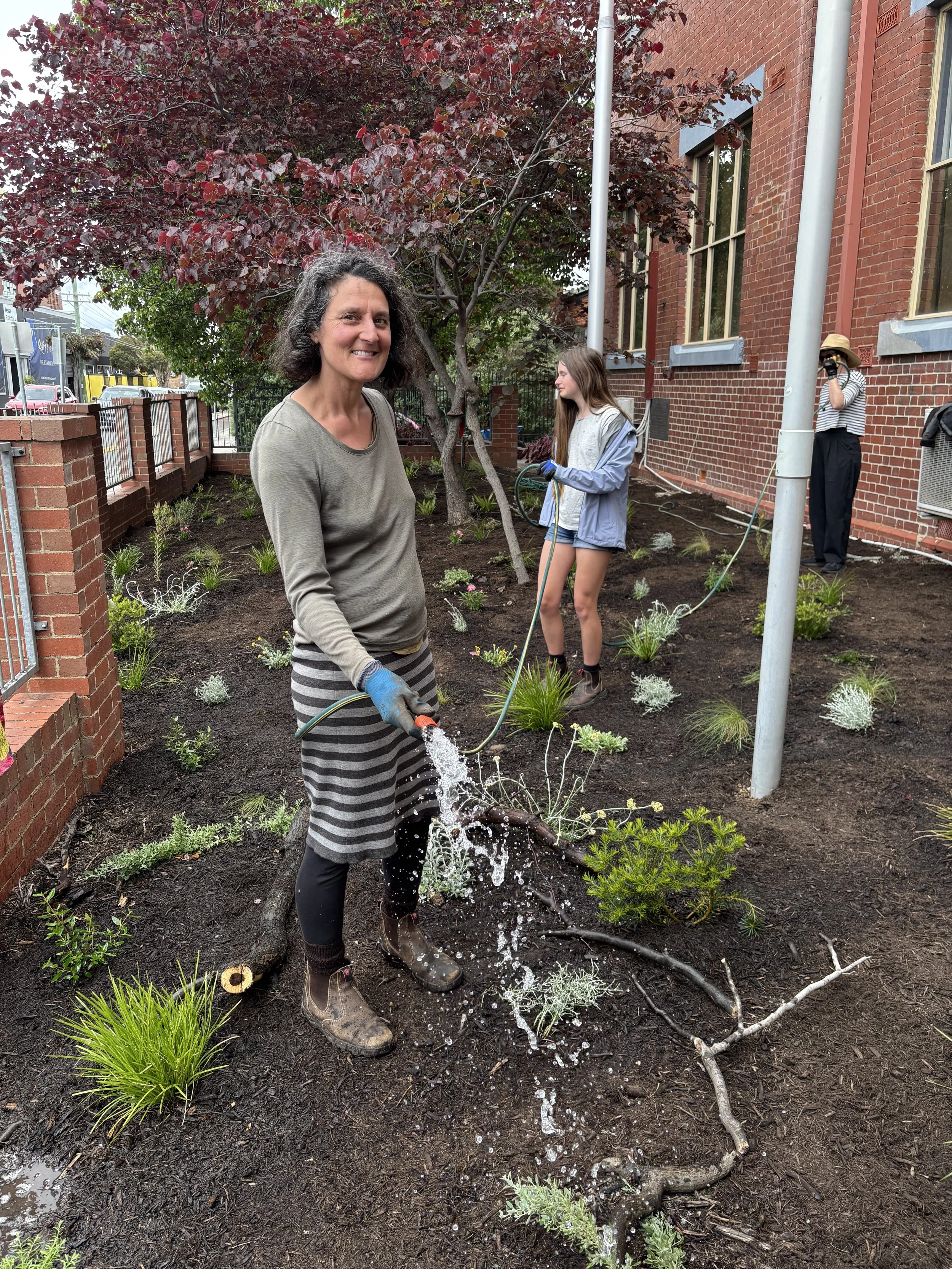
Two months after first round of planting (16 Nov 2025) - another 156 new plants were tucked into the earth by our team of BSC community volunteers
Mulch was added to support the new plantings
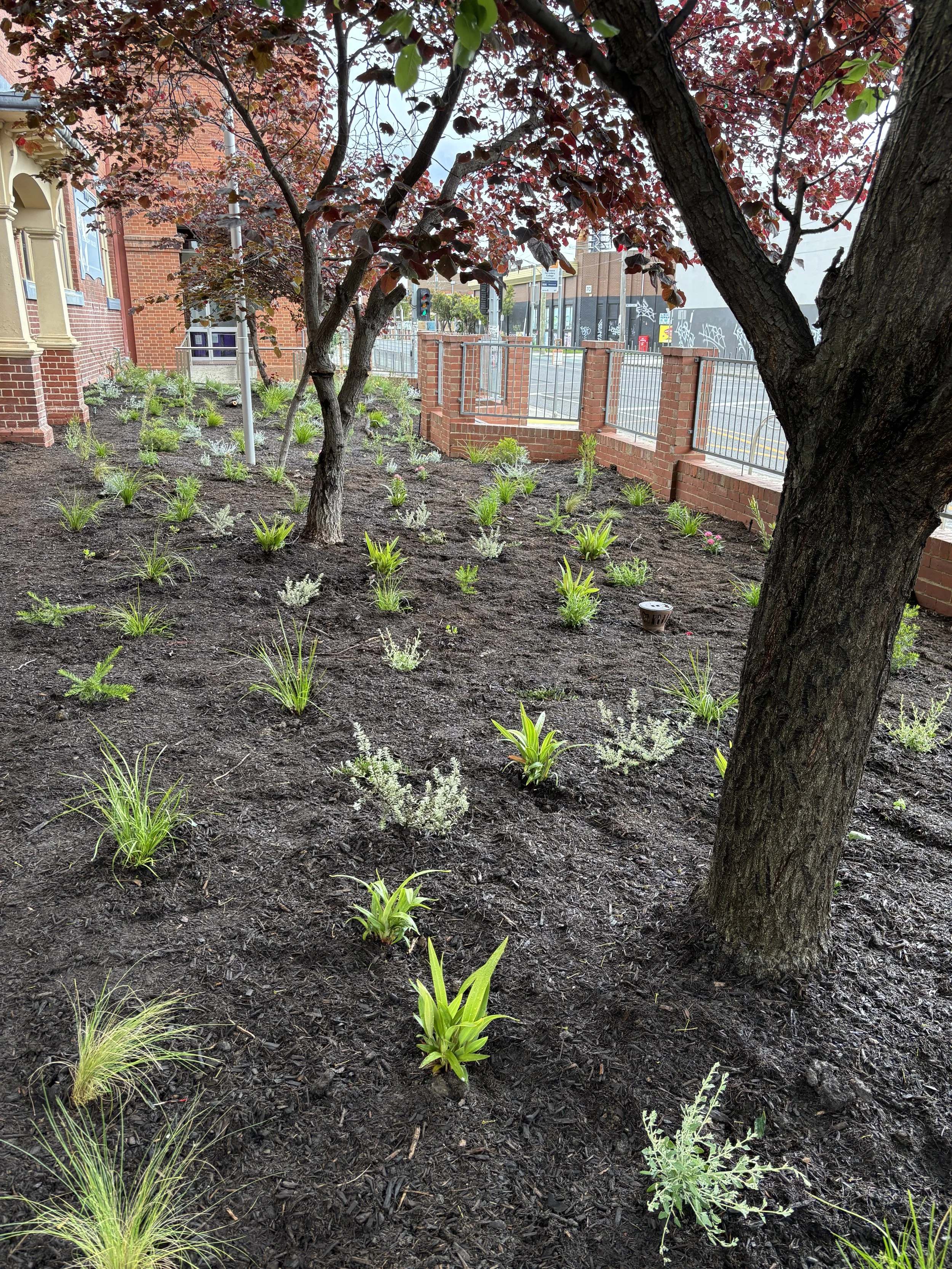
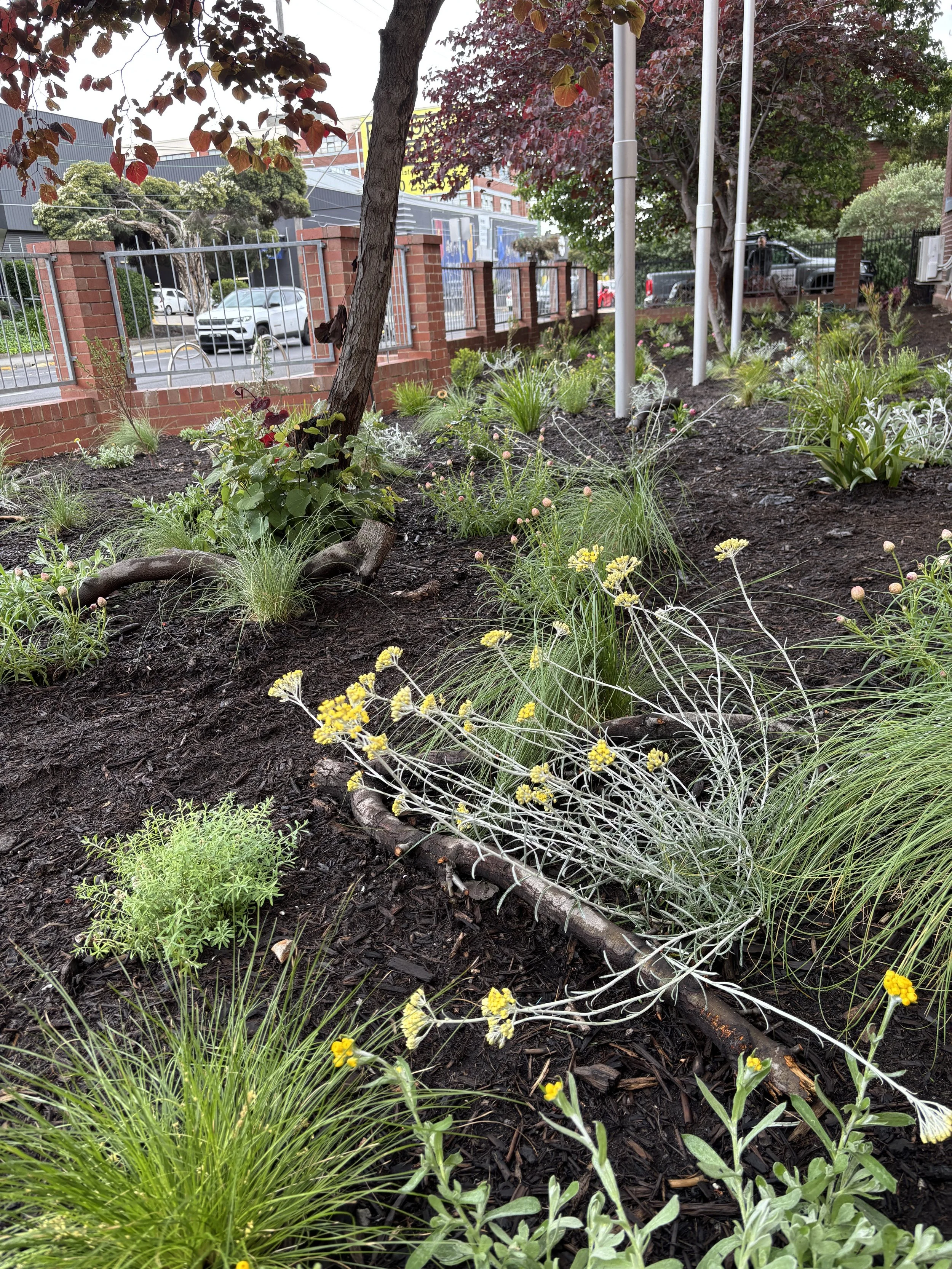
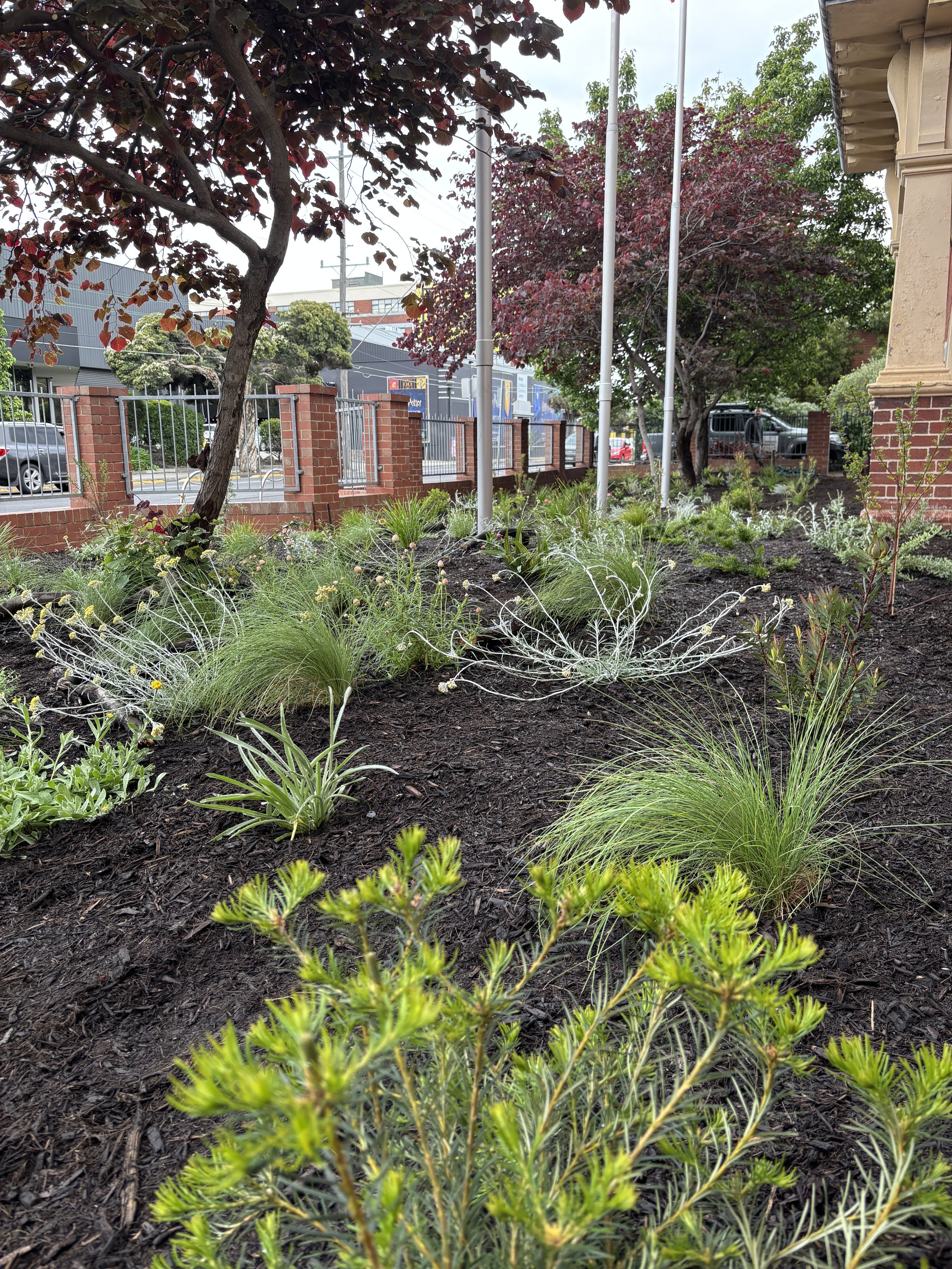
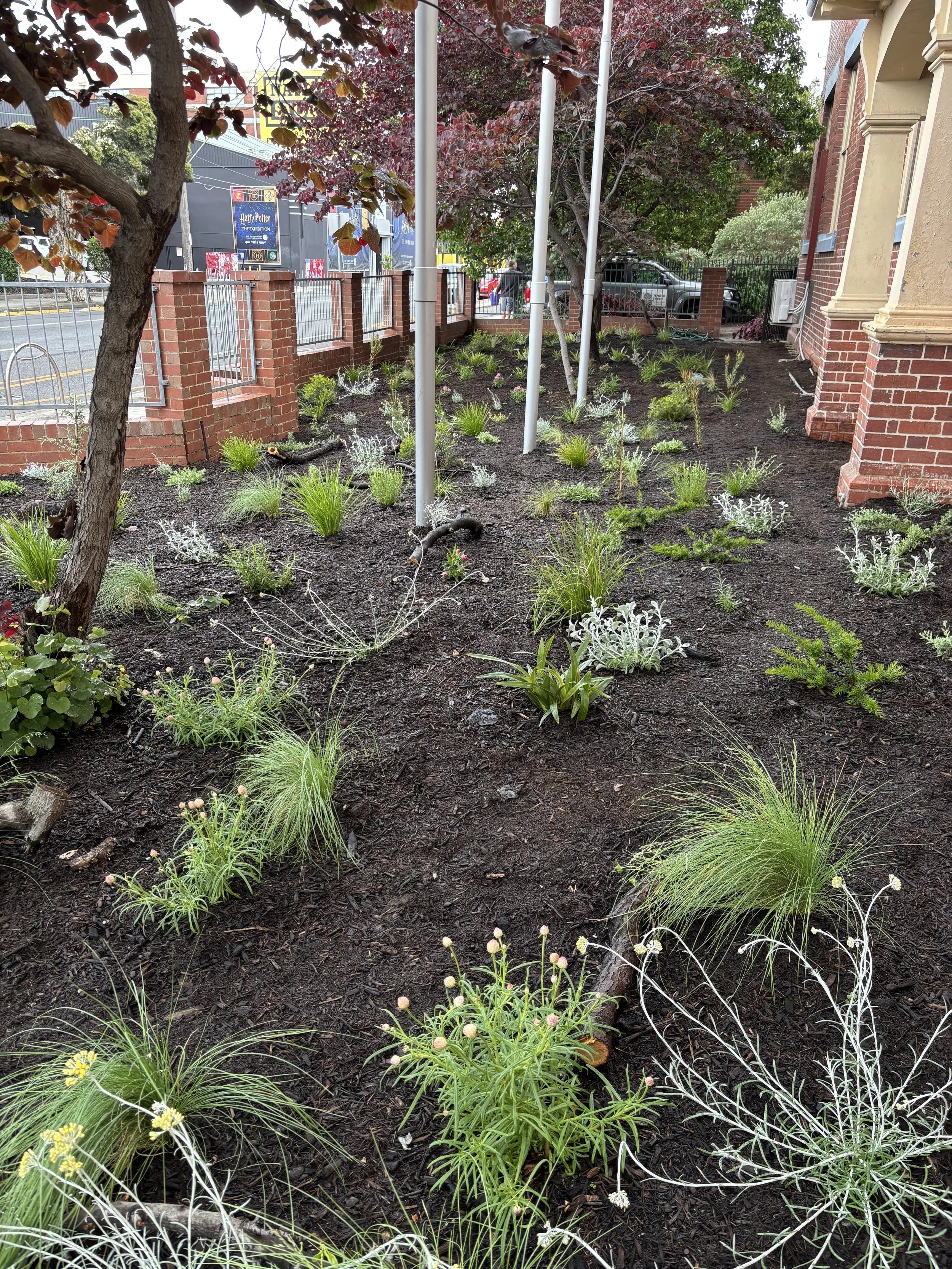
Wildflower Power
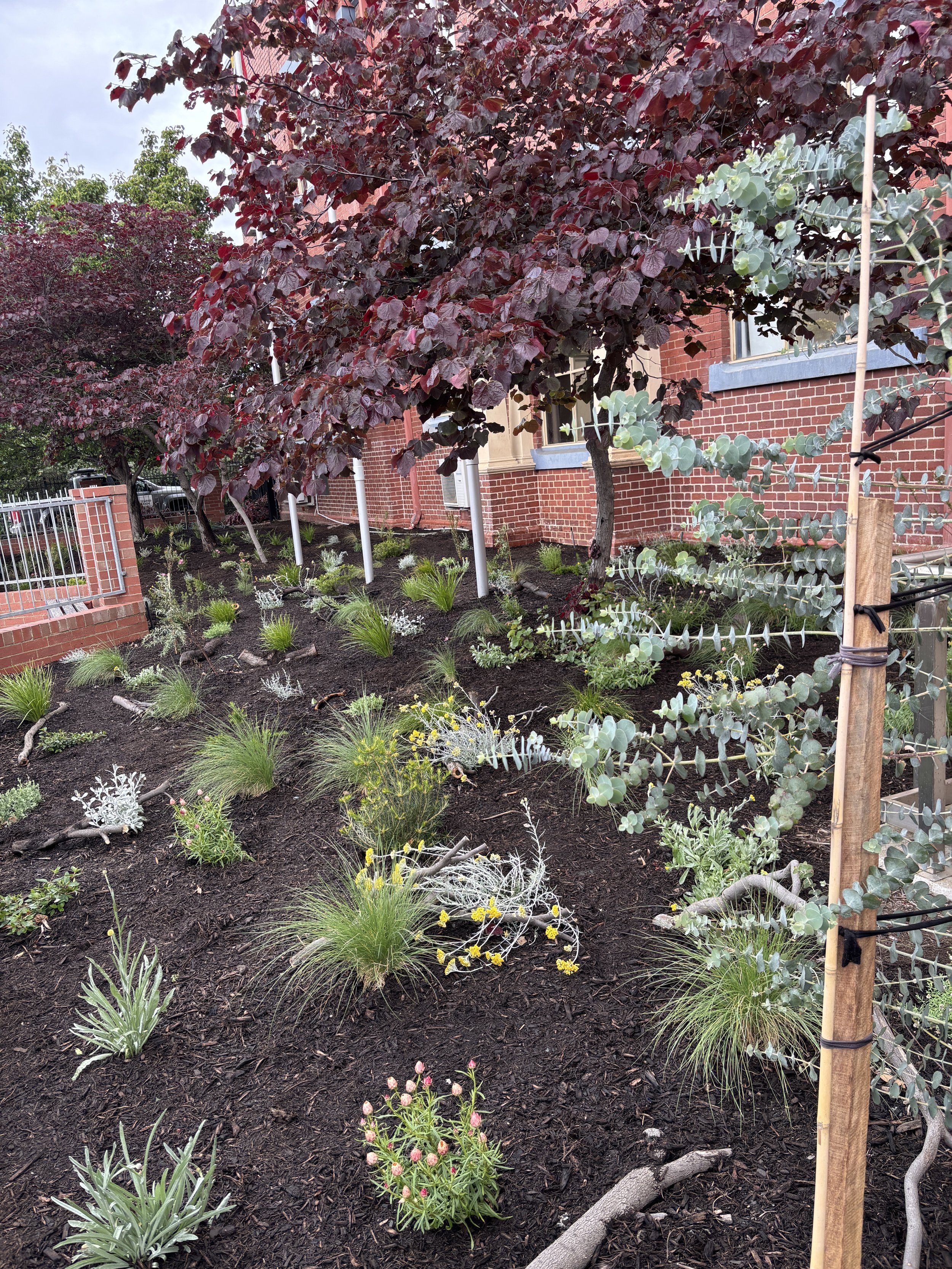
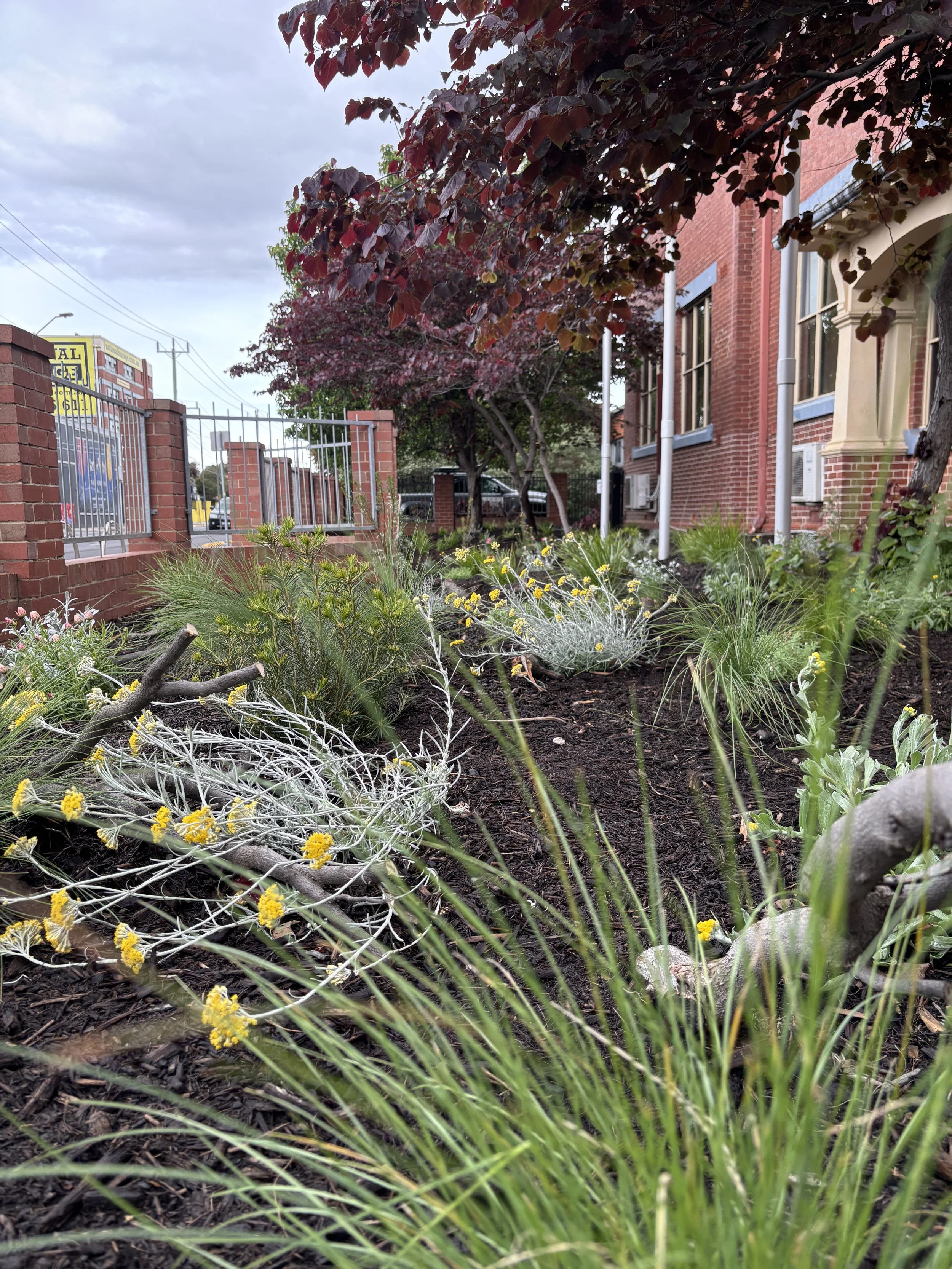
Two months into transformation
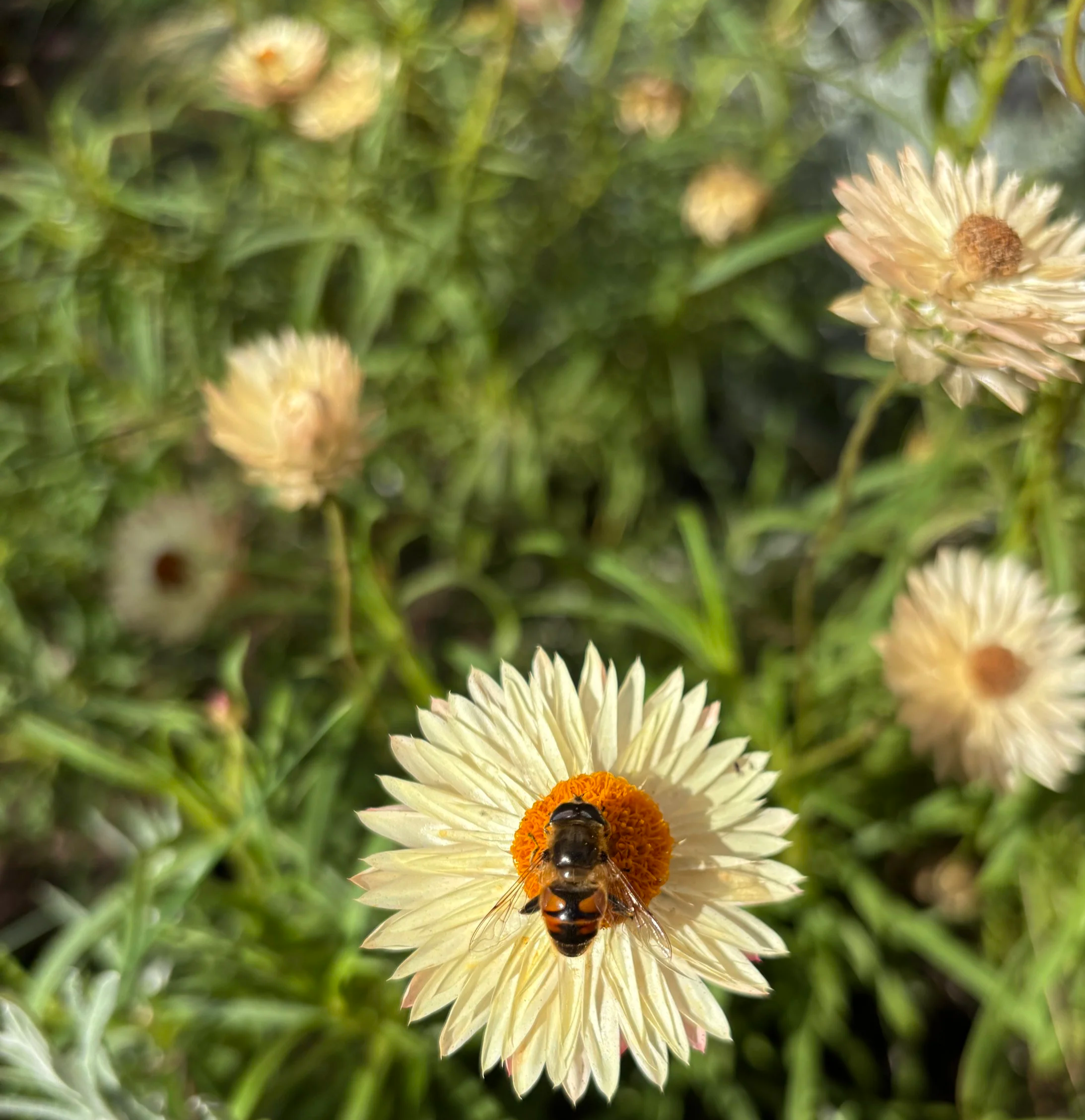
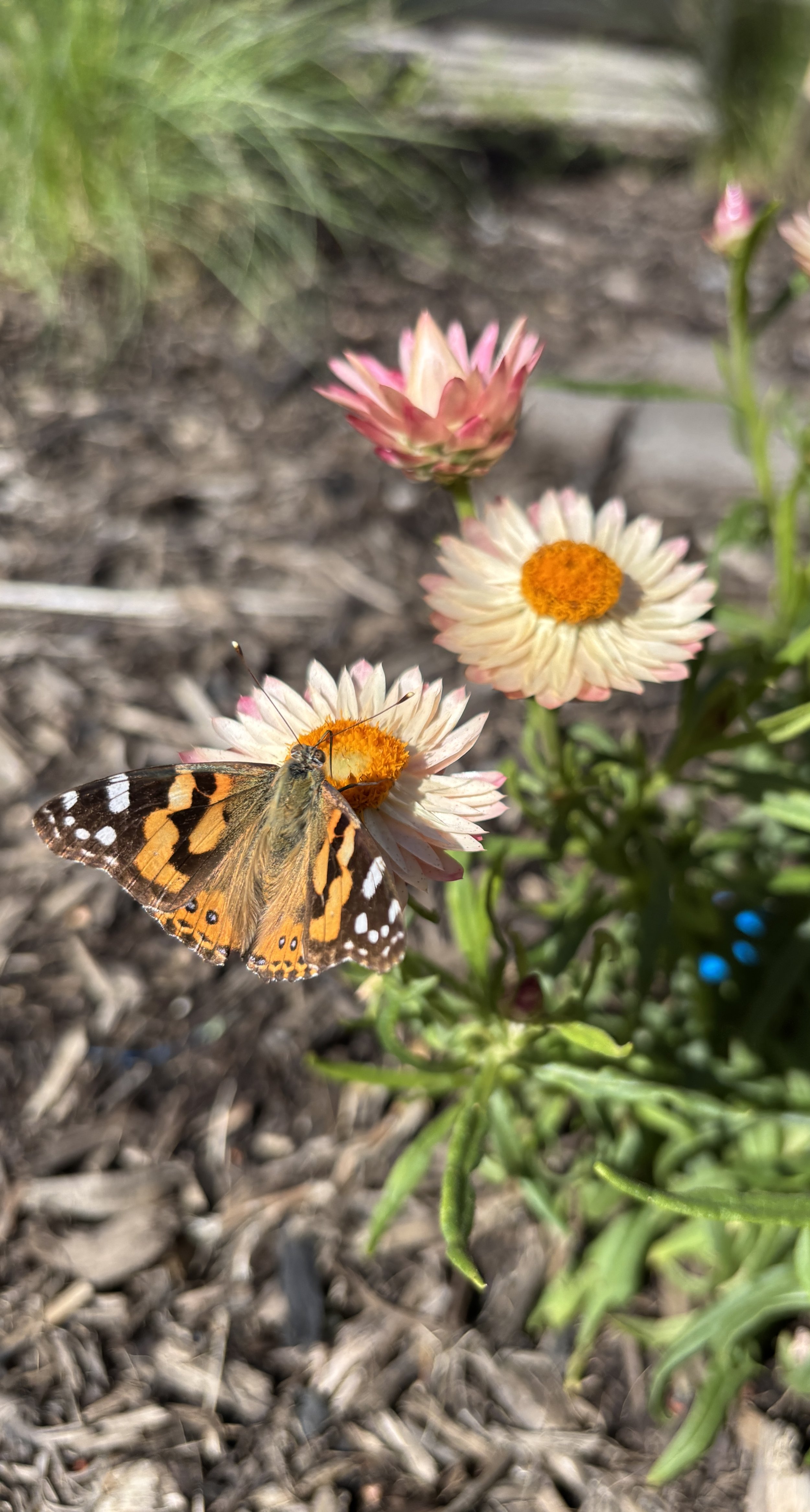
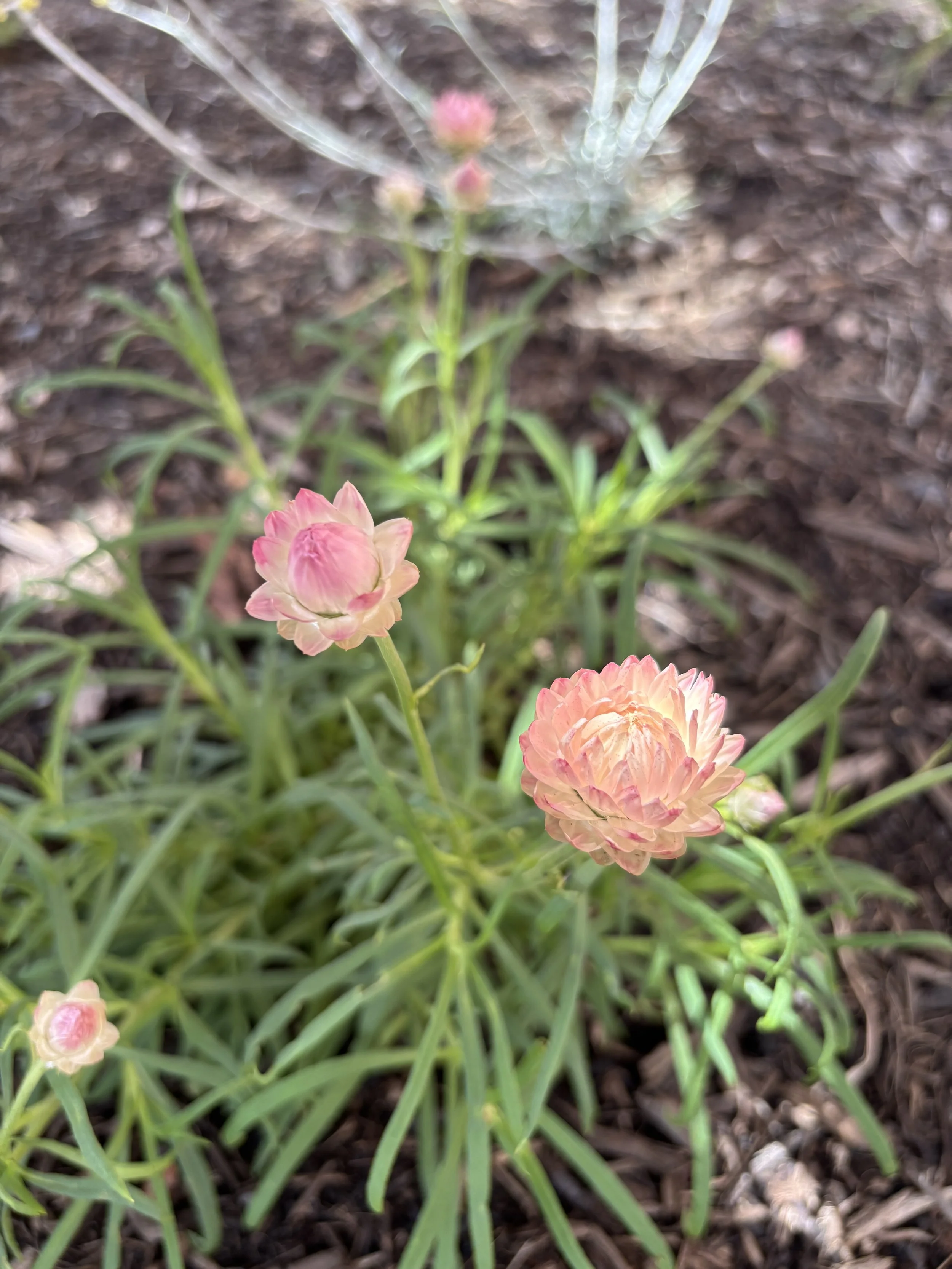
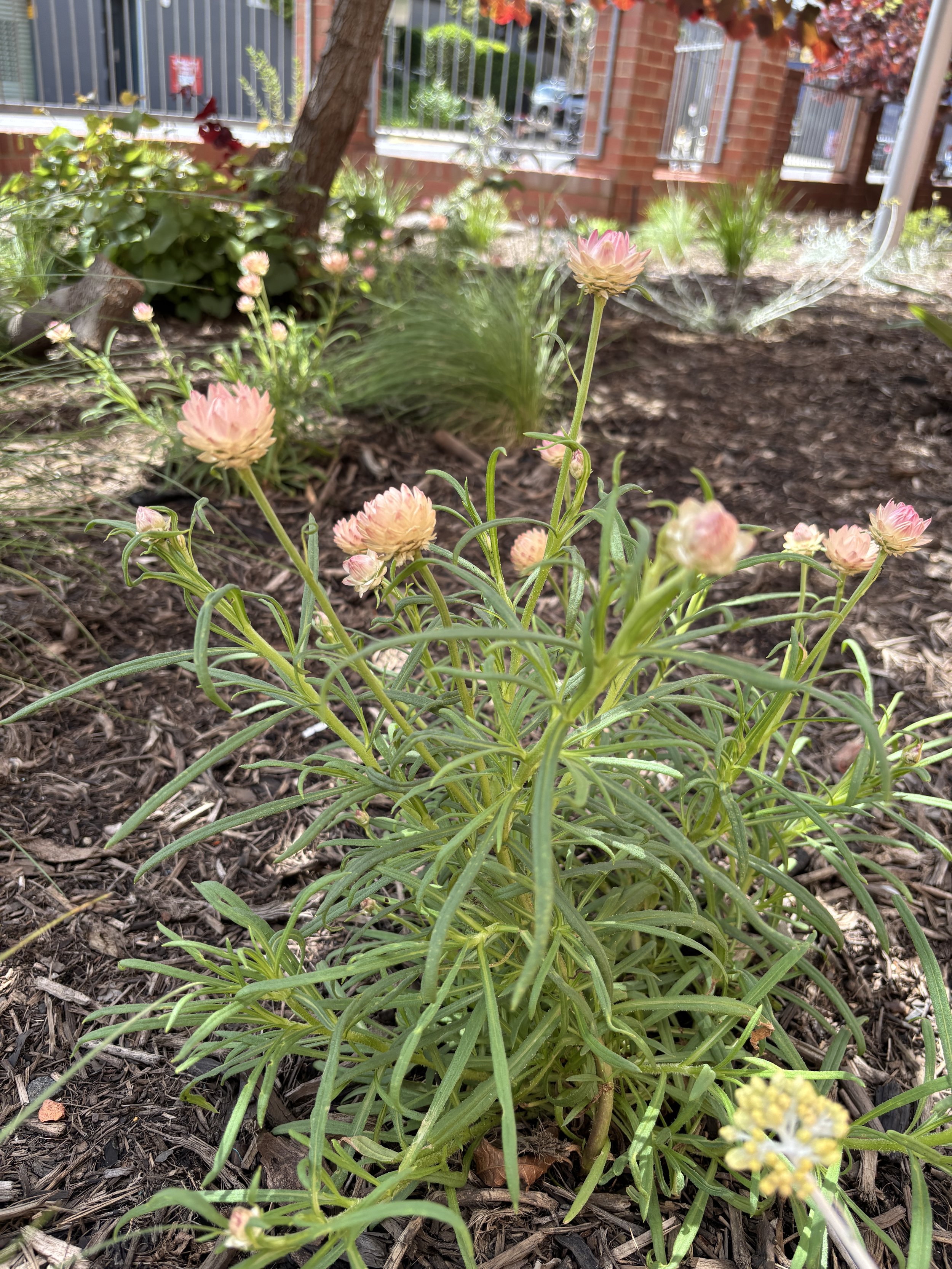
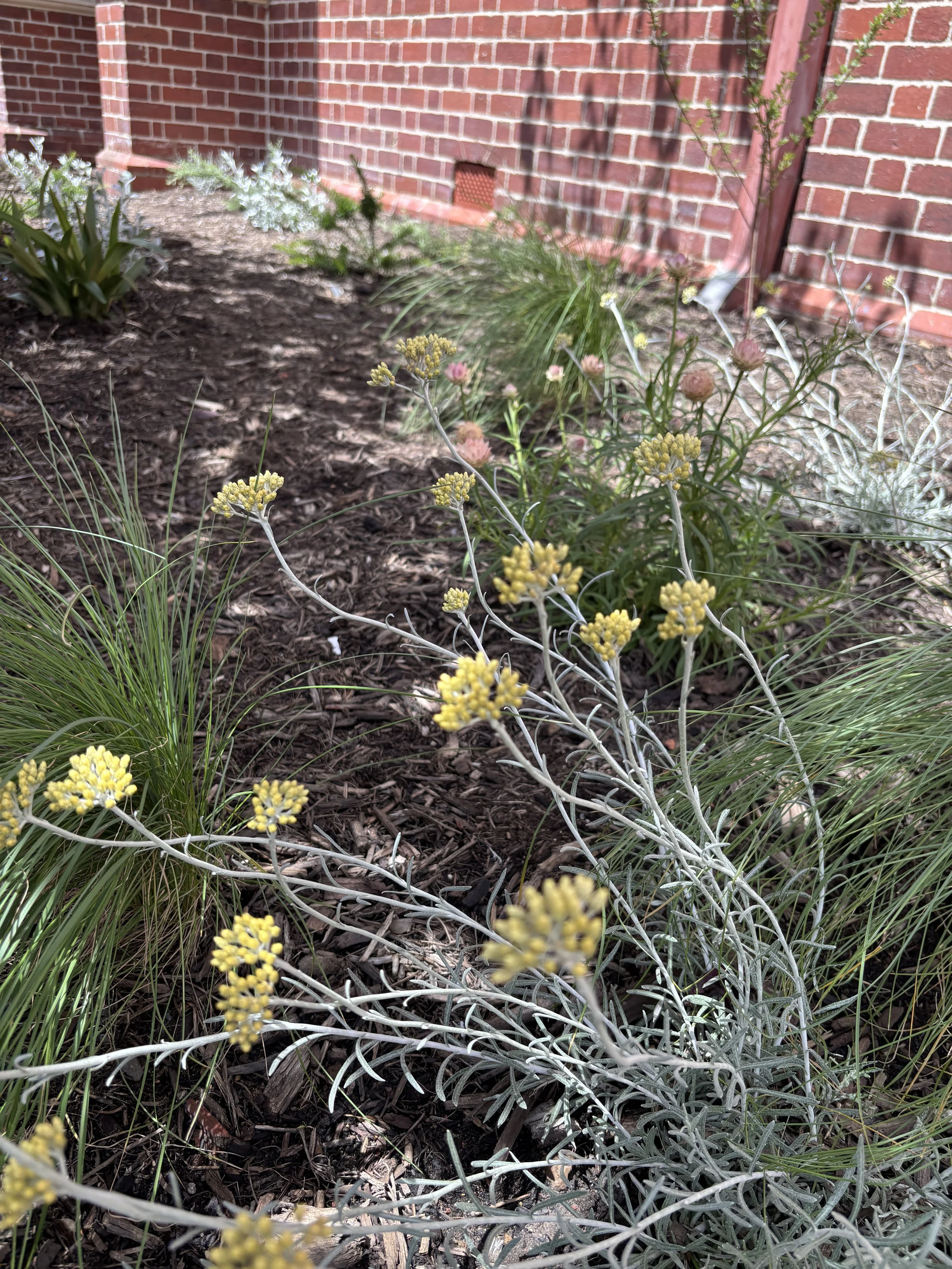
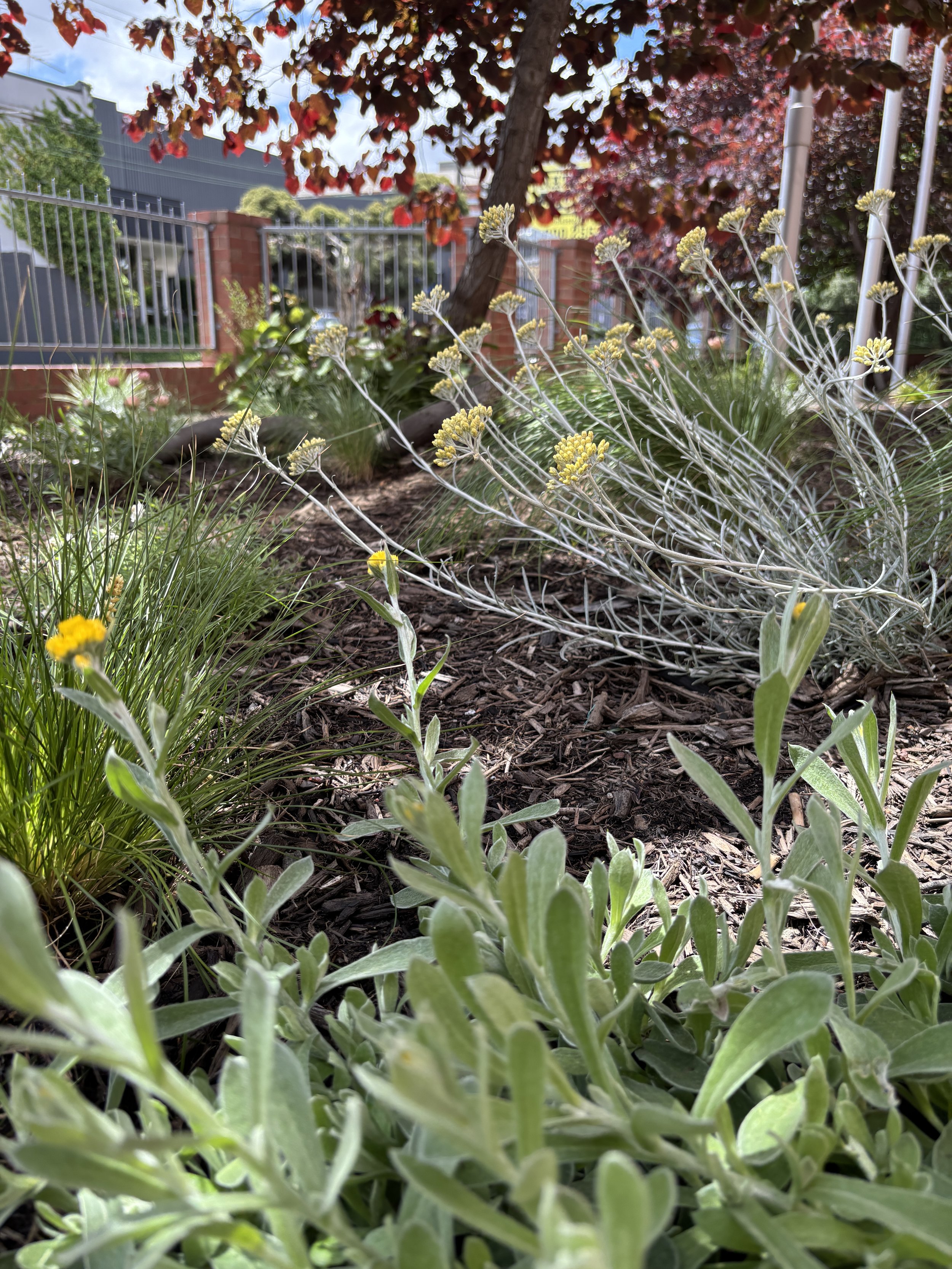
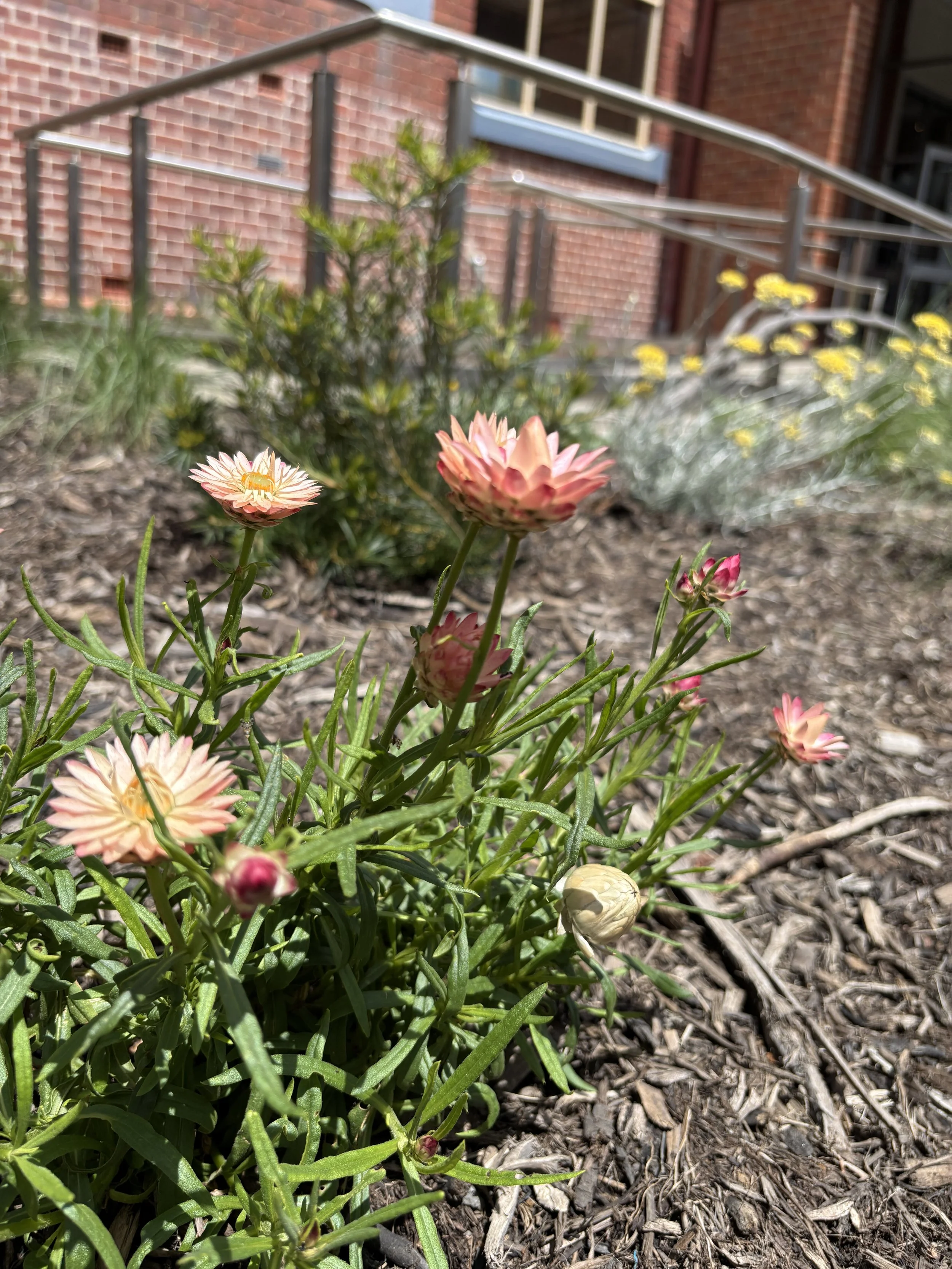
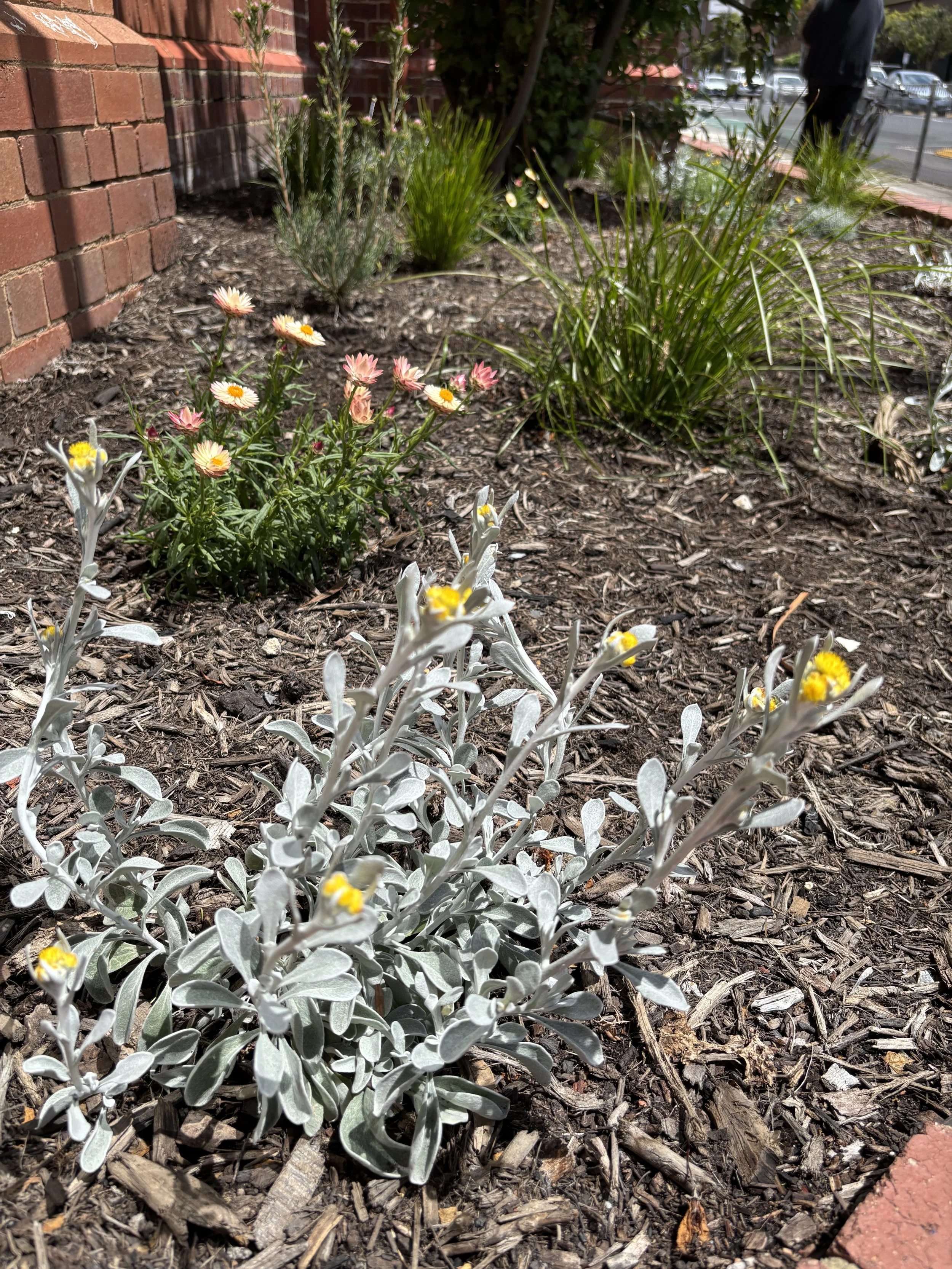
By mid-November 2025, the new BSC wild gardens were blooming beautifully and attracting pollinators, including the Australian Painted Lady (Vanessa kershawi).

Outdoor Learning
Creating Habitats for Wildlife
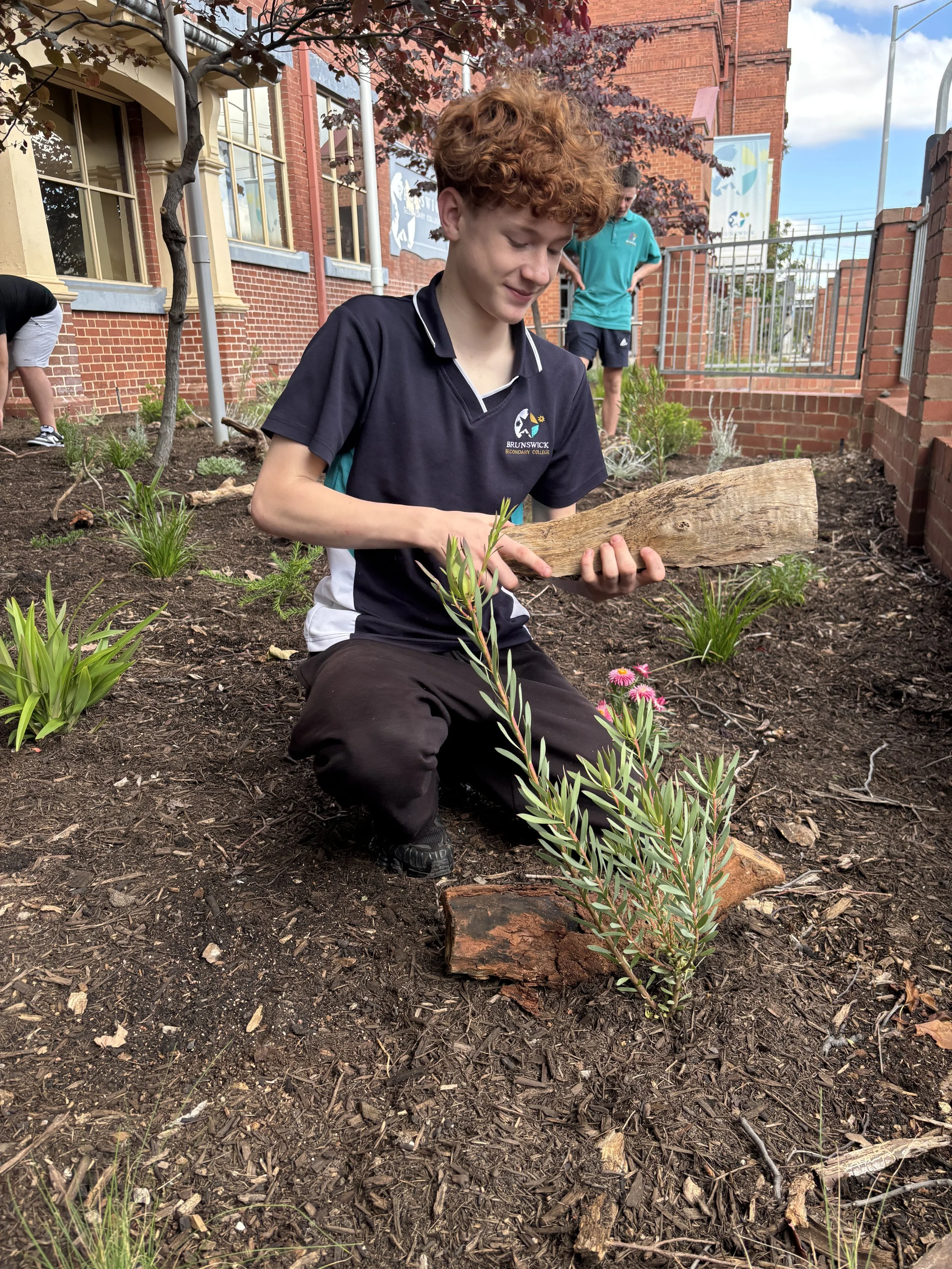
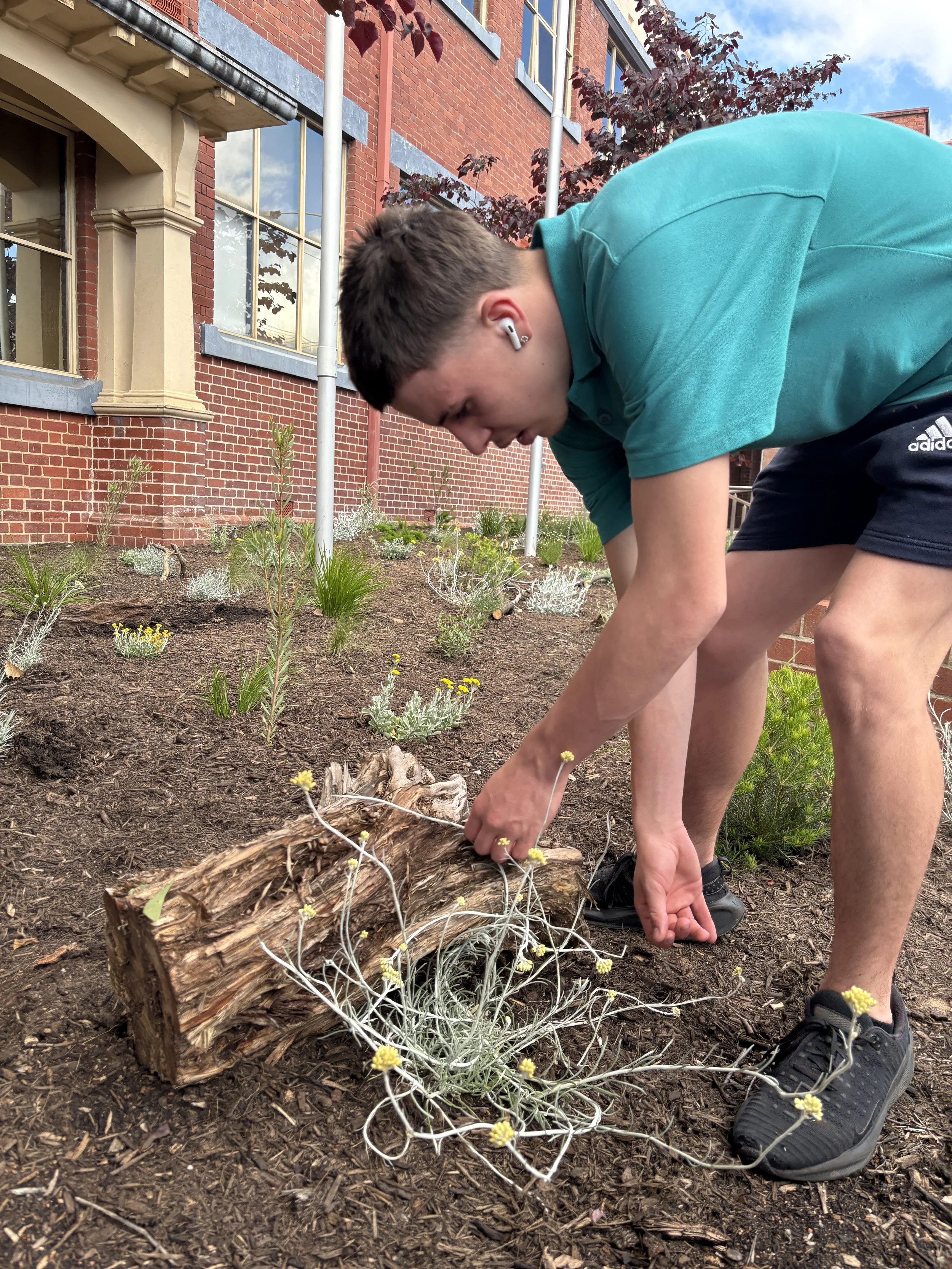
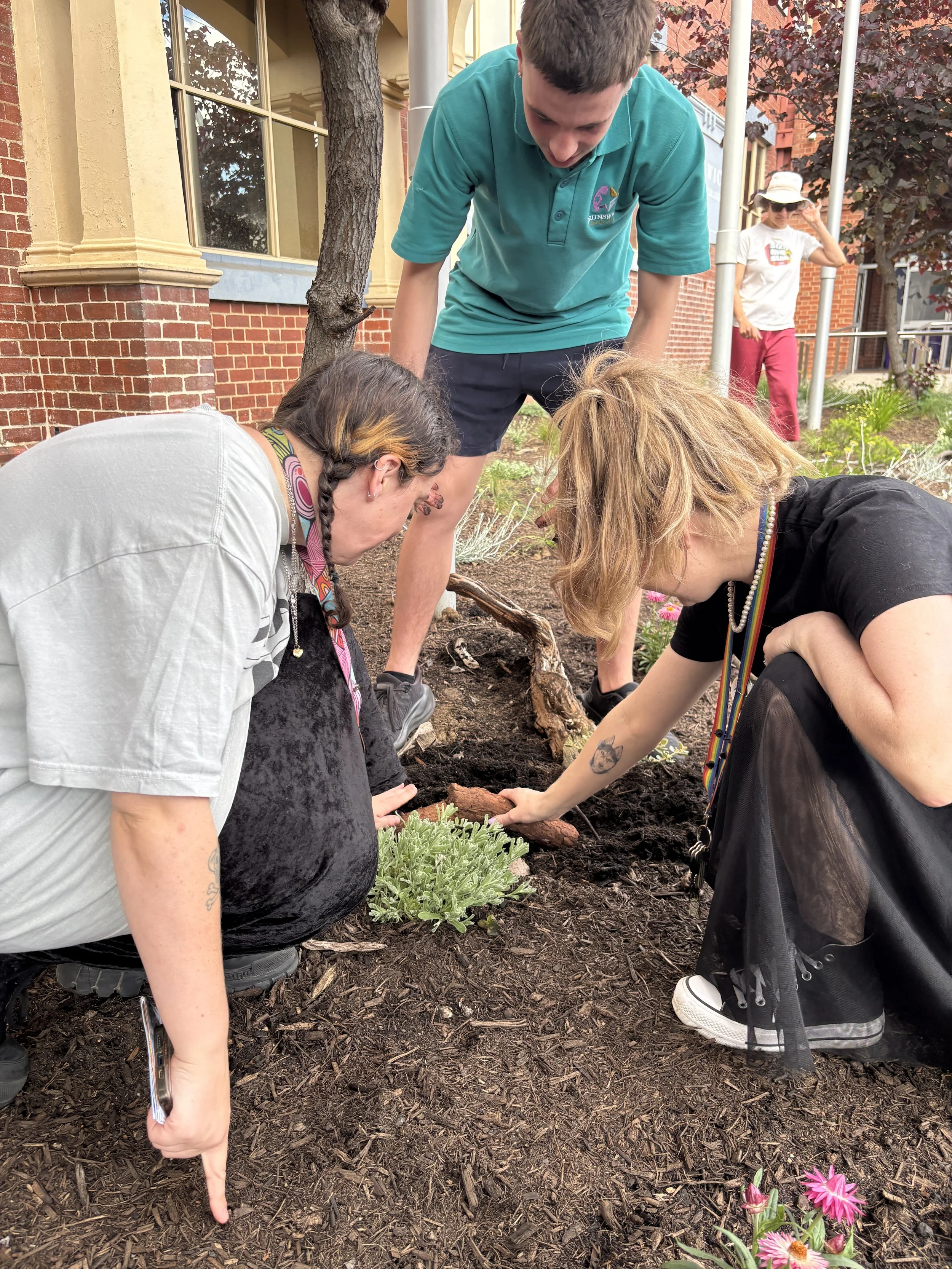
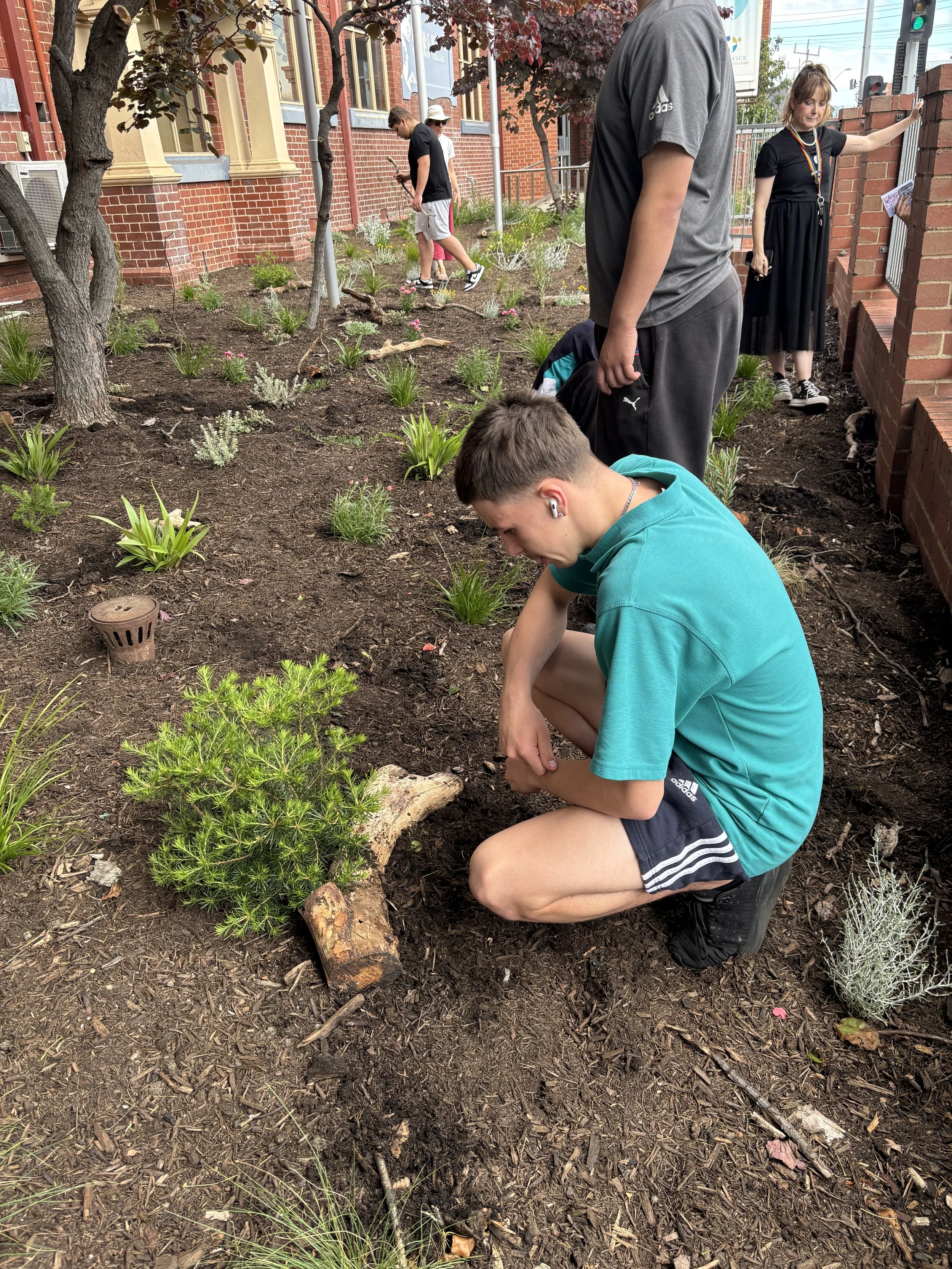
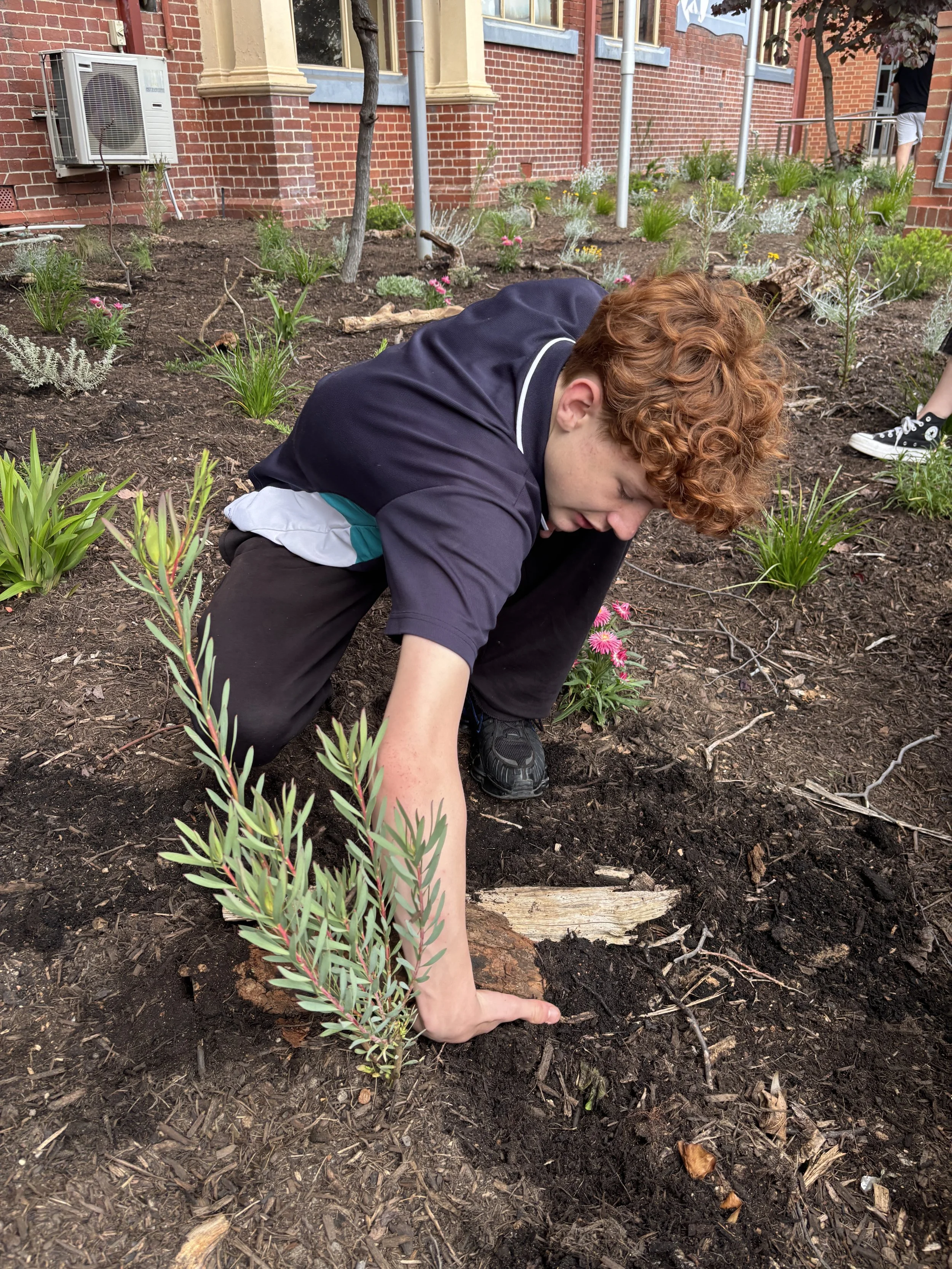
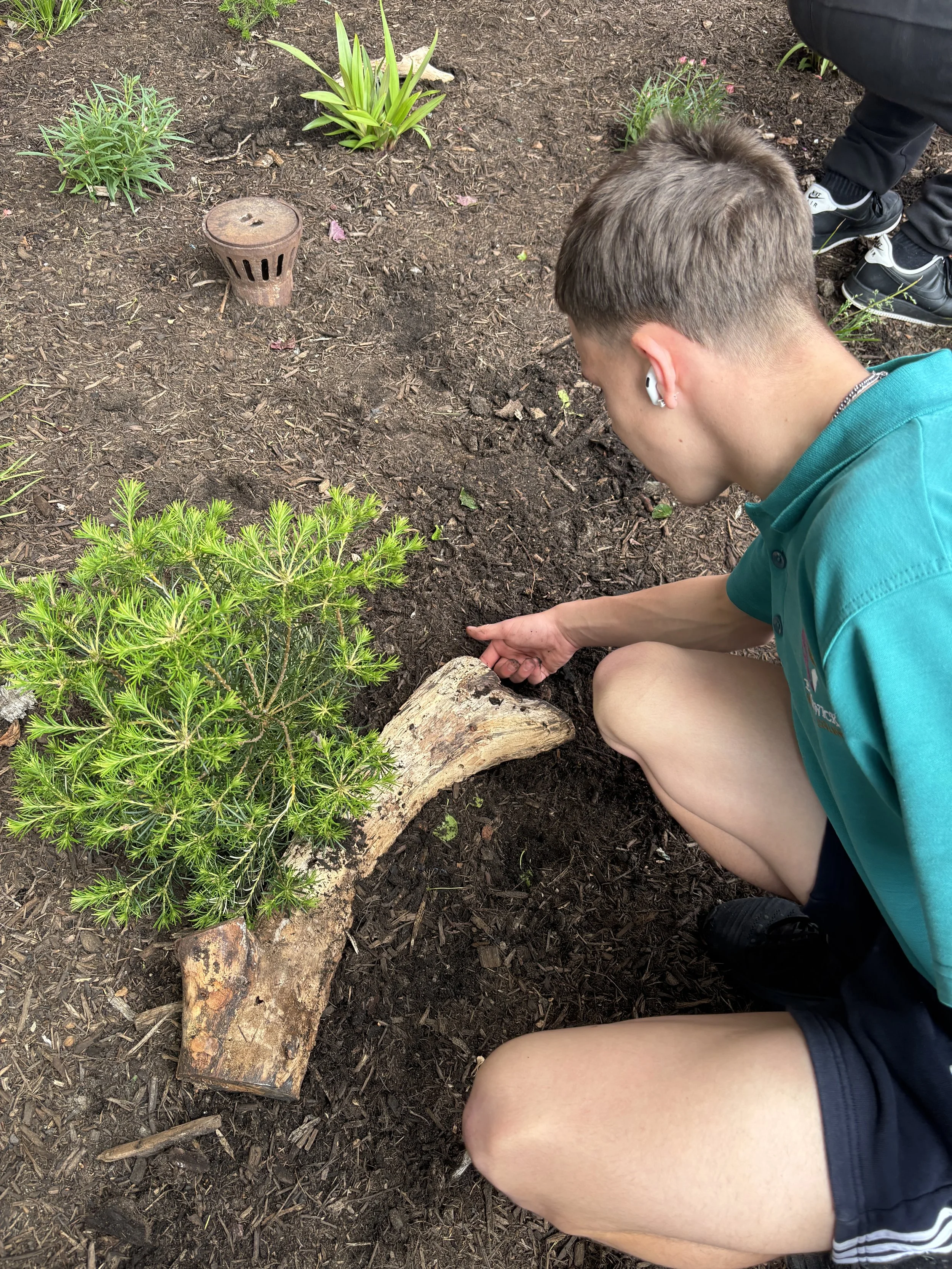
Old logs and bark provide beautiful nesting and hiding spots for beetles, spiders, native bees, ants, skinks, and other small creatures. By adding these natural elements into a wild garden, we provide welcoming habitat for local fauna and help support a thriving, resilient ecosystem.
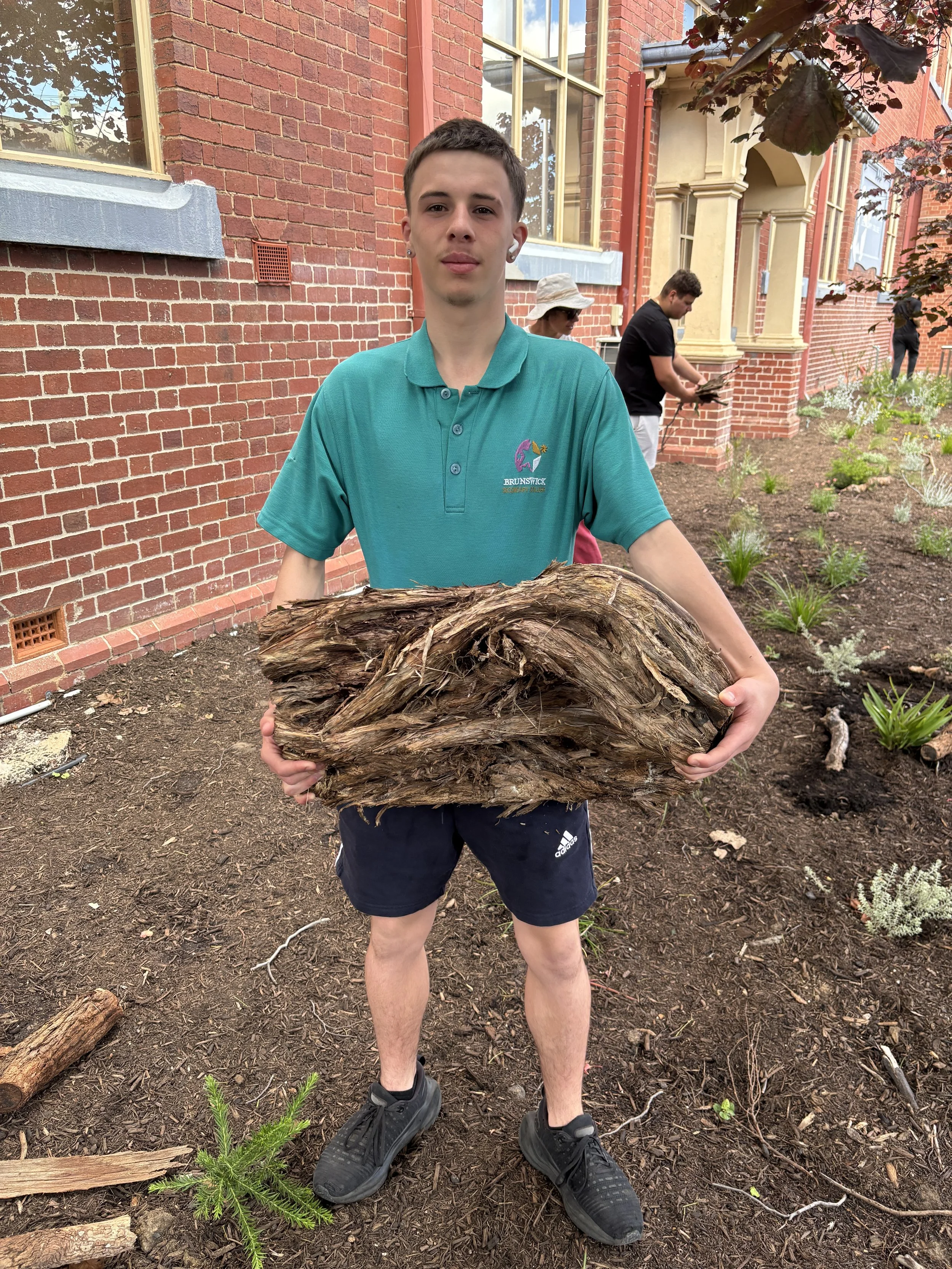
On Tuesday 25th November 2025, year 11 students from BSC joined us for a habitat making session on 47 Dawson Street, Brunswick. It was delightful watching the students carefully tuck in logs, sticks, and pieces of bark as they imagined what the little creatures might like to live in.
Assessing Pollinator Activity
Tended Earth is connecting with local experts, including Dr Philip Taylor (Botanist and local Brunswick resident), to assess and better understand pollination and seed set in the new wild gardens of BSC. This will provide valuable insight into optimising the ecological health of newly created wild gardens in urban settings.
Assessing Biodiversity
A beginner’s snapshot
Plants were selected by Tended Earth to create multi-layered, biodiverse, and beautiful wild gardens at Brunswick Secondary College (BSC). Here we take a closer look at the biodiversity in one of the three BSC wild gardens - the garden located near the main school entrance at 47 Dawson Street, Brunswick.
Garden size: approx. 180 sq. metres
Plants: 4 existing deciduous trees and 291 new plants (see Table 1 for full list)
The garden is now multi-layered:
38 groundcovers, 180 low plants, 66 mid-storey plants, and 7 canopy-providing trees
and biodiverse:
13 different families (see Figure 3 for family level composition, grouped by ecological function)
23 genera
28 species
Shannon-Weiner Diversity Index is a widely used index of biological diversity.
Typical ecological classifications describe values below 2 as low-moderate diversity, values 2-3 as high diversity, and values above 3 as characteristic of very diverse natural ecosystems (Magurran 2004; Krebs 2014).
Shannon-Weiner Diversity Index for the BSC new wild garden = 2.91, indicating a highly diverse plant community.
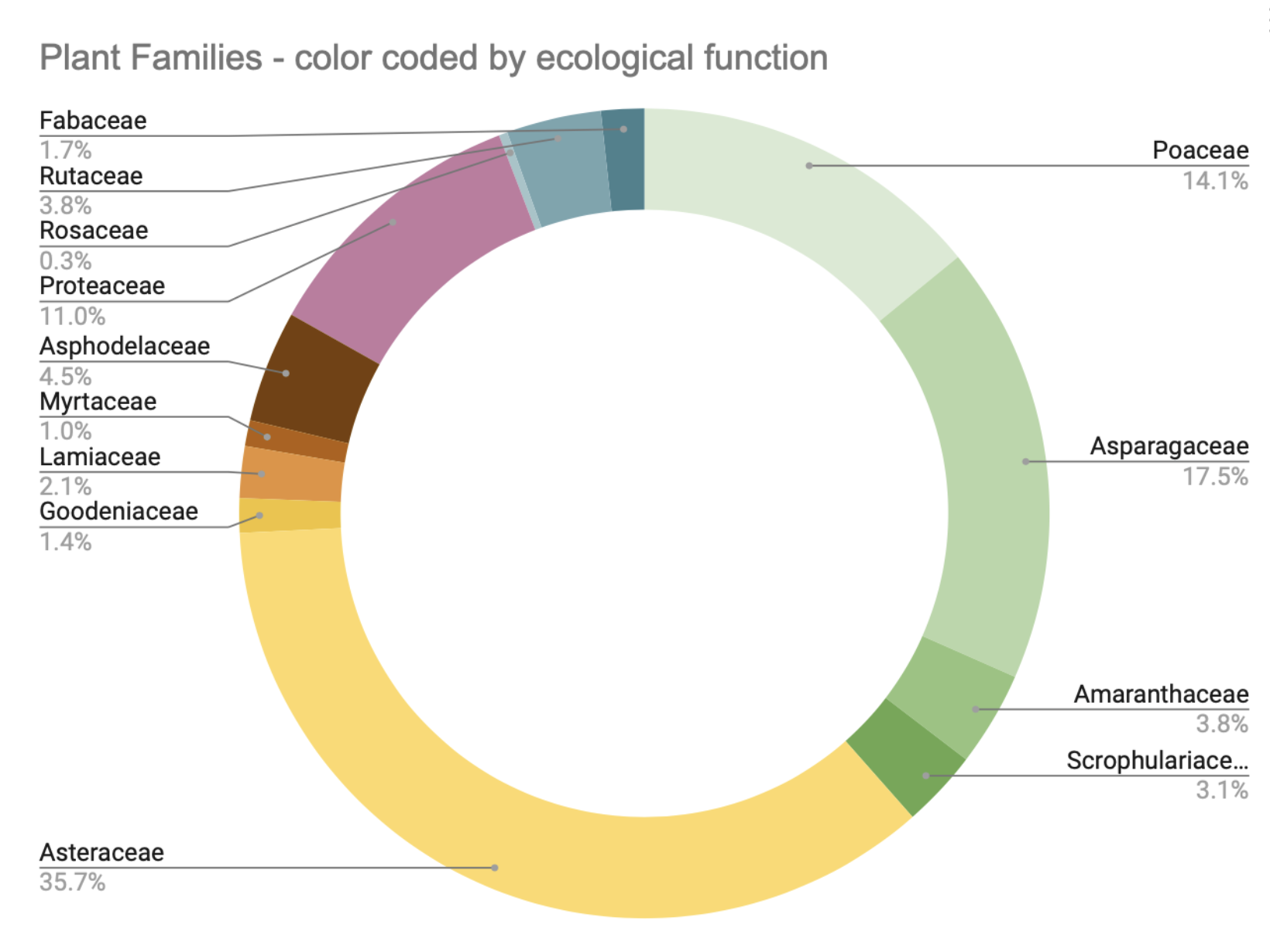
Figure 3: Composition of Plant Families in one of the BSC Wild Gardens. Families are colour coded by ecological function: structural elements (light-dark green), pollinator-supporters (yellow-brown), small bird-attracting (pink), supporting families (not playing a major role, but still contributing; blue)
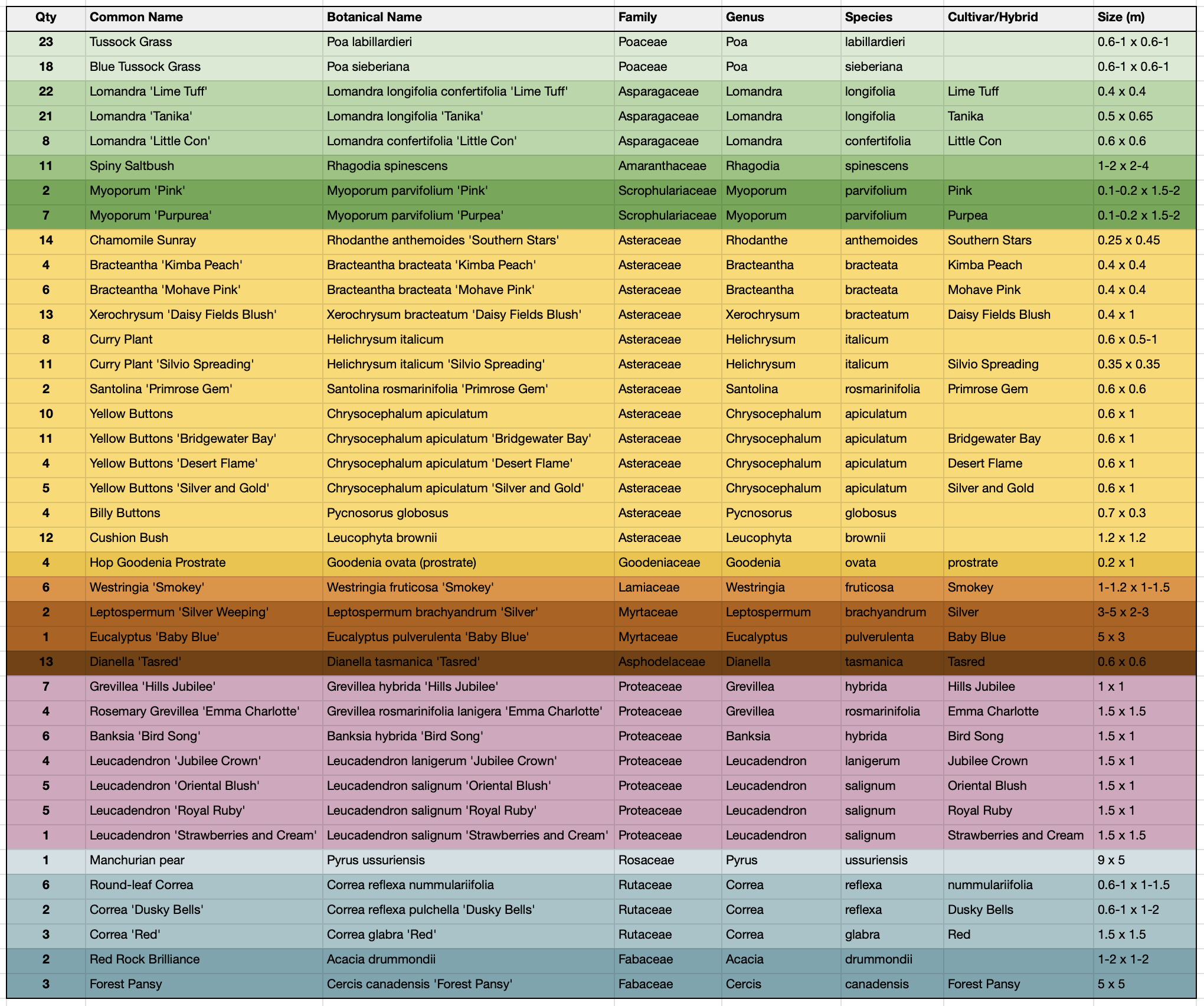
Table 1: Detailed List of Plants in one of the BSC Wild Gardens. The garden includes a diverse mix of plants representing 13 families, 23 genera, and 28 species. Data available in this table was used to calculate the Shannon-Weiner Diversity Index. Plants have been colour coded by ecological function to match Figure 3.
NB best viewed on desktop computer. Or list is available upon request
Please note, this is a very preliminary analysis of biodiversity. If you’re interested in studying this garden in more detail, please get in touch!
Shared Care of the Land
Summer Watering Roster
Although plants in the BSC wild gardens were selected for their hardiness & suitability to our climate, they still need some nursing through their first summer. To help share the love, a watering roster was established with a team of volunteers from the BSC community. The new wild gardens are being watered twice a week e.g. every Mon & Thurs *or more during heatwaves*
Photos taken January 2026 (below) show a thriving happy wild garden - thanks to the wonderful community of BSC!
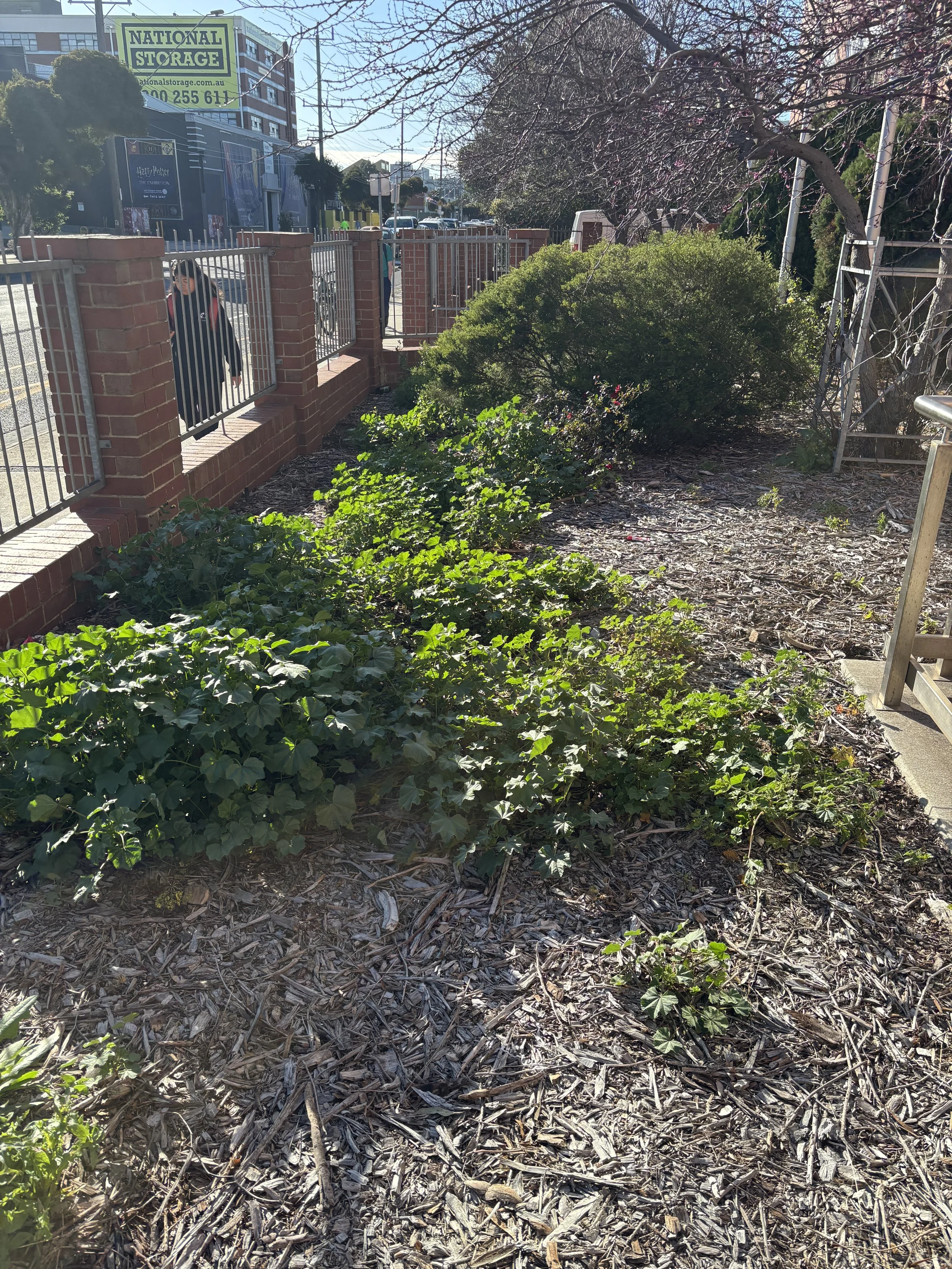
July 2025
Jan 2026 post-wilding
Changing Seasons
Golden highlights
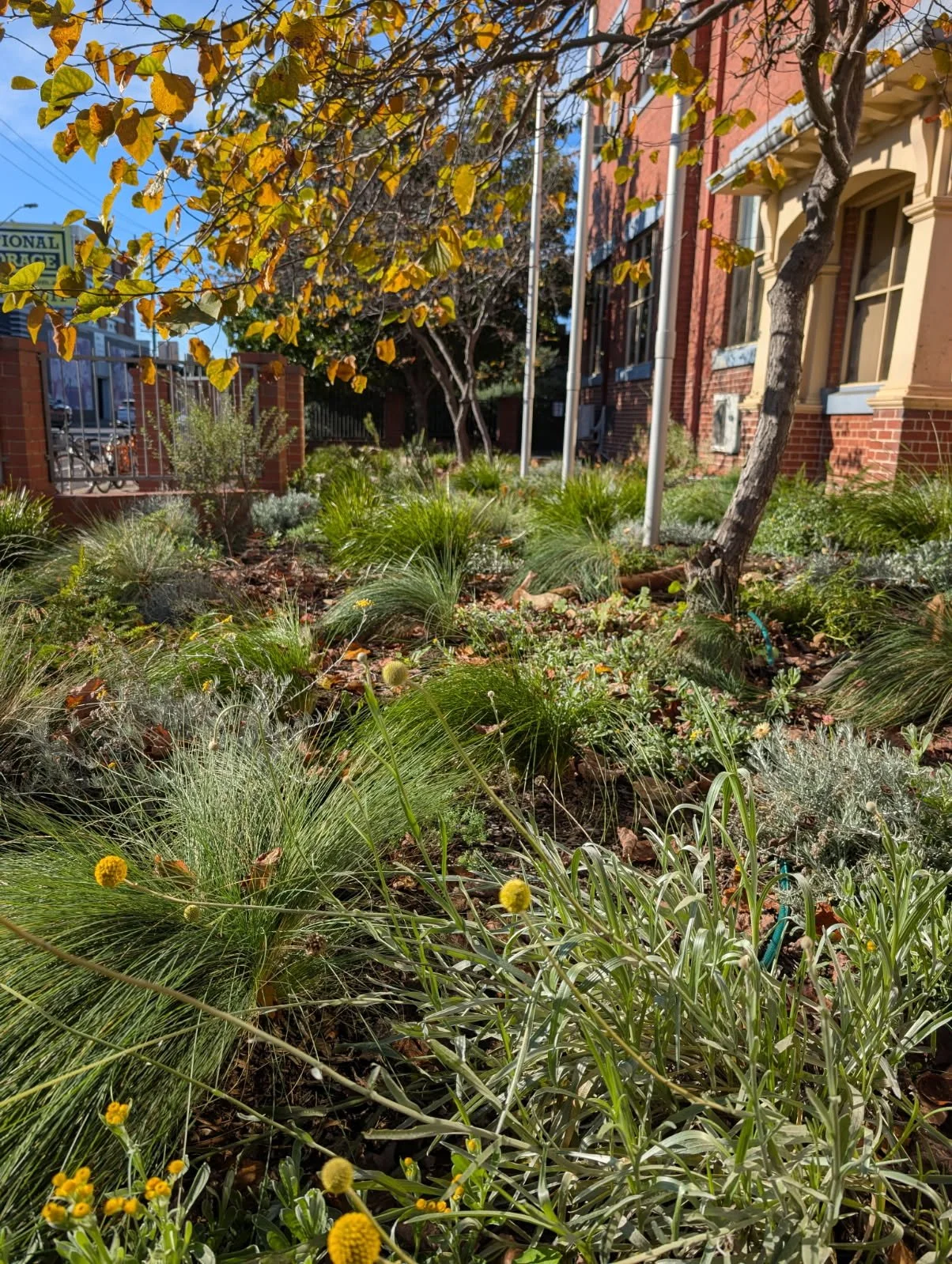
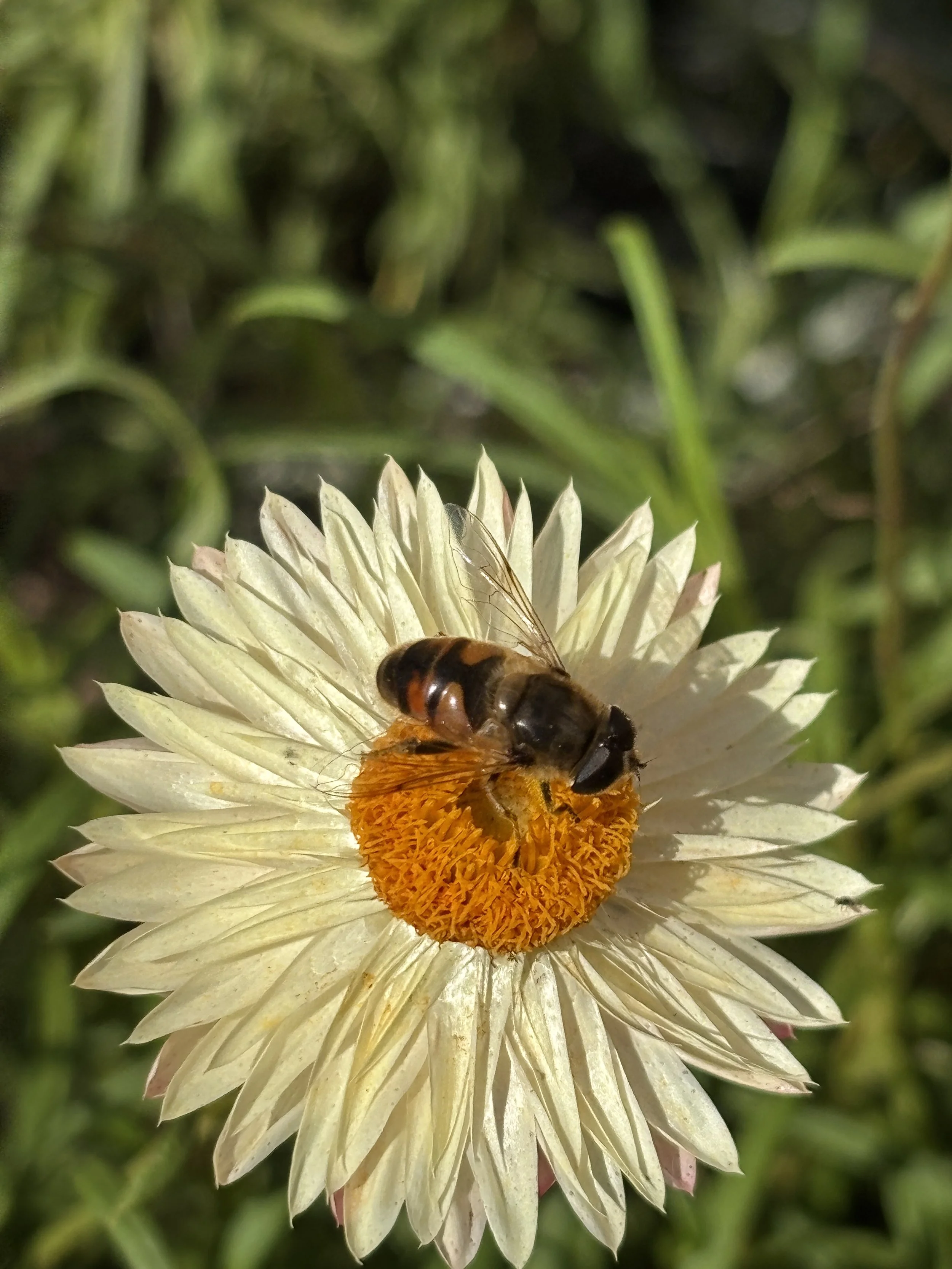
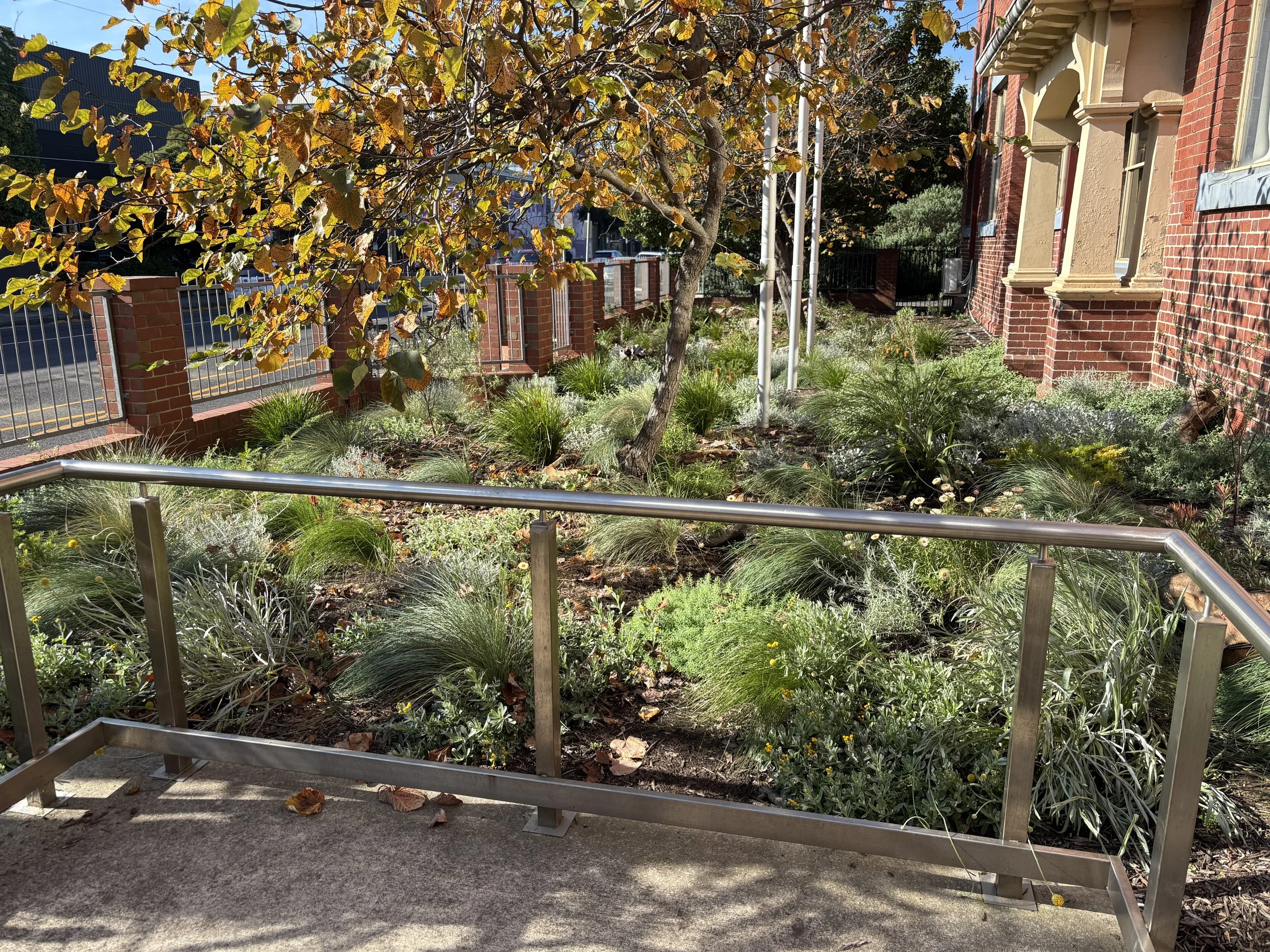
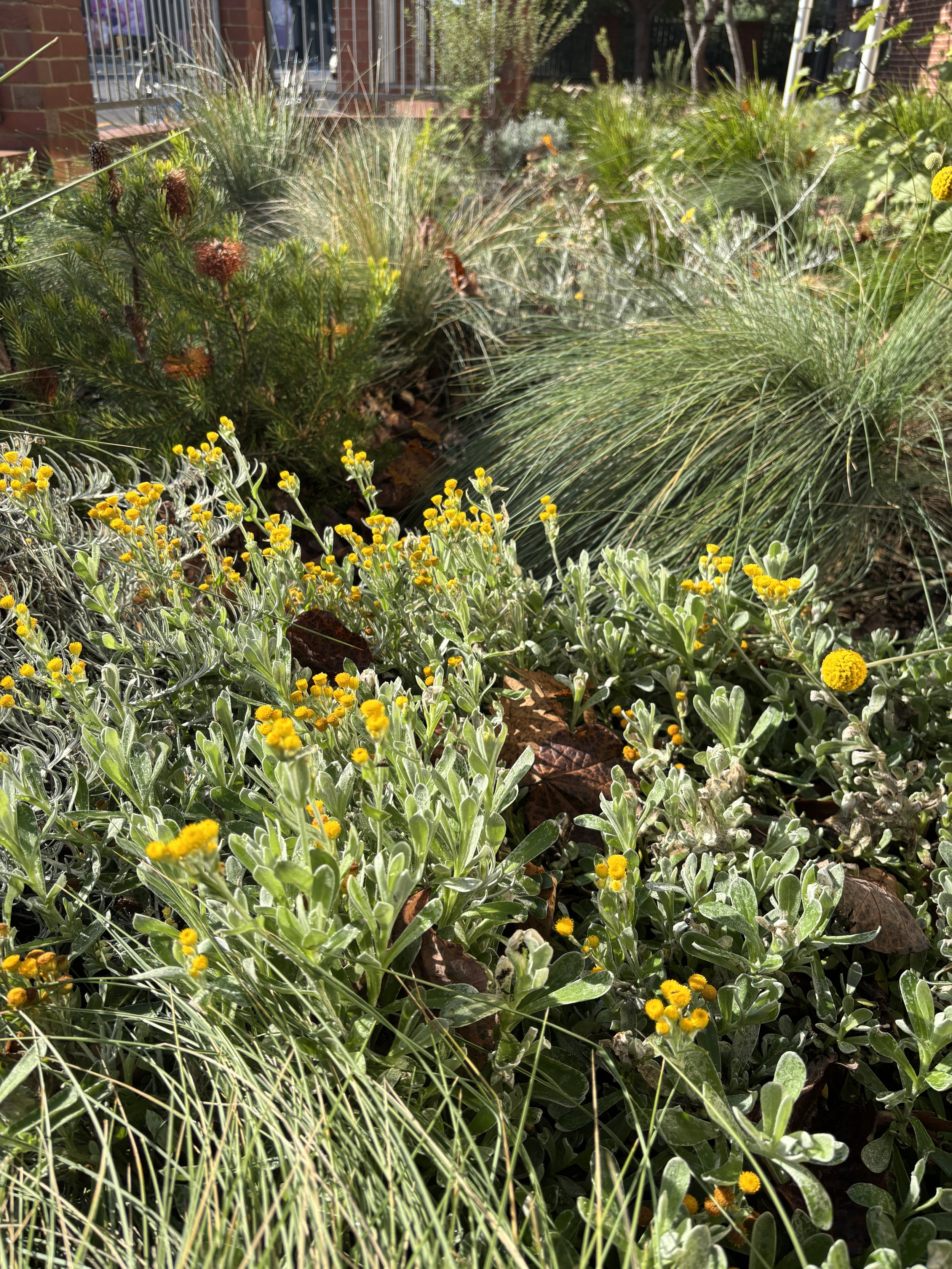
It's Waring (Wombat) season on the traditional Wurundjeri seasons calendar of the Eastern Kulin Nation, and as the cold and wet days settle in, our wild gardens are enjoying a good soak. It’s time for us to enjoy the golden magic - soft light, deciduous leaves, and the long-lived wildflower blooms!
Thank-you to Rosie Nicholson - one of the superhero parents of BSC - for sharing her photo (1st displayed below).
BSC Community Feedback
What do you like most about the wild gardens at BSC?
In Dec 2025, BSC students, staff, and families were invited to give their feedback.