
Seed Set as an Ecological Indicator in Urban Wild Gardens
Tended Earth is connecting with local experts, schools, and residents to assess and better understand pollination and seed set in urban wild gardens. This information helps identify ecological interventions needed to strengthen the pollination potential in restored urban landscapes - a critical step in ensuring our wild plantings can successfully self-seed.
Over time, an optimised, self-seeding wild garden can also become a valuable local seed source, supporting local community groups to propagate plants and expand urban land restoration efforts.
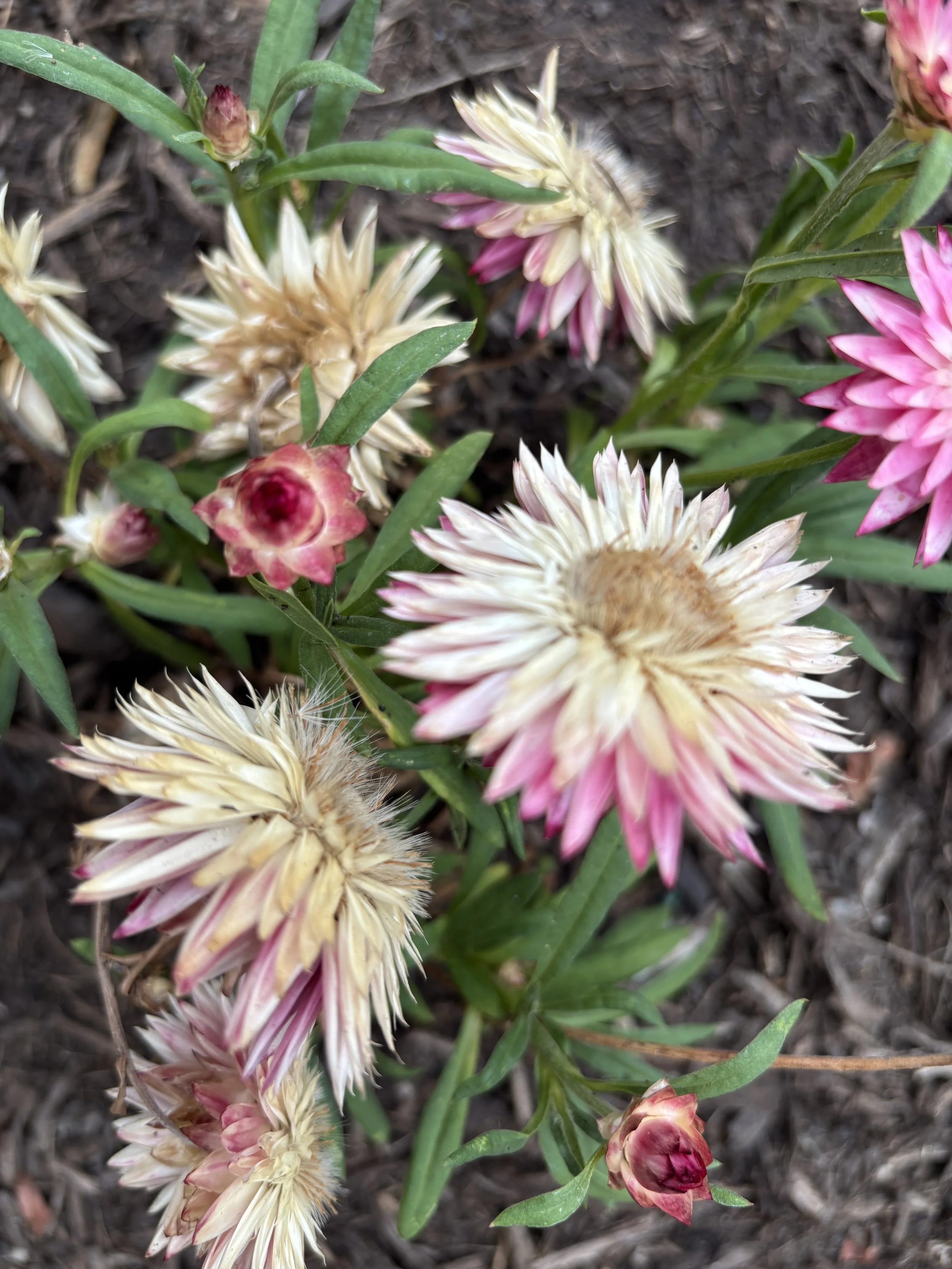
Assessing Seed Germination in Urban Wild Gardens
Local Expert
Philp Taylor, PhD - Botanist, Adjunct Senior Research Fellow at Rural Health Latrobe University and School of Medicine at University of Melbourne, Advisor to Brunswick Communities for Nature, and local Brunswick resident
Locations
New wild gardens of Brunswick Secondary College, 47 Dawson Street, Brunswick
Established garden on nearby Union Street, Brunswick
Focus Plant Species
Native Paper Daisy, Xerochyrsum bracteatum
Findings (9 Feb 2026)
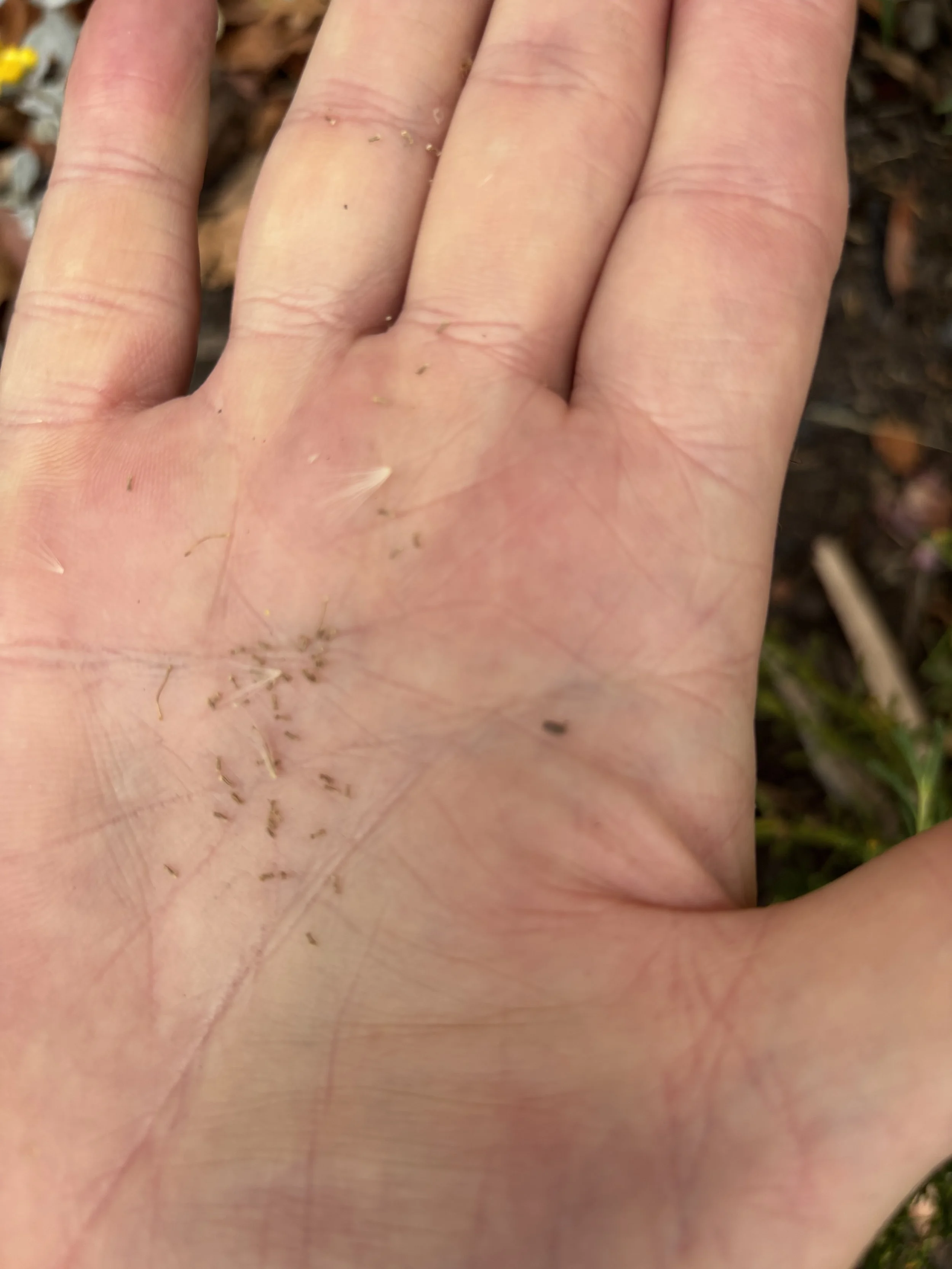
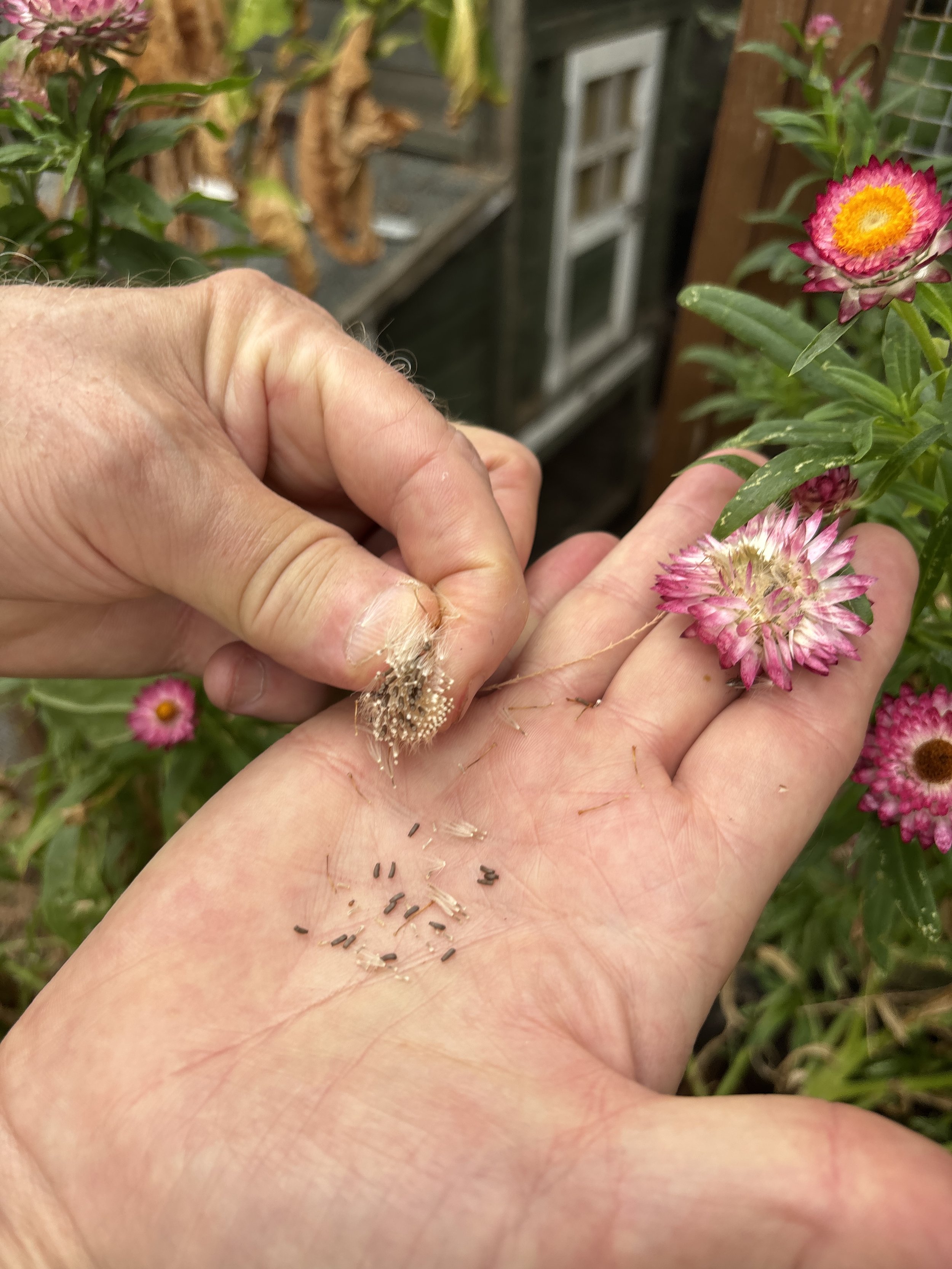
Flowers collected from Xerochrysum bracteatum in the new BSC gardens revealed very few viable seeds - these are the dark plump seeds (photos below ).
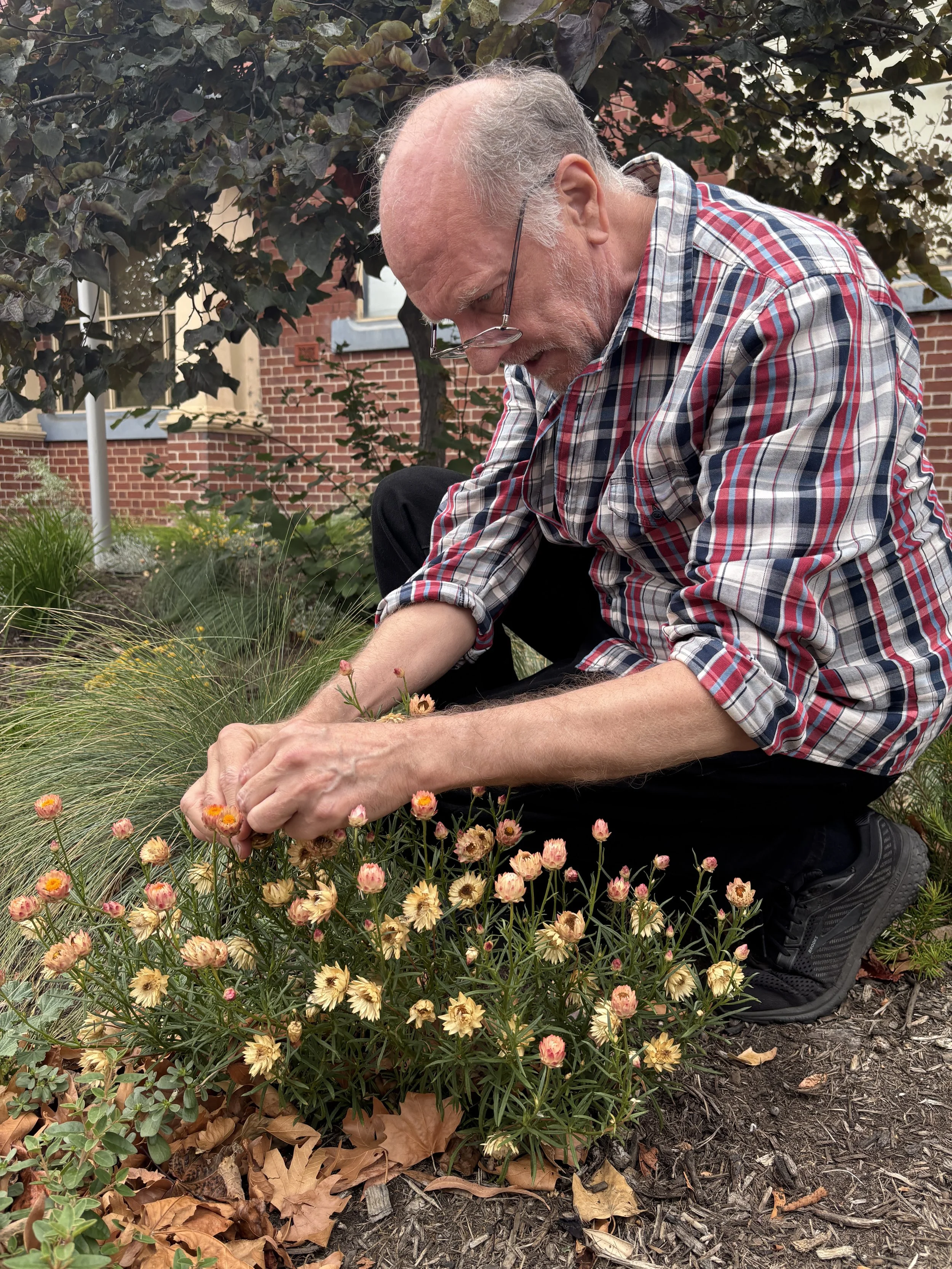
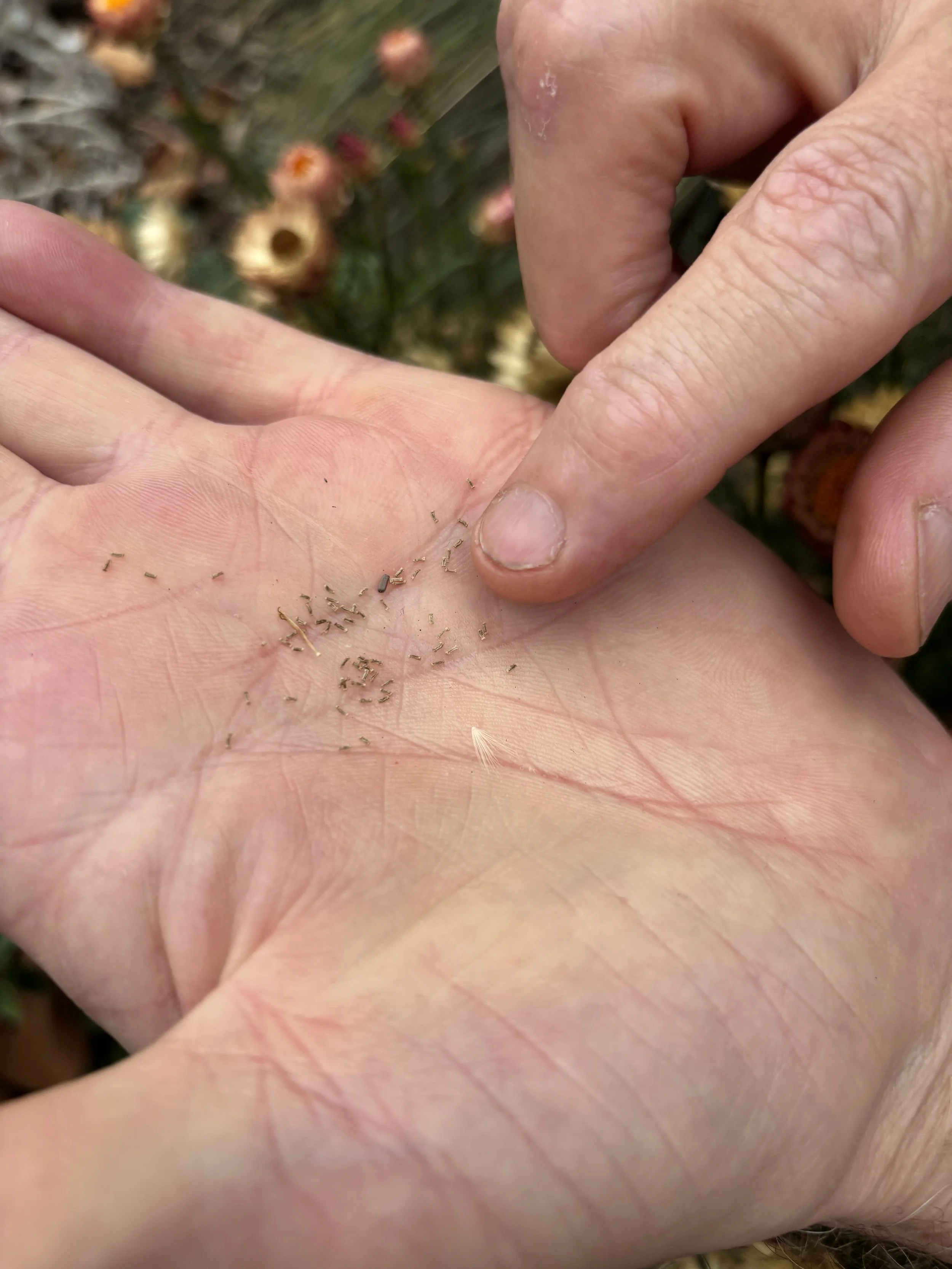
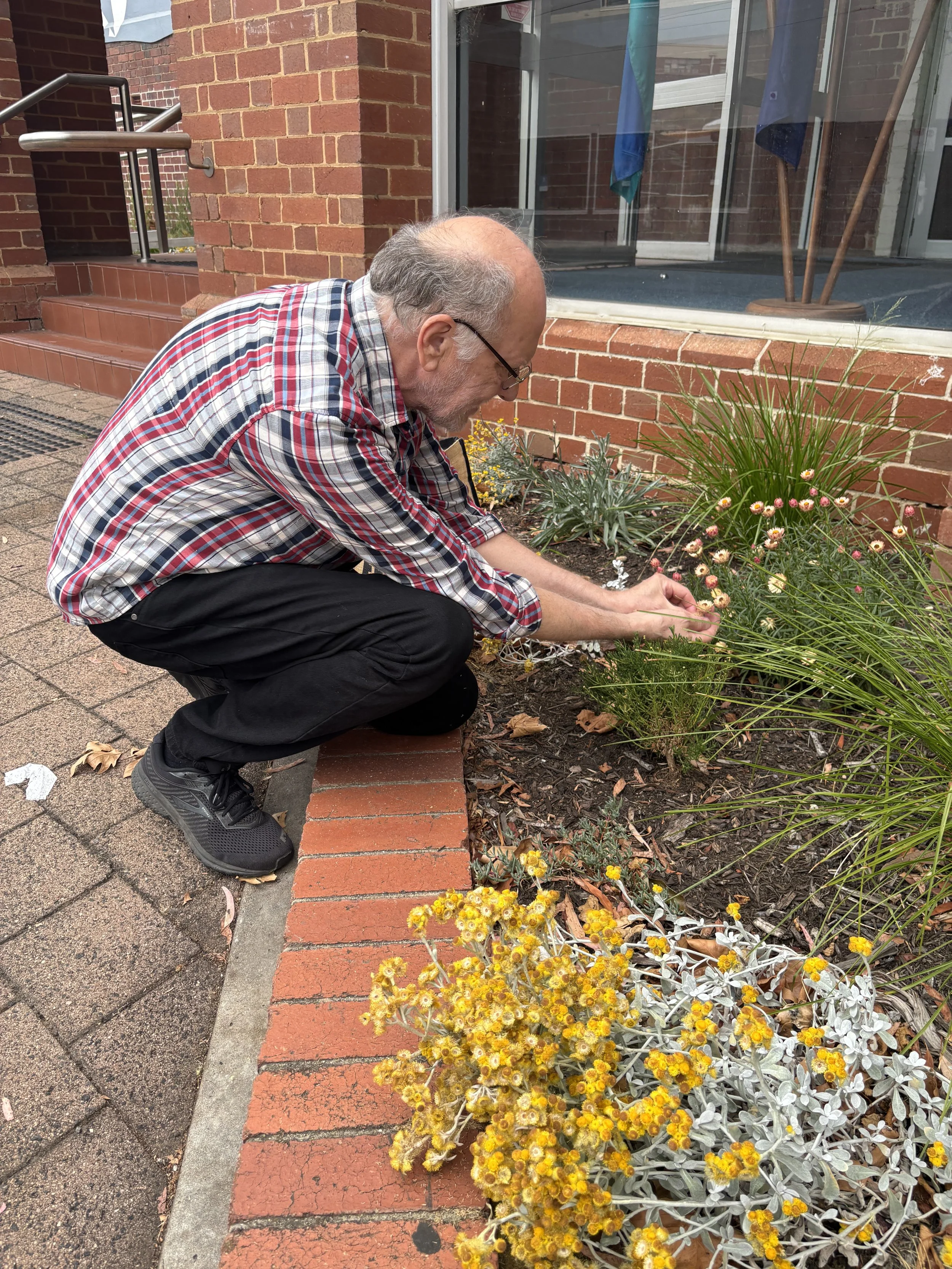
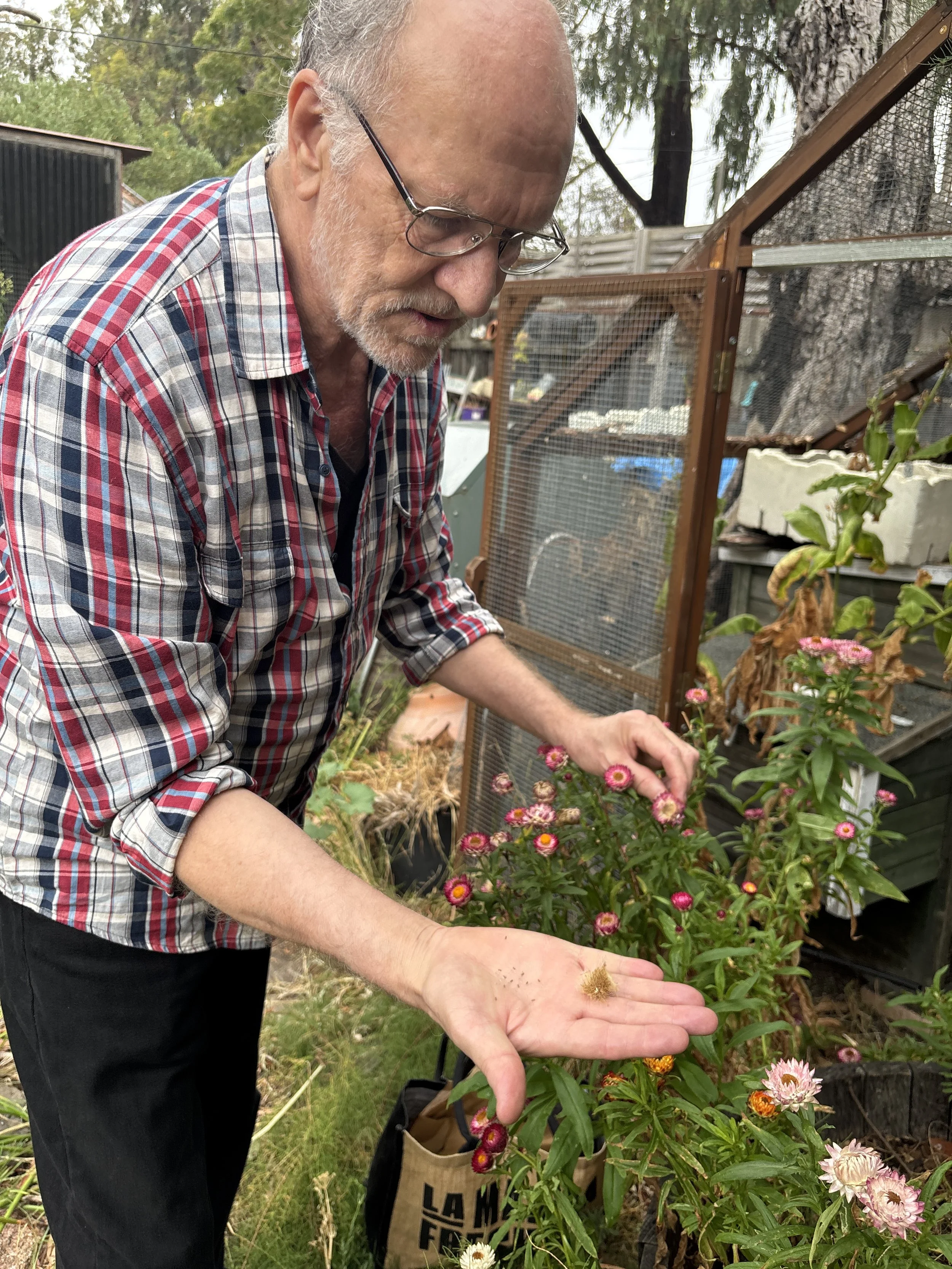
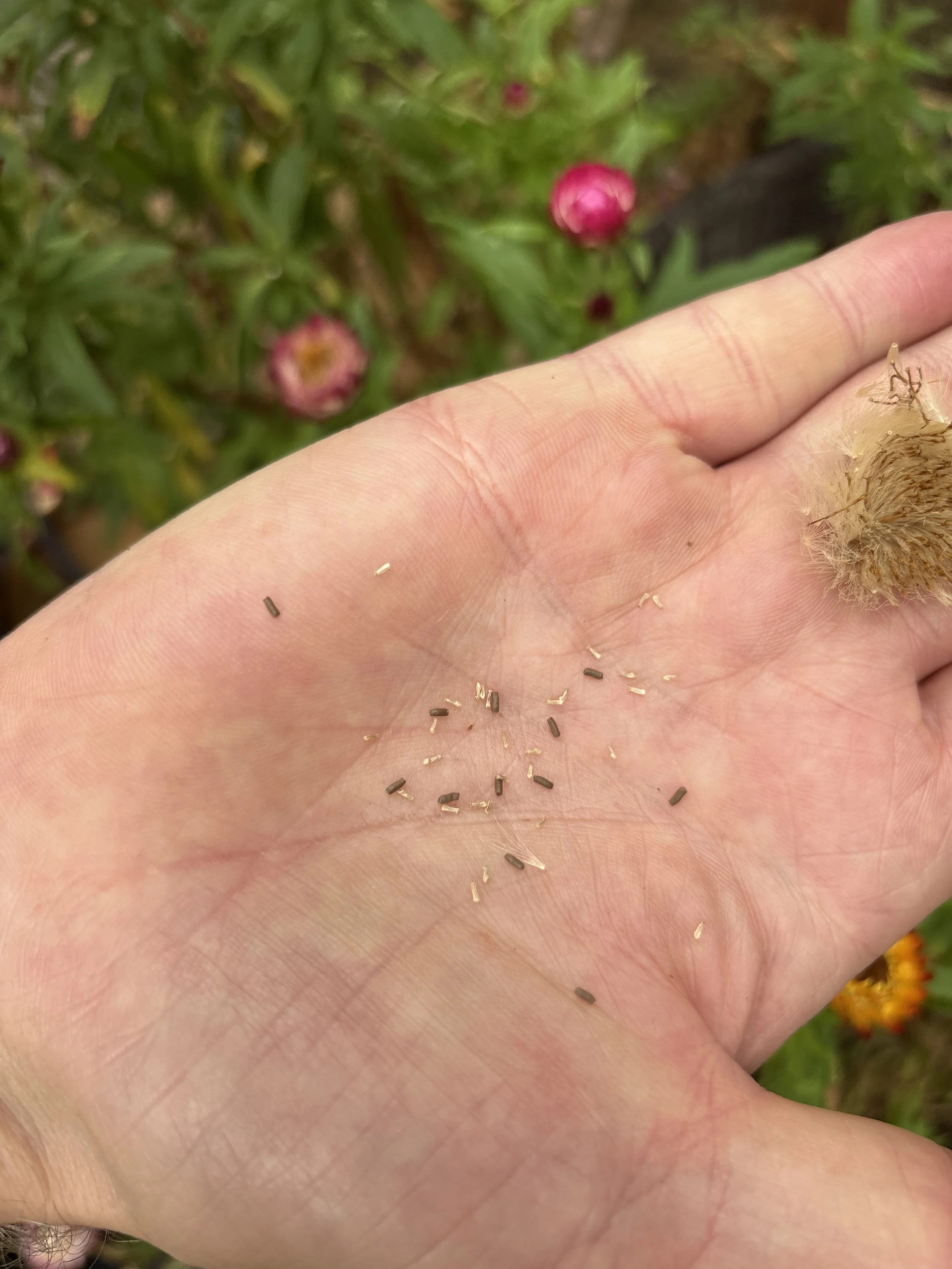
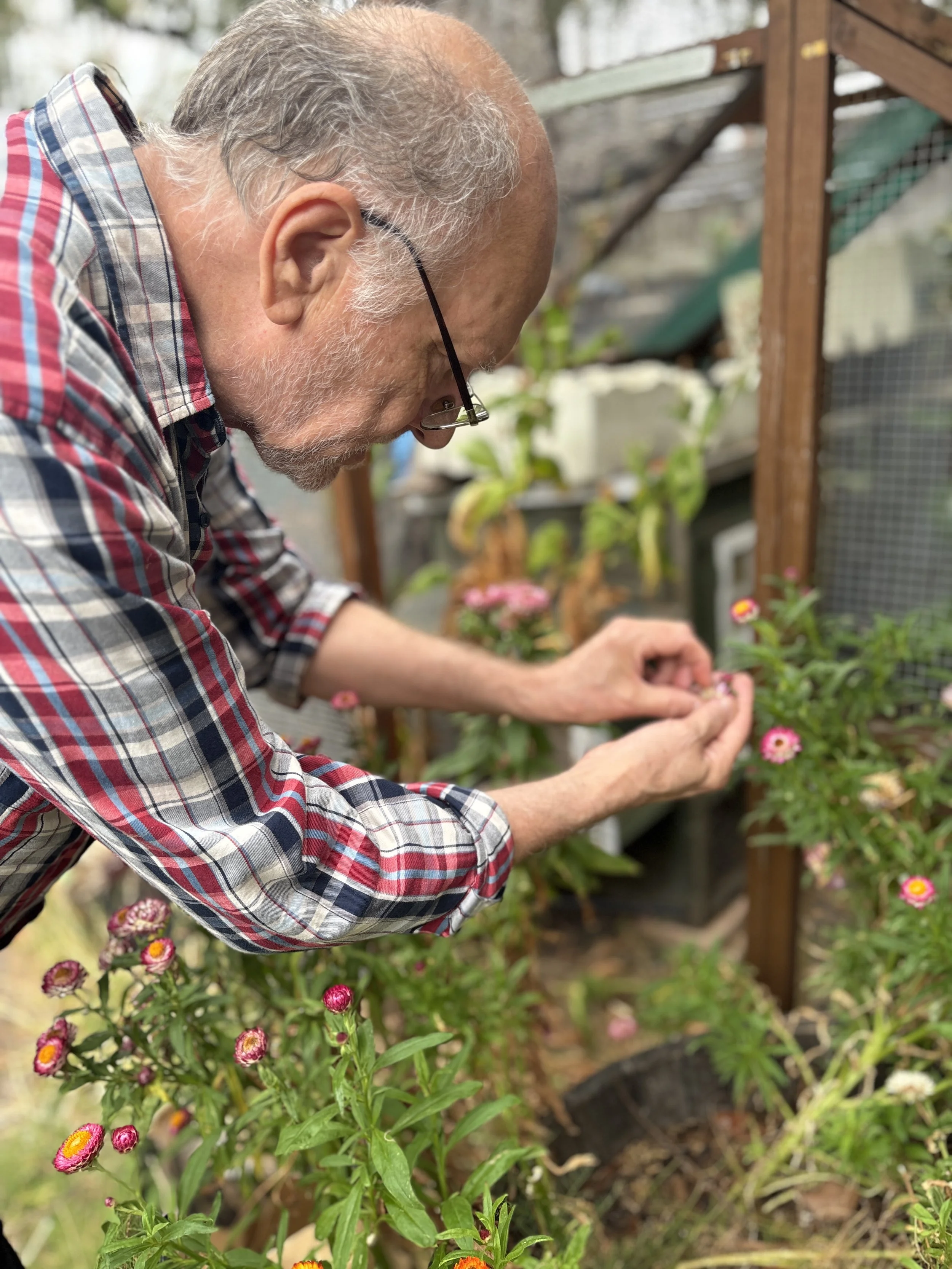
In comparison, flowers collected from Xerochrysum bracteatum in Philip’s established home garden revealed many more viable seeds (photos below).
Discussions
“Many of these Asteraceae family of plants need out-crossing with insects. The pollen is available before the style is receptive on the same flower, so insects (native bees, butterflies, moths, beetles, hoverflies) need to move the pollen between flowers/plants to set seed” - Philip Taylor, Feb 2026.
It is important to note that the cultivar of Xerochrysum bracteatum differed between the two collection sites; therefore seed set rates cannot be directly compare. However observations across the two populations still provide useful insight into relative pollination activity.
The low level of seed set observed in Paper Daisies growing within the school wild gardens indicates limited out-crossing. This suggests the school gardens are still ecologically young and isolated, with pollinating insects yet to establish in sufficient numbers.
In contrast, Philip observed his garden is rich with insects. The higher seed set in his home-grown Paper Daisies likely reflects increased pollinating insect activity and highlights the need to strengthen the pollinator potential within the new wild gardens at BSC.
Please note: These findings are observational. They are intended to spark curiosity and encourage the open sharing of experiences and knowledge, helping us build a deeper collective understanding of our restored urban landscapes.
Implications & Future Studies
Examining seed set can provide a valuable measure for assessing the ecological health of restored urban landscapes.
Tended Earth’s next steps include:
Examining the seed set in other plants within our wild gardens (on-going studies with Philip Taylor)
Seeking advice from local ecological experts on strategies to increase the pollination potential in new urban plantings
Sharing knowledge and practical strategies with other community-focused land restoration initiatives
Connecting with local community nurseries to explore opportunities to share knowledge and seeds
If you would like to share your experiences and/or knowledge in seed set as an ecological indicator of pollinator activity, please get in touch.